Category Archives: Christianity

Justice tastes good

Halloween is supposed to be scary.  Chocolate isn’t.

This Halloween you may be giving away a lot of chocolate to boys and girls dressed up as princesses, vampires, monsters, fairies, and superheroes.  It is one of the most fun nights of the year for kids, and this year it falls on a Sunday.  In my town, there is a big bonfire in the city park where the VFW has a hot dog roast and a costume contest.  It is one of those classic nights that makes living in a small town so much fun.  There will be 70-100 kids and their parents.  I’m pretty sure that not one of them will have spent the day working in hot tropical fields, wielding machetes and being exposed to harmful pesticides.  I think it’s a safe bet that none of the children getting their chocolate treats were sold into work camps by their parents, desperate to provide for siblings that are starving.

Unfortunately, such an existance is common place in West Africa, where the majority of the world’s exported cocoa beans are grown.  Equal Exchange is one group that is making a difference in the world by fighting poverty at its root.  By bringing the products of small farms to consumers in the United States, Equal Exchange has been able to empower people to maintain economic stability.  Their Interfaith Store  is a way for churches and individuals to buy products that they can trust – and feel good about.

While big corporations like Hershery continue to “lag behind their competitors” in making improvements in the labor practices of cocoa farms, Equal Exchange provides an alternative for those that want to make sure that the chocolate they give to smiling faces on Halloween was not made by children across the ocean.

Leave a comment

Filed under Christianity

Coming out

I wrote this many years ago, when I was the pastor of a small church in Central Illinois. I am no longer there, but my sentiments have not changed since writing this.


What if I were gay?  What if I was a teenage boy living in a small town in Central Illinois, and I was starting to come to the realization that I might be homosexual?  I started thinking about that today because October 11 is National Coming Out Day.  Not sure who deemed it as such, and I probably would have had no idea about this day if it were not for facebook.  In light of the recent suicides of four teenagers that were bullied, embarassed, and harassed for being gay, the organizers of National Coming Out Day have encouraged others to “come out” instead.  They have asked the following:

 We would like everyone, whether you are gay, straight, bi, trans, queer, curious, confused, or anything else, to come out as an ally. If you have a gay friend or family member, if you do not but would not mind if you did. If you believe that everyone should have the right to feel safe, loved, and respected no matter who they love, on October 11th we ask you to change your status to “[insert name here] IS AN ALLY”.

This morning I was pondering making that change to my status, and I felt reluctant.  I felt nervous about how others would react.  I wondered if it would cause controversy in my church, or if it would anger someone I didn’t want to anger.  I wondered if making such a post would somehow negatively affect my ministry.  All selfish considerations, yet responsible things to ponder nonetheless.  In the end, I made the change.  Why?

Because I thought to myself – “If it is this hard to post on facebook that I am an ally, a friend, a loving, safe outlet, how hard would it be to actually come out to people?”  I thought of those four young people that committed suicide in the last few weeks.  I thought of the thousands of others that have already taken their own life, or are considering it right now.  I tried to feel for a moment what they might be feeling every second of their life.  I tried to feel their despair, their fear.

What if I were a gay teenager living in fear?  What if I had heard someone shout “God hates fags!”  What if I had heard my friends joke about “that queer” or call each other “gay” as if being gay was the last thing anyone would want to be.  What if I feared that my church-going parents would try to send me to some camp because I was broken?  What if I didn’t know what the word abomination meant, but I knew it wasn’t good? What if I thought my pastor was going to tell me I was going to hell because of the way God created me?  What would I do?  Where would I turn?

I thought for a moment about those questions, and I wondered.  What if I were a gay teenager living in a small town and I read my pastor’s facebook status, and it said that my pastor is “an ally.”  What if I knew that there was someone that I could talk to?  What if I knew that even though there are a few that are convinced that “God hates fags,” there are more that think “God is love.”  There are some that think that I am created in God’s image, and that I’m good.  How would that change how I feel?

So I decided to come out.  This isn’t about politics.  This isn’t about church dogma.  This is about love.  This is about offering mercy, kindness and grace.

If you are reading this, and you are gay, straight, or confused, know this: I am a friend. I do not want to change who you are or who you love. I do not believe that loving another person is ever a sin. I believe that we are all in need of transformation, that we all fall short of the perfect love that God calls us to. I believe God is love, and all love is of God. I love because God first loved me, and God loves you too.

6 Comments

Filed under Christianity

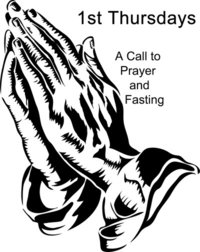
First Thursdays

For most people, the act of fasting is associated with one thing: giving up something for Lent.  Fasting is an altogether under appreciated spiritual discipline.  For the interest of full disclosure, I should add that I am guilty of neglecting fasting.  When I first became a pastor, one of the first series of sermons I did was on John Wesley’s means of grace.

I preached about prayer, Communion, worship, Bible study, conferencing and service. You can still read these sermons here.  As I put together my first sermon series, I left out fasting.  “That’s too much,” I thought to myself.  “No one wants to hear about fasting, especially not from the new guy.”

Well, I’m not the new guy anymore, so a few weeks ago I preached about fasting.  I have come realize what a disservice I did to people when I left out this important, yet unpopular, spiritual discipline.  I have since realized how incredibly important fasting really is.

In our world of instant gratification, consumer relations, and on-demand service, fasting is like an oasis in the midst of a desert of indulgence.  Fasting is so much more than “giving something up at Lent.”  While giving something up is an important part of fasting, it has much more to do with opening yourself up then giving something up.

Fasting is the intentional act of denying yourself.  It is a chance to cut off an earthly desire – not as some sort of co-sacrifice with Christ, but as a way to block out the noise of the world.  By shutting out the noise of self demanding gratification right now, a person can more easily be open to hearing God’s voice.

Fasting is a forgotten spiritual discipline, but it is one we are slowly rediscovering.  United Methodists across Illinois (south of I-80) are engaged today in prayer and fasting.  The Conference has asked people to use the first Thursday of each month as a day of prayer and fasting.

Fasting is a tough sell for people.  It is unpopular.  And that is why it is so important.  In a culture that is addicted to self, the denial of self might be the most therapeutic and counter-cultural action we can take today.

Today is the first Thursday.  I had a bagel for breakfast.  I will not eat again until about 3 p.m. (I would go later, but I have football practice, and don’t want to go hungry or full).  I am hoping to set aside some time during the day to pray for the church.  I will pray for a Pentecost revival to sweep through my church, all churches in our conference, and through all churches that are preaching the Gospel of Jesus Christ.

I invite you to do the same.  Deny yourself.  Open up to God.  Allow the Holy Spirit to work.  Hold on tight.

Leave a comment

Filed under Christianity

Unpopular: Humility

“Humility is the virtue that distinguished Christianity from worldly wisdom.”  This quote is taken from one of my favorite devotional books, Praying with John Wesley.  It is attributed to Jeremy Taylor, an Anglican bishop that influenced John Wesley. David deSilva, the author of Praying with John Wesley writes, “Desire for advancing one’s status and defending one’s honor in worldly terms is not compatible with the desire to follow Jesus.”

“Advancing one’s status” – that one got to me as I read it again last week.  It was only a week ago that I knelt in front of the Bishop and received a stole, a Bible, and a certificate announcing that I now held a new status in the United Methodist Church.  I have advanced my status, and have the certificate to prove it (it will probably be in a frame and on a wall in my office in about six months or so).

The night after my ordination tornadoes ripped through central Illinois.  They passed about 30 miles north of my home.  They destroyed many homes in Dwight and Streator.  On Wednesday I went to meet a few people from the conference to help out with the cleanup in Streator.  The three of us that met there had all gone through the conference’s disaster response training.

After going through a daylong seminar about disaster response, we were all given special green t-shirts as well as photo badges that announced our status as trained and registered early responders.  The three of us showed up at the Streator Fire Department with wheel barrows, shovels, gloves and special shirts and official badges.  We were promptly put in a van (without all of our equipment we were so proud of), and dropped off at a public park.  We were told, “Pick stuff up and bring it over here.”

We stood there for a second, not sure of what to do.  First of all, the damage left me a little dumbstruck.  We were at a baseball complex.  Two of the backstops were crumpled like aluminum foil.  Several of the light posts were snapped in half.  Brick dugouts were piles of rubble.  A cement shed was toppled.  Another field was relatively untouched.  Shingles, limbs, splintered wood, nails, and glass were scattered everywhere.

The three of us just stood there, not sure what to do.  There were about 50 people at work.  Some were dragging garbage cans full of debris.  Some were working on a pile of bricks.  It was hot and humid, I didn’t know where to begin, so I just wandered around for awhile, picking up random things and holding them in my hands.  I started to get annoyed.

Didn’t anyone notice my green shirt?  Didn’t you see my badge?  I am a trained disaster responder.  I am here to help – to do real work – not to pick up litter at a baseball field.  I’m an ordained Elder, for crying out loud, shouldn’t I have an important job to do.  I am, like Ron Burgundy, kind of a big deal.

Eventually I found an empty can.  I found a field that no one was working on, and I started to pick things up.  I picked up shingles – so many shingles.  I picked up nails and splinters of wood and broken limbs. I looked at the baseball field and realized how important this work really was.

It was a beautiful baseball complex – surely a point of pride for the community.  I realized that if I could clean up this field, it could be a place kids could come and play, and hopefully forget about the destruction.  Maybe in some small way I could help families get back to their normal life.  Maybe I could pick up enough nails and glass and make the field safe for a kid to have fun again.

In the heat of the day, knelt down to pick up a pile of debris.  I thought about those shingles.  They had come off of someone’s roof.  I was literally picking up pieces of someone’s home.  Then I saw something that really didn’t belong.  It was pink.  It was a tiny little toy pony.  In the midst of the debris, there was a little girl’s toy.  I know a little girl that loves her toy ponies. I cried.  I knelt in that field and cried as I held that toy.  I realized that I was sitting in almost the exact posture I had sat just a few days before while being ordained.

In that field I knelt down to pick up the pieces of someone’s home.  I had sweat on my brow and a young girl’s toy in my hands.  A few days earlier I knelt down to be ordained by Bishop Palmer.  I had a stole around my neck and a Bible in my hands.  Somehow it felt pretty much the same.

That’s when I knew what humility was all about.  Following Christ is not about stoles or certificates.  Being a pastor is not about compliments after a great sermon, and it is not even about building bigger churches. Being a disciple of Christ is not about “advancing one’s status.” I learned – or maybe was reminded of – an important lesson: the best way I know to follow Christ, is by getting down on my knees to serve.


2 Comments

Filed under Christianity

No relief for the Reverend

So, now I’m ordained.  Someone asked me on Sunday if I feel any different.  My immediate thought was, “No,” but I paused before I answered and thought about it and said, “Yes, I guess I sort of do feel different.”  He smiled.  I think he appreciated that I took the time to answer him honestly, and he said, “Good.  You deserve to.”

I’m not sure what I was expecting to feel like after ordination.  Some have asked if I feel relieved.  You would think I would feel relief.  After all, the process has taken almost eight years to complete.  I’ve been interviewed and approved by three different groups.  I’ve submitted myself to psychological analysis, turned in hundreds of pages of theological writing, went through CPE, and graduated seminary.  Along the way I have served at three churches, had various mentors, been criticized by anonymous letter, chastised by the mysterious “some people,” and made enough mistakes to  put even Jesus’s limit of forgiveness (70 times 7) to test.

So you would think that I would stand here relieved.  I’m not.

There is no relief.  There is way too much work to do.  If anything, I feel the weight of responsibility now more than ever.  I have been charged by my Bishop before God, my Church, and my family, to do something.  The world is a broken place, and there is so much work to be done.

I went to Peoria on Wednesday.  I was accepted into membership by my brother and sister clergy on Wednesday afternoon.  I was introduced to the conference on Thursday morning.  I was ordained on Friday evening.  I came back to Chenoa  on Saturday and the world had not yet changed.

The oil was still pouring into the ocean.  Wars over greed and power were still being fought.  The divide between the rich and the poor was still growing.  Children were still dying of curable diseases.  Wayward souls were still wandering without knowledge of the love of Jesus Christ.  Young people were still being influenced by the TV telling them they could only find happiness if they looked this way, and bought this product.

The building downtown was still crumbling.  The food pantry across the street was still in need.  The basement of our church was still a wasted space waiting to be turned into something wonderful.  The meetings still had to be scheduled.  The sermon on Sunday still had to be preached.  The dishes still needed to be washed. So no, I don’t feel relieved.

I took vows on Friday night to work for the Kingdom of God.  When I turned on the TV this morning I saw plain as day that it had not yet arrived.  So no, I don’t feel relieved.

I took vows on Friday night to move onward toward Christian perfection.  It didn’t take long for me this morning to realize I hadn’t made it yet. So no, I don’t feel relieved.

Instead, I feel empowered.  I feel ordained by the Holy Spirit to go into the world and do something.  I feel ordained by the Holy Spirit to equip the saints for ministry.  I feel ordained by the Holy Spirit to teach and preach, to break bread with sinners, to heal the sick, to proclaim release to the captives, and to baptize in the name of the Father, Son, and Holy Spirit.  So no, I don’t feel relieved.

I am empowered by God to do something.  And you are too.  Let’s get something done.  And then, and only then, may we find relief.

3 Comments

Filed under Christianity

Memorial Day Liturgy

Call to Worship

One:   Let us begin our time of worship with a moment of remembrance.

All:     We remember fallen soldiers, and the sacrifice they made for the sake of others.

One:   Let us begin our time of worship with a moment of thanksgiving.

All: We thank God for brave men and women that have given their lives so that we may worship without fear.

One: Let us begin our time of worship with a moment of silence; for a moment is the least we can do for those that gave their eternity.

Hymn  “God of All the Nations”

Confession

All:     God of every nation, as we remember those that gave their life for our sake, let us be stirred to action in their memory. We confess that we have not done all that is possible to promote peace and justice in our world.  We have not loved our neighbors, let alone our enemies.  Forgive us for failing to live up to your commandments. Empower us to work for your Kingdom in this world, and welcome us by your grace into your Kingdom in the next.  Amen.

Click here to see a Veteran’s Day Litany, which can be appropriate for Memorial Day as well.

Click here to read another reflection about Memorial Day and our struggle for peace.

Click here to read a reflection after doing a funeral at the Rock Island National Cemetery on Memorial Day weekend

Follow the Fat Pastor on Facebook

Follow on Twitter

22 Comments

Filed under Christianity

Engaging in ministry with the poor

The most important part of this area of focus is the word “with.” Too often, we think of ministry “for” the poor, as if it is our job, as those have means, to do things for those that don’t. As a church, we need to be engaged in ministry with the poor. It is not about giving away money. It is about building relationships with our neighbors.

I have said before that “the Kingdom of God exists where the needs of a community intersect with the resources of a loving congregation.”

For a church to be engaged in bringing about the Kingdom of God, it must:
1. Be loving.
2. Know its resources.
3. Know the needs of the community.

The first two seem easy. The first is about motivation. Does the congregation want to make a difference in the world? Many churches are actually more interested in maintaining a building so that they have a place to be buried and married then they are interested in making disciples of Jesus Christ. Yet once a congregation decides they want to transform the world, they must figure out what they are good at. Every Christian has gifts and passions that can be used to serve others. Every Church is made up of gifted Christians that have something to share.

Some churches have great quilting circles. They can create blankets for babies in need. They can sell quilts to raise money for the food pantry. Some churches have a lot of gardners. They can host a Garden Surplus Day, and share the bounty of their harvest with those in need. What are you good at? What do you love to do? Once you figure that out, then it takes time to figure out No. 3.

The third one takes time. It takes energy. It takes building relationships. It means that people in the congregation must be in the community. Where are the poor in your community? Are they in your church? Are they at Wal Mart, MacDonald’s, the community food pantry, the park, school, the tavern? Ask yourself, where are poor people in your community, and how can we work together to make the community better.

Engaging in ministry with the poor was an important part of Jesus’ mission. It must be a part of our mission as a church as well. If you’re wondering how to start, just ask these questions:

1. Are you loving? Do you want to transform the world, or at least the life of one person?
2. What are you good at? What are your passions?
3. How can you use that to help someone else?

1 Comment

Filed under Christianity

Talking about faith

How do you talk about faith? For many, the idea of talking about their faith looks like one of two scenes:

  • Someone knocks on your door. They are dressed immaculately, carry a Bible, and have pamphlets in tow. They smile big, and never go away.
  • Two people sitting down with open Bibles. One is going through a scripted witness story and a list of selected Bible verses, all with the goal of getting the other to pray the “Sinners Prayer.”

Talking about faith does not have to look like that. Talking about faith is most effective when it is done naturally. It should be arise from authentic relationship and sincere care. Evangelism is not about meeting quotas, filling churches, or meeting budgets. 

It is about sharing with someone the good news of Christ in your life. You don’t have to be pushy to talk about your faith, but as a Christian, it is imperative that you do it. The most effective way the Good News can be spread is by regular people talk to others.  If you’re not talking about your faith with others, then I’m not sure you have it.  Jesus told us very clearly to go into the world and make disciples, and it is clear that not enough of us are doing that.

 Part of the problem is those first two images I described.  In both, the problem is that they are too goal-oriented.  They borrow from hard sales techniques and come off as pushy and manipulative.  No one likes a door-to-door salesman.  No one likes getting unsolicited phone calls, and no one likes being steered into submission by a slick presentation and well-crafted script.

Yet both of those techniques have some merit.  It is important to be willing to step out from time to time and take a risk.  Someone going door-to-door has submitted themselves to a grueling day of rejection.  Yet they do so in the name of Christ and are strengthened.  We can learn a lesson from that.  Talking about faith does not always bear obvious and immediate fruit.  The only way you can be in relationship with someone is if you risk being rejected.

It is also important to know your story.  Every Christian should be able to articulate why they believe what they believe.  You should be able to have a coherent answer for the question, “Why are you are you a Christian?”  Again, if you can’t answer that question, then I’m not sure you are.

Christians should also know that the understanding of salvation lies in Scripture.  It is not about picking out a few passages to lead you on some road to heaven.  It is about understanding the narrative of redemption, forgiveness, healing, community, and service.  The Bible gives us a foundation on which to stand, and a narrative in which to live, not a strict and narrow path to follow.

So take the best of these two approaches: boldness and preparedness, and apply it to more authentic situations:

You are talking to a co-worker, and they express sorrow over a death, or tell you that they are struggling with a spouse, sickness, friend, etc.  You hear their story, and in the midst of a relationship of trust and friendship you add, “I’ll pray for you.”  Suddenly you have introduced God into the conversation. The conversation might end there, but it is unlikely that the person will be offended or feel manipulated.  The conversation might also take off from there, and the Holy Spirit may lead it in new, miraculous, life-giving, and life-transforming directions.

Or how about this, someone at work asks you what you did this weekend, and you say, “I went to church and the pastor gave a really interesting sermon,” or “I went and helped at a free car wash to help end malaria.”  Those things might spark a longer conversation about mission, worship, and service.

It doesn’t take a Bible, a script and a pamphlet.  It takes an open heart, an open mind, and an invitation to an open door. 

3 Comments

Filed under Christianity

Can a car wash change the world?

Can a car wash change the world?

Can the hungry be fed?

Can  the sick find healing?

Can a sinner be redeemed?

Can swords be beaten into plows?

Can a heart be transformed?

Can the dead live again?

Can a car wash change the world?

I suppose it is all a matter of perspective.  If we offer a free car wash at church on Saturday, will the world be a different place?  If someone’s day is brightened by a free act of love, will their perspective be changed?  If someone receives a flyer about World Malaria Day can awareness be achieved?

On Saturday, April 24 from noon until 3 p.m. volunteers will gather at Chenoa United Methodist Church to wash cars.  We will not accept money.  We will also extend an invitation.  It is an invitation to be in relationship  for a few moments.  It is an invitation to be a loving community.  It is an invitation to pray, worship, and learn about a movement that can change the world.

Just two generations ago Malaria was a serious health concern in the United States.  A comprehensive public health effort from 1947-1951 virtually eradicated malaria in this country.

Sixty years later Malaria continues to kill one million people a year.  None of those deaths occurred in the United States, Canada or Europe.  90% of those deaths occur in sub-Saharan Africa.  Most of these are children.

A lot of religious folk want to talk about sin.  They like to make their list of sins, often that others commit.  They may pay lip service to the fact that we are all “sinners,” but then act as if it is all ‘those people’ that sin.  If you want to start talking about sin, let’s start with the fact that while we sit and spend an hour in worship, or reading the Bible, or watching TV, or eating dinner – every hour of the day – 120 children in Africa die of a disease that is preventable and curable.

The people of the United Methodist Church have said, “No more.”  Imagine No Malaria is a bold initiative to raise $75 million (that’s less than $7 per member of the United Methodist Church) to eradicate malaria in Africa by the year 2015.  Through education, medicine, prevention, this is an achievable goal.  According to Imagine No Malaria’s website, increased net coverage and access to medicine has cut the mortality rates in Rwanda 66% in two years.

So, can a car wash change the world?  Could one relationship be built that could lead someone to pray?  Could one person with a flyer in their hand make a donation that they would not have otherwise made?

$20 can buy a mosquito net for a family.   That net could save the lives of parents and children.  It can allow a parent to work and make a living.  It can help a child go to school.  It can help a family live in health.

“To the world, you might be one person; but to one person, you might be the world” (Heather Cortez).

4 Comments

Filed under Christianity

The Pastor on the prayer list

Every week we have a list of people on our prayer list.  Because of privacy laws, we don’t get real specific.  There is a category called “Those in need of healing, comfort, or guidance”  It is usually about 15 people.  It fluctuates a little as people are asked to be put on, and are taken off.  On Sunday there will be a person on the list that has never appeared there before: me.

I’m not sure why this is such a big deal to me.  It really shouldn’t be.  Yet I thought about putting myself on the list last week and didn’t.  I’ve been having headaches for the last three weeks.  I’ve got medicine for them now, and it seems to work.  When the medicine wears off though, it can be miserable.  Last week I had an MRI just to rule out the worst-case scenario.  Today I found out that my brain image is normal (which, I assume, is a relative term).

In between the scan and the results was a Sunday in which I was not on the prayer list, and I cannot help but wonder if I failed my congregation in not including myself on the list.  I talk a good game about being a community of faith.  Whenever we share prayer concerns and joys, I talk about how great it is that we can come together and lift up each other in prayer.  Yet when it was my turn to be lifted up, I resisted.

I think I resisted because I was mixing concepts of spiritual and secular leadership.  As the primary leader of our congregation, I lost sight of an important aspect of spiritual leadership – the ability to be vulnerable.  Culture tells us that leaders need to be strong and resilient.  Leaders are supposed to be Superman, invulnerable to the frailties of the rest of us.  I spend so much of my energy rejecting that cultural myth of masculinity, leadership, strength and power; and yet when it came to me being in a time of need, I fell right back into it.

I remember though, that being a leader is not about being invulnerable.  Acts 6 tells us that being a spiritual leader is about being “of good standing, full of the spirit and of wisdom.”  In this case, it was wise to ask for prayers.  My head is killing me sometimes, and I desperately want to know why.  I am in need of prayer.  Besides that, I am risking my body two times a week on a football field like an idiot.  I am in need of prayer.

The more I think about it, the more I realize I need to be a fixture on the prayer list.  I put myself on the list today, and I’m having trouble imagining a time that I will think to myself, “Well, I’m good – I don’t need prayer anymore.”

So the pastor is on the prayer list.  I am in need of your prayers too, and that doesn’t make me any less of a leader.  In fact it makes me a better one.

3 Comments

Filed under Christianity, Personal Reflection