Tag Archives: Christmas

The Grandmothers: Bathsheba

Part four in this four part series on the women in Jesus’ genealogy 

Bathsheba was a survivor. Her story is told in two distinct and independent passages. In the first, which we share today, she is a voiceless victim of King David. The second comes in the first two chapters of 1 Kings, when David is near death. In this passage, she is a clever strategist who ensures her son Solomon becomes David’s heir.

The difference in Bathsheba in these two passages is striking, which has led commentators for centuries to describe her in one-dimensional either/or terms. Either she is a plotting seductress or she is a naïve patsy.

As Baylor University scholar Brent Nesler wrote, “If Bathsheba is interpreted as intelligent and resourceful in 1 Kings 1–2, she is thereby assumed to be slyly complicit with the king in 2 Sam 11. If Bathsheba is interpreted as naïve in 2 Sam 11, she is assumed to be oblivious to the machinations of men in 1 Kings 1–2” (Journal of Biblical Literature, 142, no. 1, p. 91-109).

In the story we shared today from 2 Samuel, Bathsheba falls victim to King David. The first sentence of the passage tells us all we need to know about David. “In the spring, when Kings go off to war, King David sent… his servants.” Kings are supposed to lead the people to war, instead he sent others off. His power has already corrupted him. When he sends for her, she has no agency to say no. Some have argued that the phrase “When she came to him,” implies her consent, and paint her bathing seductively to entice him.

This is utter nonsense. A little later in the story, David calls for Uriah, Bathsheba’s husband. The Scripture uses the same phrase as before: “When Uriah came to him.” This doesn’t imply Uriah’s consent, it reflects the fact that when a King asks someone to come to him, they come. Or die. Another important fact of the story is that Bathsheba’s actions are never condemned. David is the one that faces the punishment of God. It is David that the prophet Nathan calls out. Bathsheba, in the first story, is a voiceless victim.

Yet something changes in her. The next time we find her, the nation is on the verge of civil war. David’s different sons are vying for the crown. In fact, another has declared himself King. David, old, and mired in inaction, is about to let his kingdom crumble into chaos. Instead Bathsheba emerges with Nathan. The two make sure that David names Bathsheba’s son, Solomon, as the heir.

The stability of the nation is saved. Bathsheba is saved. Solomon becomes king and goes on to build the Temple (with his own set of pitfalls and failures).

Bathsheba is neither a foul temptress or a voiceless patsy. Instead, I propose something more complex happened with Bathsheba. When reading her story through the lens of trauma recovery, something wonderful is revealed: She healed.

She is a victim of abuse who survived, healed, found her strength, and asserts her control and self-determination. Bathsheba, the last grandmother mentioned (but strangely not named) in Matthew 1, is a survivor. She falls prey to powerful men, but rises up and finds her strength.

Bathsheba, when understood properly, is a model for so many women who have been traumatized. We don’t get to hear enough of her story, but she is remembered by Matthew. She is an important part of the line that brought us not only the Temple, but Jesus himself.

These are Jesus’ remarkable grandmothers: Tamar the persistent widow, Rahab the Canaanite strategist, Ruth the loyal and courageous friend, and Bathsheba the one who rose up. Their stories must be told and retold. All of them Gentiles, reflect that Jesus came from the world to save the world. He came from strength to reveal God’s strength. It is a strength forged in courage, loyalty, faithfulness, and love; not violence, coercion, or fear.

Jesus was born on Christmas as the Word of God made flesh. He was born to a woman and a man who adopted him as his own. He was born as a part of a long line of survivors. He was born into a long story of God and God’s people who were both flawed and righteous. He was born to save the world though love.

1 Comment

Filed under Christianity, Sermons

The Grandmothers: Ruth

Part three in this four part series on the women in Jesus’ genealogy

According to some ratings statistics, the Hallmark Channel has been the top entertainment network on basic cable in the fourth quarter of the year for several years. They are not the top network the other three quarters of the year. The difference? Hallmark knows Christmas.

The Hallmark Channel website claims that they have a new original movie every Friday, Saturday, and Sunday night starting on October 20. That’s 31 new original movies. Well, original might be a stretch. Everyone knows that these movies are all basically the same story. And we’re all okay with it.

The fact that they are full of cliché, trite story lines, predictable plot points, and catalog-model attractive actors, is why we watch. We know what to expect. Like a big platter of Christmas fudge and hot chocolate, there’s not much sustenance, but it feels good to consume.

The Book of Ruth could be read critically. We could question the agency of Ruth. We could wonder about Naomi’s motivations. We could ask what “uncovered his feet” means. We could ask Boaz why he apparently allowed his men to assault other women in his fields. We could lament that the child born to Ruth is called “Naomi’s.” We can bring up issues of trafficking, abuse, patriarchy, and exploitation. These are all worthy questions of the text, and I’m thankful for scholars like Wilda C. Gafney who challenge these kinds of texts—but right now, as I ponder the Grandmothers, I’d rather see the story of Ruth as a Hallmark Christmas Movie.

Let’s plug in the characters. A hard-working woman (Ruth)who has experienced grief and a lot of bad luck. She has a dear friend (Naomi) who is older and wiser, but their bond is secure. New in town, the woman gets a job for a man of integrity (Boaz). He makes sure she is safe and shows he cares about her with little gifts and benefits. Eventually, the older friend arranges a romantic setting for Ruth and Boaz to take the next step in their relationship. They fall for each other, but they have to conquer one more obstacle (the unnamed redeemer). In the end, Boaz and Ruth marry, have a child, and Naomi joins their household. They live happily ever after as the snow falls in town square and the Christmas lights twinkle.

This could honestly be the next Hallmark movie, but there’s one more character who isn’t named in the story. He casts a pall over the entire story, revealed not by any character, but by how Ruth is described.

Over and over she is called Ruth the Moabite. The reader cannot forget where Ruth came from. Like all the women in this Advent sermon series, she is called righteous. Her integrity, friendship, courage, and loyalty leads to the joyful climax of the story—King David is her great-grandson. The righteousness of the Moabite wife leads directly to the birth of King David.

And this stands in direct tension with the other unnamed character—Ezra. The work of Ezra-Nehemiah was probably written at about the same time as Ruth. Though the story of Ruth takes place far before Ezra, they stand as contemporary voices from post-exilic Judah. As the exile ends and the people return to Judah from Babylon, they have a problem. How to rebuild? How do they put life back together. Some have been there in Judah the entire time.

Ezra-Nehemiah poses the twin projects of rebuilding the city wall and the Temple. They are also adamant that the only way to restore the people to their former greatness is to close ranks, stick to their own, and be pure. Among these purity laws is the ban of marrying outside of Israel. Moabites are among the groups specifically named to avoid.

Ezra-Nehemiah and Ruth pose competing understandings of how to move forwards as a people. Ezra-Nehemiah reminds the people of the Law, the rules they must follow, the duty they have to worship, and to protect themselves. Ruth tells a story of love, friendship, and embracing “the other.”

Ruth is more than an a Hallmark Movie. The story is a reminder that when people are in relationship, walls are broken down. Divisions that we put up to protect ourselves crumble. Relating to outsiders is a more fruitful way to be a people of God. “The other” will always be among us. Ezra-Nehemiah thought the answer was to avoid and isolate. Ruth comes back saying love and embrace.

When the writer of the Gospel of Matthew decided to tell the story of the savior of the world, he reminded us of the women that made it possible. He reminded us of Ruth the Moabite. He reminded us of a Hallmark-worthy story of friendship, courage, loyalty, and love. He reminded us that the path to the Kingdom runs through a love story. It seems appropriate that Jesus, the one who told his disciples to “make disciples of all nations,” had a Moabite Grandmother.

Leave a comment

Filed under Christianity, Sermons

The Grandmothers: Rahab

Part two of four in this Advent series on the women of Jesus’ genealogy.

“Rahab the prostitute” is named twice in the New Testament as a model of faith in action. Both James 2:25 and Hebrews 11:31 praise her and cite her as an example of someone who should be honored. She is named in Matthew 1:5 as one of the mothers in Jesus’ genealogy.

Rahab’s inn seemed to serve as a part of the wall that surrounded Jericho (this was a common way to build ancient cities, with the “wall” being a combination of large buildings and walls forming the perimeter of the city). She received Israelite spies who were sent by Joshua to learn about the city’s defenses. This was the first stage of the Israelite’s occupation of the “Promised Land”

Rahab’s actions are incredible in this brief story. It can be argued that she manipulates three parties, all of whom are much more powerful than her. First, she manipulates the Jericho guard. When they confront her, she sends them on a wild goose chase to find the Israeli spies. Second, she manipulates the spies themselves, keeping them relatively safe but still in a precarious spot when she negotiates for the lives of her and her family. Last, she manipulates God’s plan.

The Exodus tradition is clear about how the Israelites should occupy the land. “I will hand over to you the inhabitants of the land, and you shall drive them out before you. You shall make no covenant with them and their gods.” (Exodus 23:32). Yet Rahab’s story continues in Joshua 6:25 “Joshua let Rahab live, her family, and everyone related to her. So her family still lives among Israel today.”

In other words, Joshua made an agreement with a Canaanite, in direct opposition to God’s decree in Exodus, and this agreement helped lead the Israelites to victory. From the very first battle in the occupation, there were Canaanites who were spared. The agreement between Rahab’s family and the Israelites allowed them both to prosper.

This reveals a deeper tension that is found throughout the Hebrew Bible. There are elements of Scripture that suggest that the Israelites must be pure. They must take total control of the Land and completely destroy all of their enemies. There are truly disturbing calls for genocide found in the stories of occupation. These flow from the promises made to Abraham that are eternal. The covenant of the Land is described as unwavering and pure. The Land belongs to Israel. Period.

But Deuteronomy provides the giant “If.” The ‘if’ is found many places, but is pronounced In the final speech of Deuteronomy. “Now if you really obey the Lord your God’s voice, by carefully keeping his commandments… then the Lord your God will set you high above all nations” (Deut. 28:1). “But if you don’t obey the Lord your God’s voice by carefully doing all his commandments and his regulations… all these curses will com upon you” (Deut. 28:15).

The promises made to Abraham were made for a purpose. Five times in Genesis it is repeated that Abraham is blessed for a reason: to be a blessing  to all (Gen 12:3, 18:18, 22:18, 26:4, 28:14). Deuteronomy backs up this claim, if Abraham ceases to be a blessing to all, then the promises made will turn to curses.

This is an element of the Biblical story that many ignore. As people of God, our unwavering support should be on the side of justice and peace. Drawing direct lines from the Biblical story to modern national politics and wars is a always a fraught endeavor. Within the Bible is a strong tension between isolation from and care for “the other.”

There should be a tension in all of our convictions about what is happening right now in Gaza. Multiple things can be true. Israeli people should feel safe. We grieve the 1,200 deaths and reprehensible violence that occurred on October 7. Palestinian people and children should not be collateral damage, even in the pursuit of terrorists and militants. We grieve the 18,000 Palestinian deaths and the rising humanitarian crisis in Gaza. Hostages should be released. Aid should be given. A path to a just cease-fire must be found.

Antisemitic violence against Jewish people is evil and the rise of it is disturbing. Holocaust-denial is on the rise and needs to end. Islamophobic violence against Muslims is evil and the rise of it is disturbing. The rhetoric and actions of Hamas is deplorable and cannot be justified. The apartheid policies of Israel in Gaza should be challenged and criticized. The death of innocent Israeli and Palestinian people should end. The self-determination of Israeli and Palestinian people should be protected. These should not be seen as political, partisan, or even controversial statements.

I do not have the expertise to untangle the problems in Israel/Palestine, but our Biblical story doesn’t support sweeping generalizations or unwavering support for anything but peace and justice. Rahab the Canaanite saved the Israelites in a city in what is now known as the West Bank and her family lived with them in peace.  There is an Advent hope that a Jewish boy born in a West Bank town called Bethlehem could be the Prince of Peace.

A Pulpit Fiction interview with Walter Brueggemann

A thoughtful piece about avoiding antisemitism by ReformJudaism.org

Jews for Peace is a progressive Jewish voice for peace

Opinion piece from The Forward, an independent Jewish news source that both calls out both Hamas for the terrorism it has inflicted and the government of Israel for mistakes it has made. An excerpt: “Tunnel warfare is dirty, complicated, costly and requires lengthy efforts and campaigns, not the short and swift operations upon which Israel’s military doctrine is built. Rather than weakening Hamas, which is underground, the current Israeli military operation in the strip is killing supporters and opponents of the group alike, inflaming the region, exacerbating anti-Israel sentiments worldwide, silencing political opposition to Hamas inside Gaza, complicating efforts at normalizing relations with Arab countries and achieving precisely what the group wanted in the first place: to reinvigorate the Palestinian cause and force Israel to act in a manner that in essence proves Hamas’ claims.”

Leave a comment

Filed under Sermons

The Grandmothers: Tamar

Part one of four in this Advent series on the women of Jesus’ genealogy.

This Advent I will take four weeks to write about the grandmothers of Jesus. These are the women who were named in the genealogy of Jesus in the first chapter of Matthew. These four women were all either explicitly Gentile or connected intimately connected to Gentiles. Tamar’s father was from a Canaanite city. Rahab was a Canaanite living in Jericho. Ruth was called “Ruth the Moabite,” and Bathsheba was married to “Uriah the Hittite.”

They also all had sordid scandal connected to them. They were all victims of a patriarchal system that valued them more for their womb or sexuality than for their own agency, but they all survived. They all refused to be subjugated, and all four were called “righteous.” History, commentators, and “the religious,” have tried to defile their name. They have been called sinners, adulterers, and harlots, Scripture calls them righteous, and Matthew named them up for a reason.

We will remember the grandmothers of Jesus. We will remember their persistence, their cunning, their loyalty, and their courage. As we prepare for the coming of Jesus, we will remember those who prepared the way for him to come for us.

Tamar, Genesis 38:1-30

The Pharisees asked Jesus when God’s Kingdom would come. He told them a few parables, including one about a poor widow who was denied justice, but persisted in pestering the judge until he granted her justice. Perhaps Jesus was thinking of his Grandmother Tamar while he told the parable of the persistent widow (Luke 18:1-8).

He must have known her story, and that she was the mother of Perez, whose line continued to King David and of course, to Joseph (Matthew 1). Tamar’s story is not one that is told much these days. It comes in the middle of the more well-known story of Joseph and brothers. Wedged in between Judah and his brothers selling Joseph to traders on their way to Egypt, and Joseph gaining favor with Potiphar before getting entrapped by his wife, we get the story of Judah and Tamar.

It is a story with the cringe-factor turned up to 10. It is disturbing on many levels. For one, we are reminded that women’s agency was extremely limited. We are dealing with a patriarchal society where women were extremely vulnerable. Yet through the difficult circumstances, Tamar’s cunning and persistence brings her the justice she deserves.

Judah’s oldest son marries Tamar, but he dies. To fulfill the levirate law (Deuteronomy 25:5-10) she must marry Judah’s second son. This is so that Tamar may live within the clan and get the protection that is due her. It is also to ensure that she may bear a son to “carry on” her husbands line. Onan, her second husband, realizes that giving his brother an heir would mean that his inheritance would be reduced to a third of Judah’s estate instead of half. So he “spills his seed,” (thus giving rise to the “Sin of Onan”) so that his inheritance will not be further divided. As punishment of this evil deed, God strikes Onan down.

Now only one son remains, Shelah, but he is too young to marry. Judah then sends Tamar back to her home to wait until Shelah is of age. After some years pass, Shelah is old enough, and Tamar has not been recalled by Judah (he thinks she is cursed), so she plots her course. When Judah comes to her home town, she puts her plan into action.

She poses as a prostitute at the gate. He takes the bait and sleeps with her. As a deposit for payment she asks for his seal, cord, and staff (all of which would be unique to Judah. This is the ancient equivalent of leaving your ID for a bar tab).

Eventually Judah hears through the grapevine that his daughter-in-law Tamar is a prostitute, and she is pregnant. He cannot bear this shame upon his name, and decides to have her killed. Then she tells him, “I’m pregnant by the man who owns these things.” When he realizes what has happened, he declares “She is more righteous than I.”

It is a crazy story, to say the least. And lest you think, “well, it’s really old, it was a different time,” you should know, it was shocking then, too. And that is the point. Tamar is never judged for her action. In fact, she is deemed righteous. She was denied the justice that she deserved—that Torah demanded. In a patriarchal system that kept women in a perpetually vulnerable state, it was Judah’s duty to protect her. When he failed, she did what she had to do.

Scholars and commentators have not been kind to Tamar. She has been called a sinner, and her inclusion in Jesus’ genealogy a sign that he could redeem even a sinner such as her. Yet neither God nor anyone else in Scripture calls her a sinner. Perhaps our puritanical sexual ethic must be re-thought. Tamar – despite posing as a prostitute and having sex with her father-in-law, is called righteous. She is the original persistent widow who demands—and receives—justice.

That the Torah includes this interlude in the Joseph story suggests that she saved not only herself but helped the development of Judah. Here, he is able to see Tamar in a new light and grow from his mistake. This is a story of Judah’s growth and development. Remember he is the brother who sold Joseph into slavery, but later he is the one who puts his life on the line for Benjamin.

That Matthew includes Tamar in the genealogy of Jesus suggests that she is a part of Jesus’ life, ministry, and legacy. Jesus, the one who criticized the religious for “devouring widow’s homes,” who raised the widow’s son, and told a story of a persistent widow, probably remembered the story of Grandma Tamar.

We should remember her, too. Remember her predicament—the product of a patriarchal system. We should remember her persistence and her triumph. We should remember our grandmothers who overcame patriarchal systems that still exist. Tamar’s cunning and persistence is an important step in the line of Christ. We can honor her by remembering the women who continue to preach, pastor, prophecy, advocate, and work for justice.

Leave a comment

Filed under Christianity, Sermons

The genealogy of Jesus

Matthew 1:1-17

Searching one’s genealogy has always been a popular hobby, but technology has helped create an explosion in the last decade or so. First, the ability to network on the internet made data collection more powerful as distant relatives could link up with each other without having any previous knowledge of the other’s existence. Finding one distant cousin could suddenly open enormous branches of your family tree that you didn’t even know about.

Then Commercial DNA testing kits offered people an even deeper and more precise view of their history. Marketing for these kinds of products include slogans like “Give yourself the gift of you.” Not only do these kits provide DNA evidence of your ethnic makeup, but they add you to vast databases that can link you to known genealogical studies.

The study of one’s genealogy can be enlightening. There are important medical and biological things one can find out about themselves. There are other deeper and more meaningful stories that genealogy can link you to. The popularity of the PBS show “Finding Your Roots” has revealed how powerful an in-depth story of genealogy can be.

Watching “Finding Your Roots” however, has revealed to me what a privilege it even is to have a genealogy. While everyone has people from whom they came, not everyone has the privilege of being able to study that list of ancestors. Genealogy is able to be studied by those who have the privilege of having ancestors who left a paper trail. Those held in bondage as property did not always leave a trail. Many people have had their genealogy erased by the institution of slavery. What’s more, there have been many people who have had their existence erased in the telling of family stories.

LGBTQIA+ people have often been erased from family histories. Either the person has been wiped from the family memory entirely or their “queerness” has been removed. They have become the “eccentric uncle” or the “confirmed bachelor.” Sometimes, if they weren’t willing to erase that essential part of who they were themselves, they have simply been scrubbed from the history. They were left out of the stories, cropped from the photo albums, and left uninvited to the reunions. Generations of queer people have been erased from families, exiled to be virtual orphans because their family of origin perceived their existence to be too shameful to bear.

The privilege of a family genealogy and history has been stolen from countless people because they are LGBTQIA+. The history of millions of people runs into a dead end when they get back to the auction blocks. Knowing your genealogy is a privilege that many take for granted.

Today we read Matthew’s version of Jesus’ genealogy. Often one’s first impression of this genealogy is that it is dry, boring, and easy to be skipped. It feels like a list of hard-to-pronounce names that no one remembers. While Matthew frames Jesus’ genealogy in an interesting way (14 generations from Abraham to David, etc.) it still feels like a pretty easy part of the story to skip.

Until you notice the mothers. When you consider the mothers of Jesus’ genealogy, a more interesting (one might even say sordid) story is told. The fact that these four women are lifted-up is a remarkable thing. Matthew refused to erase Jesus’ family history. In fact, he highlighted some of the more difficult parts. He took the stories that could have been stories of shame and pointed them out. He could have skipped these mothers of Jesus. It would have been easy to skip over the sordid story of Tamar and Judah. He could have left out the prostitute Rahab. He could have left out Ruth the Moabite who “uncovered the feet” of Boaz. He didn’t have to mention Uriah, who was killed by David so that he could hide his assault of Bathsheba.

These women, all victims of a patriarchal system that devalued them as humans, were all lifted-up as mothers of Christ. They were all victims, but none of them allowed themselves to remain as such. They persisted. They used their agency, their strategic minds, and their grit to achieve survival. All four women have an element of sexual scandal attached to them, and by putting their names in the genealogy of Jesus, Matthew puts those scandals right in Christ’s history too. Matthew shines a light on the stories that some may deem shameful. He makes sure to remind everyone that Jesus’ history is fraught with humanity – messy, sordid, triumphant, and persistent.

As we read the genealogy of Jesus, we can give thanks to the controversial mothers who refuse to be ignored. I hope that we take a moment to lament the stories that have been erased. I pray that we, like Matthew, have the courage to tell the stories of the messy, the triumphant, the sordid, and the persistent. For these are the stories that give us meaning and hope. These are the stories that invite us into Christ’s eternal story of redemption and love for all – even the ones that others want to erase.

Leave a comment

Filed under IGRC for Unity

An advent letter to my congregation

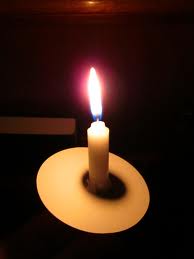
christmas eve candleDear Church,

This is our first Christmas together, and I cannot tell you how excited I am for Christmas Eve.  Every year, there are two moments I most look forward to at Christmas.  One is my daughters coming down the stairs on Christmas morning, pausing for a picture, then slowly making their way to see what magic transpired under the tree.  The other is singing “Silent Night, Holy Night,” as the lights are slowly turned down and the candles are lit in the sanctuary on Christmas Eve night.

I know that Easter is supposed to be the big day. Singing “Christ the Lord is Risen Today” with the throngs and the organ and the lilies and the spring air at Easter is pretty special, but it is Christmas that touches my heart like no other. I know that Christmas is wrought with commercialism, consumerism, and a secularity that some mourn.  Maybe that is why that moment is so special to me.  It is so needed.  It is that moment where nothing matters but joy.  I can block out the noise and the fear and the distractions.  Sure, “Silent Night,” has helped contribute to a falsely idyllic understanding of Christmas, but I’m okay with that.  It is a song that can end war, even if only for a moment.

I get a pretty special view for Christmas Eve.  I get to stand up front and look out at the faces of those gathered.  I can close my eyes and see it through the years.  I can picture each of the congregations I’ve had the awesome honor to serve.  I can see the faces of those who have supported me, shaped me, challenged me, and molded me into the man and pastor that I am today.  I can see the faces of young and old, woman and man, single and married, healthy and sick.

I can see the faces of people lit by the glow of a small candle as we sing those holy words, and I’m very much looking forward to singing it with you.  We haven’t been together very long, but things are going well.  No church is perfect, but I believe that I am right where I need to be.  Already we’ve laughed and cried together.  Already we’ve dreamed of a Kingdom future, and mourned the loss of pillars.  Already we’ve eaten too much, shared some of our scars, worried a little, and stumbled through some movements.   Already I can see the excitement and the energy.  I can see good things happening.  I can see people being fed without asking first if they deserve it.  I can see invitation that is born from joy, not fear.  I can see welcome.  I can see grace, and a desire to share lives,  not just small talk and pleasantries.  I can see the Body of Christ, redeemed by Christ’s love, reaching out into the world.

Incarnation.  That is what Christmas is all about.  It is the coming of light in a world of darkness.  It is God breaking through all of the barriers.  It is strength and power and might redefined in the form of a newborn baby.  Christmas is peace, love, joy, and hope.  And just as that candle spreads from the table in the sanctuary to those that are singing in the pews, Christmas is the light of Christ spreading into the hearts of the faithful, and being carried out into the world.  It is not about “happily ever after.”  It is about the presence of God in the midst of real life.

It is a reminder that right here in the world is a promise that God is with us.  Right here with the cancer is hope. Right here with the struggle and upheaval is peace.  Right here in the gathering of Christ’s people is joy.  Right here with our fellow humans, hurting, sinning, and falling, is love.

So I’m waiting for Christmas Eve, and not altogether patiently.  I’m waiting to wish you a Merry Christmas, and to see your face lit by the glow of a candle.  It’s my favorite time of year, and I’m so glad we can do this together.

In Christ,

Your pastor

Follow The Fat Pastor on Facebook

Follow @FatPastor on Twitter

Two Rivers United Methodist Church

1 Comment

Filed under Christianity, Personal Reflection

To those who only come on Christmas Eve, “Welcome. I’m so glad you’re here.”

WelcomeIs this the only day of the year you come to church?  Please don’t apologize. You are welcome, and I’m thrilled you came.  If you’re only going to come to worship once a year, then this is a good day to pick.  It is a pretty awesome day.  The Christmas tree is beautiful.  The songs are familiar.  The story is simple, and the message is powerful.  Singing Silent Night at the end of the service with the candles lit give me chills every time.  I hope it is moving for you too.

Maybe you’re here because your Grandma insists.  Great.  We love your Grandma too.  I saw her last month in the hospital, and we prayed for you.

Maybe you’re here because you’re looking for your “yearly check up.”  Great.  I’m glad you still feel connected to God through worship.  It might not be a part of your weekly routine, but I’m so glad that you came here to try to encounter something Holy, even if it is only once a year.

Maybe you’re busy every weekend.  You intend to come to worship, but it’s just too hard.  Great. I know that your time is precious. I’m so glad that you were able to carve out some time now. Christmas is an especially busy season.  I’m so glad you were able to be here and worship. Life is hard. I believe that being a part of a worshiping community can help you tremendously.  I hope you are blessed by coming.

Maybe you’re back from college, and this service brings back memories of growing up as you live through a transitional time of your life. Great. We’re proud of you, and what you’re becoming. We hope you remember who and whose you are while away at school. Leave your school address, and we’ll send you a care package.

Maybe you’re trying church with your kids. Great. We love kids, and not just the idea of kids. We love real kids.  Kids that make noise. Kids that get up and climb the steps. Kids that need something to do. Kids that want to participate in worship, and kids that just want to color. Kids that are looking for a smiling face over the pew. Kids that dance in the aisles when the music is just too good to sit still. We know that raising kids is one of the hardest things we’ll ever try to do, so we’ll be in this together.

Maybe this is the first time you could come back since the loss of a loved one.  I’m so sorry for your loss, but I’m so glad you’re here. I hope you consider this a step toward healing. I know you miss her. I know that Christmas can sharpen the pain. There is someone here that misses someone too. I hope you sit together, and find comfort and joy in the midst of mourning.

Maybe this Christmas you had a strange feeling that maybe Christmas doesn’t come from a store.  Maybe Christmas, perhaps, means a little bit more. Great. I hope you continue to search, and by the way, I love Dr. Seuss too. I hope you encounter something real with us at worship. I pray that you feel connected to God through the songs, the prayers, the Scriptures, and the message proclaimed. I hope that the power of the eternal Word made flesh resonates with you, and opens up a new way of understanding the world.

Maybe you’re searching for a church home. Great. You should know that this is not a typical worship service, but we hope you can come back. May your search be blessed, wherever it takes you. If you want to come back on Sunday, we’ll be here.  We’d love to have you. I’d love to walk with you as you dig deeper into your faith. I’d love to see you in a Bible study. I’d love to talk with you over coffee about faith, compassion, forgiveness, Jesus, grace, sin, death, and life.  I’d love it if you want to get baptized. I’d love it if you joined us in our mission to transform our community and our world.  But if this night is all you want, I’m okay with that.

Maybe you’re a pilgrim searching for truth. Great. There’s room for your questions. No one here has it all figured out. I believe that doubts, questions, and wondering makes faith stronger in the long run. There’s no need to check your brain, your science, or your logic at the door. Maybe though, there is room for some mystery, and we can go on this journey together.

I celebrate that you are here with us today. Sometimes I hear “church folk” or other pastors talk about “C and E Christians.” You know, people who only show up to church on Christmas and Easter. The term is seldom used with kindness.  Maybe if the people already established in churches stopped talking about C & Eers with such righteous indignation, more of them would come back on December 28.

Follow The Fat Pastor on Facebook

Follow @FatPastor on Twitter

Check out Two Rivers United Methodist Church in Rock Island, Illinois

5 Comments

Filed under Christianity

Interactive Christmas Eve service: The ABCs of Christmas

I found the original ABCs of Christmas on a website called The Young Clergy Women Project.  I loved the idea of the service, and decided to use it this year for one of our Christmas Eve services.  Every year we have a special “Kid-Friendly” Christmas Eve service.  I love this, because it seems like it will be truly interactive.  Each person coming into the service (or every child) will get to choose to be a Wise One, a Shepherd, or an Angel.  Erin Klassen, the author of the original blog post, suggested making little head gear for kids to wear.  I’m not that crafty.  I’m going to print little paper-sized posters for people to take with these pictures on them:

These are images I took from Microsoft Clip Art.

These are images I took from Microsoft Clip Art.

At the beginning of the service, I’ll tell the people to listen to the Christmas ABCs story, and pay close attention.  Every time I say the word “Shepherds,” the Shepherds are supposed to hold up their poster and say “Let’s go see!”  Every time I say the word “Wise Ones,” the Wise Ones hold their poster and say “Look, a star!”  When I say the word “Angel,” the angels say, “Hallelujah!”

A is for ANGEL. The ANGEL Gabriel began the story by telling Mary,

Luke 1:28-33        “Good morning! You’re beautiful with God’s beauty.  Beautiful inside and out! God be with you…. Mary, you have nothing to fear.  God has a surprise for you: You will become pregnant and give birth to a son and call his name Jesus.”

B is for Bethlehem, where our story takes place.  People traveled from far and wide to get to Bethlehem, which was not a very big village.

C is for Census, which means an official counting of all the people.  The reason so many people came to Bethlehem.

D is for Donkey.  A donkey carried the family on their long journey.  Mary and Joseph had to travel 107 miles along the Jordan River to get from Nazareth to Bethlehem.  That’s a pretty long journey.

E is for Exhausted.  That’s how everyone must have felt when they arrived.  It would take about 36 hours of walking to go that far.  That’s three days in a row of doing nothing but walking.

Song: O Little Town of Bethlehem

F is for Family.  Mary and Joseph and their new baby Jesus created a new family, one that would bless the whole world.

Luke 2:6-8       “While they were there, the time came for Mary to give birth. She gave birth to a son, her firstborn.  She wrapped him in a blanket and laid him in a manger, because there was no room for in the hostel.”

G is for the Good News about to be shared with all the earth.  This is what the ANGELS said:

Luke 2:10-14   “There were SHEPHERDS camping in the neighborhood.  They had set night watches over their sheep.  Suddenly, God’s ANGEL stood among them and God’s glory blazed around them.  The SHEPHERDS were terrified.  The ANGEL said, “Don’t be afraid. I’m here to announce a great and joyful event that is meant for everybody, worldwide: A Savior has just been born in David’s town, a Savior who is Messiah and Master.  This is what you’re to look for: a baby wrapped in a blanket lying in a manger.”

            At once the ANGEL was joined by a huge angelic choir singing God’s praises: “Glory to God in the heavenly heights.  Peace to all men and women on earth.”

Song: Hark the Herald Angels Sing

H is for Hope.  Now we light the Advent candle of Hope.  Hope is knowing that good news is coming, even when things look bleak.  Jesus is the source of our hope.

I is for Imagine.  If we close our eyes and imagine the scene, we can see the beauty and wonder of the ANGELS proclaiming good news to all men and women.  We can see the SHEPHERDS, first terrified, but then overcome with joy as they hear the good news.  If we try even harder, we can imagine a world where God’s peace reigns, where there is no war or hunger.  And if we can imagine it, we can do it with God’s help.

J is for Joy.  Now we light the Advent candle of Joy.  Joy is a kind of happiness that comes from God.  It cannot be dampened, and is always shared.  The birth of Jesus gives us joy.

Song: Joy to the World

K is for King.  Though Jesus would be King, he was not the kind of King people were used to.  Most kings are born in palaces, surrounded by servants.  He was born in a stable, surrounded by dirty, smelly SHEPHERDS.  Most kings rule with power and fear.  Jesus rules with mercy and love.

L is for Lost.  When Jesus grew up he told a lot of stories, and three of them were about lost things that were found.  He loved to find lost things, and when you are with Jesus, you will never be lost.  He is the good SHEPHERD, who do anything to find his lost sheep.

L is also for Love.  Now we light the Advent candle of Love, Jesus summarized his ministry by saying “Love God…” and “Love your neighbor as yourself.”

M is for Manger.  A manger is usually used to hold food for animals, but this time it held the baby because he had no crib.

Song: Away in the Manger

N is for Noel.  Noel is another word for Christmas.  It means new birth, and that’s what happened in our story.  That’s what happens every year at Christmas time.  That’s what happens every time we decide to follow Jesus – he is born anew in us.

O is for Offering.  The WISE ONES gave gifts to the baby, and we can offer our gifts every day.  We give our time, our talents, and our treasure to God, and pray that as a Church, we are good stewards of all that is entrusted to us.  So we we share our gifts now.

Offertory – Go Tell it On the Mountain

Doxology

P is for Peace.  Now we light the Advent candle of peace.  Jesus is the Prince of Peace, and is the source of the kind of peace that surpasses all understanding.

Q is for Quiet.  We begin a time of prayer in quiet, allowing God to speak to us, and joyful when the quiet is broken by small voices.

R is for Revealed.  Revealed means “showing us something that was once hidden.” God revealed to us what love looks like by giving us Jesus.  Jesus is love, and reveals to us the way to love one another.

S is for Star.  One special star guided WISE ONES to come to see the baby.  They were mysterious, and they lived far away, but they brought gifts to Jesus because they knew that he would grow up to be a King.

Matthew 2:9-11 Instructed by the king, they set off. Then the star appeared again, the same star they had seen in the eastern skies. It led them on until it hovered over the place of the child. They could hardly contain themselves: They were in the right place! They had arrived at the right time! They entered the house and saw the child in the arms of Mary, his mother. Overcome, they kneeled and worshiped him. Then they opened their luggage and presented gifts: gold, frankincense, myrrh. 

T is for Table.  When Jesus grew up he invited all to his table.  He gave his friends bread and wine, and told them to remember him always.  When we gather at the Lord’s Table today, we call it Communion because we come together.  So at this table, we also remember the next letter:

U is for Unity.  Communion is a time when all people can come together and be one.  Just as many grains come together to form one bread.  We, who are many people, come together to be one body of Christ.

Communion Liturgy

After the Communion liturgy is read, these instructions are given: When you come to Communion, you will be given a piece of bread by the Pastor.  You may take it with you to the railing, where you will  be given a cup of grape juice.  If you are here as a family, then each family will be given one hunk of bread.  You are then invited to kneel at the railing together.  Take the bread, break off a piece, and give it to someone else in your family and say, “This is Christ’s body.”  If you have a little one, tell them “We do this as reminder of how much Jesus loves us.”  The cups will be brought to you at the railing.  You are welcome to pray together as long as you wish.

V is for Vulnerable.  Vulnerable means, “able to be hurt.”  Every baby is very vulnerable, and so are we when we love one another.  God became vulnerable when Jesus was born, and we are called to be vulnerable when we love our brothers and sisters.

W is for Wonder.  Like the WISE ONES, we stand in awe and wonder of the newborn King.

X is for Christ.  X is the Greek letter Chi, the first letter in the word “Christ.”  The X is one of the most ancient symbols of Christianity.  People have been using the letter X to stand for Christ for centuries.  And now we light the Christ candle, symbolizing the coming of light into the world.  Jesus is born.

Y is for You.  You ANGELS.  You WISE ONES.  You SHEPHERDS.  You sons and daughters. You mothers and fathers.  You friends and strangers.  You are all here to worship and celebrate the birth of Jesus.

Z is for Zeal.  Let your zeal for Christ burn brightly.  As these lights are passed out, know that the light of God burns much, much brighter.  Though these lights will die out, the light of God is steadfast, and endures forever.

Glow sticks are distributed by the ushers.  Sometimes these sticks are difficult to crack, so they should be lit before the service and kept in a box.

Song: Silent Night

13 Comments

Filed under Christianity

One piano sounds like a string symphony playing Christmas Classic

Every time I watch the Piano Guys, I find myself doubting.  They cannot possibly be doing this with just one piano.  This is truly remarkable.  I could write more about being inspired to use old tools in creative ways, or the power of team work, or the discipline it must take to perfect this kind of performance.  Instead, I’m just going to take it for what it is – a beautiful piece of music that should be savored.

Follow The Fat Pastor on Facebook

Follow @FatPastor on Twitter

1 Comment

Filed under Christianity, Media

The Virtual Run to Bethlehem

According to google maps, the journey along the Jordan River from Nazareth to the Church of the Nativity in Bethlehem is 166 kilometers, or 103.2 miles.

According to google maps, the journey along the Jordan River from Nazareth to the Church of the Nativity in Bethlehem is 166 kilometers, or 103.2 miles.

This Advent, I am going to run to Bethlehem, but I need your help.  As a way to encourage people to Live Well, I’ve started a new virtual running event.  From November 28 until December 25, I want to run the virtual journey from Nazareth to Bethlehem.  According to Google Maps, this is a 106 mile journey.  For me to run the 106 miles, I would have to average four miles a day.  While not impossible, it is an impractical goal.  So I’m enlisting help.

My Pulpit Fiction co-host and best friend Eric Fistler and I are going to do this together.  We are asking all of the Fat Pastor readers and Pulpit Fiction listeners to do the same.  If we can get a few people to do it with us, the 106 mile journey will be a lot easier.  In fact, I figure if there are ten people running, we might be able to make the return trip too.

If you want to participate in the Run to Bethlehem, just submit your time and distance on this google form.  We’ll compile the information and post our progress as we go along.  We’ll start tracking on Thanksgiving Day, and we’ll go until Christmas (maybe Epiphany)

If you’re on twitter, use the hashtag #AdventRun to post pictures or tag routes if you use something like Map My Run.

Also, don’t forget to use #BeChristInChristmas to share ways that you, your family, or your church is trying to be Christ in the life of your neighbors.

Follow the Fat Pastor on Facebook
Follow @FatPastor on twitter

Submit your run

Go to the Pulpit Fiction Podcast Advent Special

7 Comments

Filed under Fitness