Tag Archives: Tamar

The Grandmothers: Tamar

Part one of four in this Advent series on the women of Jesus’ genealogy.

This Advent I will take four weeks to write about the grandmothers of Jesus. These are the women who were named in the genealogy of Jesus in the first chapter of Matthew. These four women were all either explicitly Gentile or connected intimately connected to Gentiles. Tamar’s father was from a Canaanite city. Rahab was a Canaanite living in Jericho. Ruth was called “Ruth the Moabite,” and Bathsheba was married to “Uriah the Hittite.”

They also all had sordid scandal connected to them. They were all victims of a patriarchal system that valued them more for their womb or sexuality than for their own agency, but they all survived. They all refused to be subjugated, and all four were called “righteous.” History, commentators, and “the religious,” have tried to defile their name. They have been called sinners, adulterers, and harlots, Scripture calls them righteous, and Matthew named them up for a reason.

We will remember the grandmothers of Jesus. We will remember their persistence, their cunning, their loyalty, and their courage. As we prepare for the coming of Jesus, we will remember those who prepared the way for him to come for us.

Tamar, Genesis 38:1-30

The Pharisees asked Jesus when God’s Kingdom would come. He told them a few parables, including one about a poor widow who was denied justice, but persisted in pestering the judge until he granted her justice. Perhaps Jesus was thinking of his Grandmother Tamar while he told the parable of the persistent widow (Luke 18:1-8).

He must have known her story, and that she was the mother of Perez, whose line continued to King David and of course, to Joseph (Matthew 1). Tamar’s story is not one that is told much these days. It comes in the middle of the more well-known story of Joseph and brothers. Wedged in between Judah and his brothers selling Joseph to traders on their way to Egypt, and Joseph gaining favor with Potiphar before getting entrapped by his wife, we get the story of Judah and Tamar.

It is a story with the cringe-factor turned up to 10. It is disturbing on many levels. For one, we are reminded that women’s agency was extremely limited. We are dealing with a patriarchal society where women were extremely vulnerable. Yet through the difficult circumstances, Tamar’s cunning and persistence brings her the justice she deserves.

Judah’s oldest son marries Tamar, but he dies. To fulfill the levirate law (Deuteronomy 25:5-10) she must marry Judah’s second son. This is so that Tamar may live within the clan and get the protection that is due her. It is also to ensure that she may bear a son to “carry on” her husbands line. Onan, her second husband, realizes that giving his brother an heir would mean that his inheritance would be reduced to a third of Judah’s estate instead of half. So he “spills his seed,” (thus giving rise to the “Sin of Onan”) so that his inheritance will not be further divided. As punishment of this evil deed, God strikes Onan down.

Now only one son remains, Shelah, but he is too young to marry. Judah then sends Tamar back to her home to wait until Shelah is of age. After some years pass, Shelah is old enough, and Tamar has not been recalled by Judah (he thinks she is cursed), so she plots her course. When Judah comes to her home town, she puts her plan into action.

She poses as a prostitute at the gate. He takes the bait and sleeps with her. As a deposit for payment she asks for his seal, cord, and staff (all of which would be unique to Judah. This is the ancient equivalent of leaving your ID for a bar tab).

Eventually Judah hears through the grapevine that his daughter-in-law Tamar is a prostitute, and she is pregnant. He cannot bear this shame upon his name, and decides to have her killed. Then she tells him, “I’m pregnant by the man who owns these things.” When he realizes what has happened, he declares “She is more righteous than I.”

It is a crazy story, to say the least. And lest you think, “well, it’s really old, it was a different time,” you should know, it was shocking then, too. And that is the point. Tamar is never judged for her action. In fact, she is deemed righteous. She was denied the justice that she deserved—that Torah demanded. In a patriarchal system that kept women in a perpetually vulnerable state, it was Judah’s duty to protect her. When he failed, she did what she had to do.

Scholars and commentators have not been kind to Tamar. She has been called a sinner, and her inclusion in Jesus’ genealogy a sign that he could redeem even a sinner such as her. Yet neither God nor anyone else in Scripture calls her a sinner. Perhaps our puritanical sexual ethic must be re-thought. Tamar – despite posing as a prostitute and having sex with her father-in-law, is called righteous. She is the original persistent widow who demands—and receives—justice.

That the Torah includes this interlude in the Joseph story suggests that she saved not only herself but helped the development of Judah. Here, he is able to see Tamar in a new light and grow from his mistake. This is a story of Judah’s growth and development. Remember he is the brother who sold Joseph into slavery, but later he is the one who puts his life on the line for Benjamin.

That Matthew includes Tamar in the genealogy of Jesus suggests that she is a part of Jesus’ life, ministry, and legacy. Jesus, the one who criticized the religious for “devouring widow’s homes,” who raised the widow’s son, and told a story of a persistent widow, probably remembered the story of Grandma Tamar.

We should remember her, too. Remember her predicament—the product of a patriarchal system. We should remember her persistence and her triumph. We should remember our grandmothers who overcame patriarchal systems that still exist. Tamar’s cunning and persistence is an important step in the line of Christ. We can honor her by remembering the women who continue to preach, pastor, prophecy, advocate, and work for justice.
Leave a comment

Filed under Christianity, Sermons

Tamar and Simone

This devotion was published first in the IGRC for Unity weekly email. IGRC for Unity is a group of Illinois United Methodists who have rejected the Traditional Plan for the United Methodist Church and are working to create a United Methodist Church that is truly open to all. These devotionals will be taken from a text from the Revised Common Lectionary, and will often have a theme of inclusion and welcome.

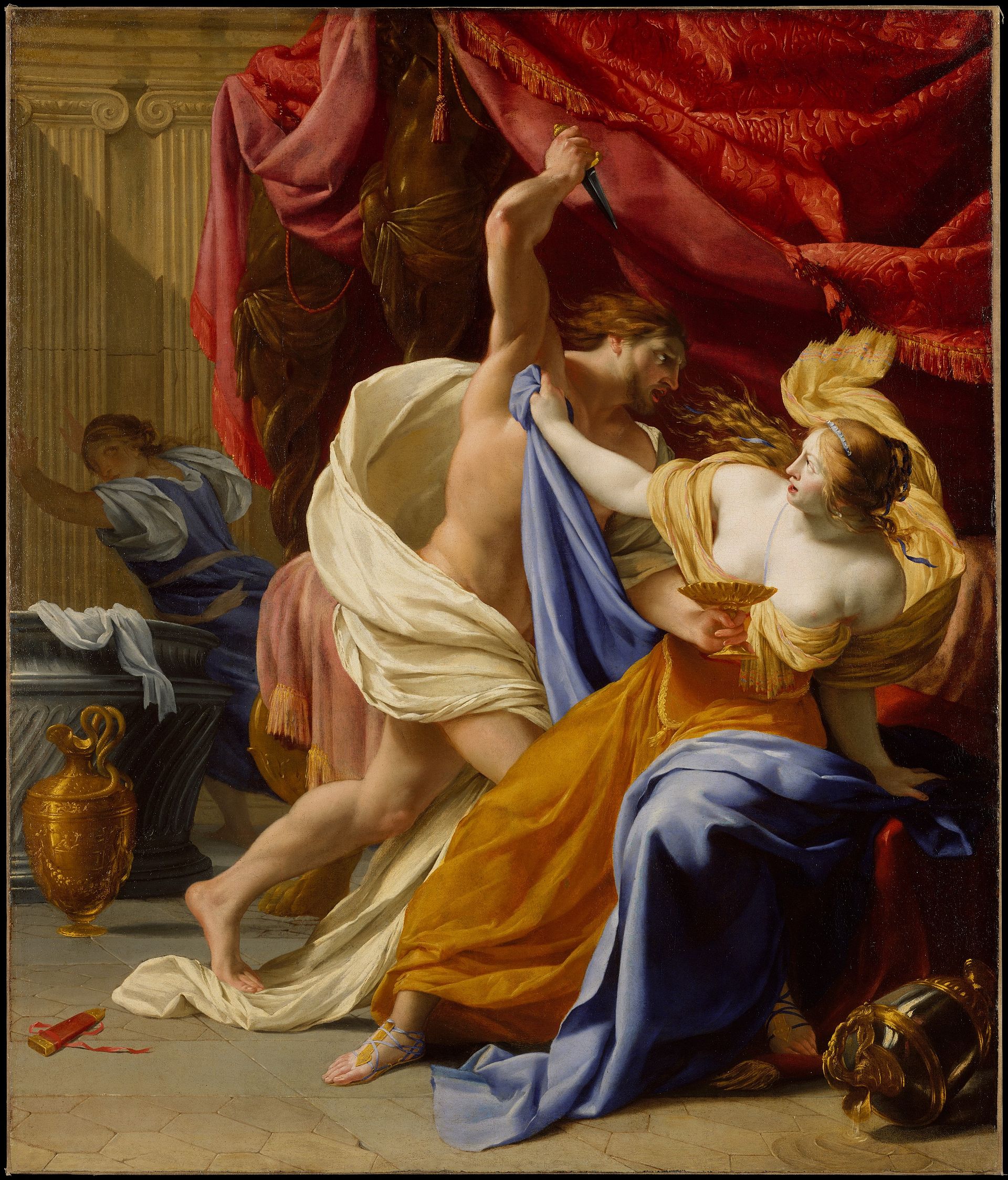
The Rape of Tamar, by Estache Le Sueur, wikimedia.

First Reading of the RCL for August 8, 2021

 2 Samuel 18:5-9, 15, 31-33 The death of Absalom (who started a war with David because David did nothing to punish Absalom’s brother who raped their sister Tamar).

I played team sports my whole life. Baseball, football, and basketball were my great passions as a kid. Even as an adult I’ve played semi-pro football and church league softball. Now as a parent I coach as often as possible – helping out with my daughters’ softball teams. I think this is why my first reaction to Simone Biles withdrawing from the team gymnastics competition was overwhelmingly negative.

In the immediate aftermath of hearing that she withdrew because of mental health considerations, I was frustrated. I was disappointed that she wouldn’t compete. I was mostly angry on behalf of her teammates. “She let them down,” I said to no one in particular. “They are supposed to be a team. They are supposed to pick each other up.”

My righteous indignation was raised on behalf of three women I had never met. “Michael Jordan never quit on his team,” I thought. “Tom Brady played through injury!” Then I saw a meme that reminded me of Kerri Strug, the gymnast who clinched Team USA’s gold in in 1996 landing a fantastic vault despite having an injured leg. At first, I thought Kerri was the true champion, and Simone had shown weakness.

Then I thought some more.

While I do not want to take anything away from Kerri Strug, I want to recognize something that we should have known then. She should not have vaulted on an injured leg. Strug was a part of a system and a culture that treated the women on the team as commodities that could be traded, replaced, and whose only value was reflected in the scores they achieved.

Since 1996, “many fellow gymnasts who endured the rigors of coaches Bela and Marta Karolyi’s ranch believed Strug was conditioned to push through her pain under an abusive environment where girls were afraid to challenge authority.” (Holly Ford, https://www.nbcphiladelphia.com/news/sports/tokyo-summer-olympics/1996-olympic-gymnast-kerri-strug-praises-simone-biles-decision/2900065/). Strug, Dominique Moceanu, and Mckayla Maroney are just three former gymnasts who have come out in support of Biles.

They were all a part of a system that compelled women to lose their autonomy, erase their dignity, and submit to the desires of more powerful people – often men. It was a culture that devalued questions and demanded obedience – or the girls would be replaced. It was a culture that produced gold medals, and it was a culture that allowed for emotional, physical, and sexual abuse.

Simone Biles survived abuse. She has stated that she returned to Olympic competition in part so that her voice as an abuse survivor would not be silenced. She wanted to hold USA Gymnastics to the fire and not go away quietly. Her platform as the greatest gymnast of all time gave her a power that no other gymnast has had.

Simone Biles became famous for doing athletic feats that no other gymnast has done before. She has four moves named after. She altered scoring systems, and now she has altered cultural systems. By withdrawing, she did something no other gymnast has done before. She stood up for herself. She stood up for the hundreds, maybe thousands of girls who were abused by powerful coaches, trainers, and doctors. She stood up and claimed her own autonomy, not for the glory of USA Gymnastics – a group that helped create a culture of abuse – but for her own self-care.

As I watched the events unfold – tape delayed on NBC – I saw the faces of her teammates turn from shock and disappointment to fierce determination and I realized that Simone Biles owed me nothing. She is a champion in the truest sense of the word. She championed for those little girls in gyms across the country who are pushed too far. She championed for those who suffer from mental health in silence for fear of being mocked or belittled. She is a champion – no matter what color medal hangs around her neck.

And what does any of this have to do with the Biblical texts this week? Very little, unless you read the story between this week and last week in 2 Samuel. The lectionary skips from 2 Samuel chapter 12 – in which David rapes Bathsheba and skips to chapter 18 and the death of his David’s son Absalom. Skipped is a civil war between David and Absalom. Also skipped is the rape of Tamar, David’s daughter.

While the Biblical text is ambiguous about Bathsheba’s rape (Biblical authors did not have the same concept of power dynamics), Tamar’s rape is explicit. She is raped by her half-brother Amnon. It is a violent exchange. She pleads with him – first not to rape her – and then not to discard her. Amnon’s actions are vile. When Absalom finds out, he tells her to be quiet. David does nothing to Amnon “for he loved him like a first born son.”

Tamar – much like dozens of American gymnasts before Simone Biles – was silenced. Yet her actions stood defiantly against her rapist. Wilda Gafney writes, “Tamar proclaims it publicly so that it may be Amnon’s shame and ultimately his death sentence. But she will have to wait years to see justice done. Tamar rips open her royal dress just as her body was ripped open, using that sartorial wound to make visible her vaginal wounds and those of her soul. She cries, not silent tears but a cry loud as the cries heard in battle, the cries of women in labor, and the cries of desperate people to their God. Tamar’s cry holds Amnon accountable – even when their father does not.” (Gafney, Womanist Midrash, Westminster John Knox Press, 2017; p. 215)

Life is messy. It is not always easy to draw easy lines of cause and effect. “Everything happens for a reason” is seldom a helpful way of understanding God. Why did Absalom die? Was it because of Joab’s ruthlessness, David’s ineffective leadership, Amnon’s lust… How far back do we go? Is it because of David’s lust after Bathsheba? Was it because David himself rose to power because of killing Goliath? How far back do we go? 

Did Simone Biles quit on her team or did she reclaim her agency? Did she crack under the pressure or did she stand up and champion those who are all-too-often silenced? Tamar was silenced, but Amnon and Absalom were ultimately silenced too. David’s kingdom crumbled, yet God’s love is steadfast and endures forever. For the orphan, the widow, and the alien, for Tamar, and for Simone, God’s love endures forever.

Leave a comment

Filed under Uncategorized