Tag Archives: grace

The difference between seeing and sight.

visionNeurologist Oliver Sacks tells a fascinating story about Virgil, a man who received sight at age 50 after spending 45 years totally blind.  His book An Anthropologist on Mars tells a tragic tale about a man who struggled to adapt to his new-found sense.  On the surface, it seems like such a story would be a wonderful, heartwarming story of triumph and celebration.  In reality, Virgil’s story is fraught with confusion, loss of identity, and even health.

At first marveling at the light that he was able to perceive, Virgil was quickly overwhelmed by the confusion of so much light, color, shapes, and movement.  What people born with vision take for granted became difficult, even terrifying.  A bird flying by, even at a distance (for distance was meaningless to him), was more than a little startling.  Making connections between flat shapes and 3D objects was almost impossible (a circle and a sphere were totally unrelated).  The story of Virgil is heartbreaking. His tactile world, that was ordered and in which he was thriving, was shattered.  His identity was lost as he realized he was neither blind nor sighted.  After making some improvements, he suffered a setback when an unrelated illness caused him to nearly lose the ability to breathe.  He almost died, and in the process he lost his job, his home, and eventually his sight again.

It is one thing to have physical ability to perceive light hitting your retina.  It is another process to interpret that light in the midst of the world.  Virgil was never able to fully incorporate the light which was in front of him.  He was never able to distinguish the shapes, colors, movements, and flashes into a coherent vision of the world.  He spent fifty years in world of touch.  He was able to spend a few months in a world of vision, and when the two worlds collided, the result was not pretty.  It almost indirectly cost him his life.  Would he have been able to adapt if given more time? Perhaps.  Was the stress of the two worlds colliding too much for him to take? Did it hasten the progress of his sickness? That certainly seems reasonable.

Virgil’s story illustrates that being able to see is different from having sight.  There is a story in the Bible about sight and blindness.  It is told in the ninth chapter of John.

In this story the man born blind has  no such difficulty adapting.  Instead, it is the Pharisees who cannot cope.  They had a very ordered world.  It was their role in society to keep the order.  They used the Biblical Law to understand what was clean and unclean, what was righteous and sinful, what was in order and what was out of order.  A man born blind was clearly out of order.  Sin is punished with curse.  Righteousness is rewarded with prosperity.

This is how the story begins.  Even the disciples understand the world in this way.  Sin is the only explanation for blindness.  The only question is, who’s sin? So they ask Jesus to clear things up.  “Who sinned that he was born blind, this man or his parents?”  Jesus turns the order upside down immediately.  He gives an answer that is completely out of their expected order, “This happened so that God’s mighty works might be displayed in him.”

After the healing, there is much confusion.  The people do not know what to make of this healing, so they take him to the ones whose job it is to answer questions about order.  The Pharisees are baffled.  They are split.  They investigate.  In the end, they cannot understand this new order that Jesus is proposing.  Jesus does not fit into their order.  He healed, which must be of God. He worked on the Sabbath, which is a sin.  These two facts are so starkly in contrast, they cannot make sense of them.  The world of Jesus collides with their world, and the result is not pretty.

When you read Virgil’s story, it is easy to feel compassion for him.  In receiving sight, he was changed so drastically that it was difficult to cope.  It wasn’t just laziness, or stubbornness.  There were physical, emotional, and neurological hurdles that were enormous.  That he didn’t “make it” as a sighted person does not make him weak.

Perhaps we can take a similar amount of compassion to the Pharisees.  Their world was being turned upside down.  They knew what they were seeing, but they couldn’t interpret it in the midst of their world.  They were not able to incorporate the light which was in front of them.  They were able to see, but they never possessed the sight needed to understand what they were seeing.  It is easy to condemn the Pharisees, put black hats on them, and call them the bad guys.

Demonizing is tricky business.  Were they at fault? Sure.  It would be wise to remember though, that Jesus cast out the demons, he didn’t cast “demonhood” on others.  Neither should we.

I think we’d do well to remember that there’s a difference between seeing Jesus, and having vision.  When Jesus comes off of the page, out of the two-dimensional world we so often like to keep him, disruptive things can happen.  When we incorporate Jesus into the world, there can be collision that is discomforting.  Catching a vision of the Kingdom of God knocks us out of our daily existence.  It challenges our preconceived notions.  It breaks our routine.  It shatters prejudices.  Suddenly we’re supposed to be loving our neighbor.  Suddenly we’re supposed to forgive as we are forgiven.  Suddenly all of our instincts of survival and self-hood are replaced by Kingdom instincts of abundant life through selflessness.

It’s a struggle, and it’s a process. We may experience a flash of euphoria when the weight of sin and shame is lifted.  Usually there is more to it though.  It is rare for the scales to be removed, and all understanding to come at once.  Even the man in the Biblical story, though he could see, took time to process what had happened to him.  Even he didn’t open his eyes and praise Jesus, the Son of God.

It’s no wonder that for so many, the vision doesn’t stick.  It becomes easier to be blind, to shuffle through life slowly, methodically, unchallenged by the light.  Turn a blind eye on the suffering.  Turn a blind eye on our own sin.  Turn a blind eye on the injustice, on the first remaining first, and the last being pushed farther and farther down the line.  It’s no wonder so many cannot see

Jesus healed the blind man so that God’s mighty acts may be displayed in him. There’s a difference between seeing and having sight. We are called to do more than see.  We are called to have God vision, to catch the vision of Christ, and see the Kingdom of God.  For if we can see it, we can live into it.  There is a difference between seeing Jesus in a Bible, or in stained glass, or in a movie, and catching onto this vision for the world. When see Jesus, I mean really see Jesus, it changes the way we look at the world. It changes how we look at our neighbor. It changes how we look at a stranger. It changes how we look at suffering. It should also change the way we see ourselves. See the world with Christ’s vision so that God’s mighty acts may be displayed in you.

Follow The Fat Pastor on Facebook
Follow @FatPastor on Twitter


2 Comments

Filed under Christianity, Sermons

Six reasons I share Communion with kids

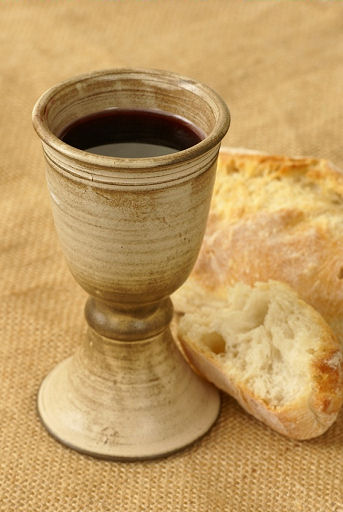
wine and breadCommunion is one of my favorite things about worship.  It is a ritual ripe with meaning and power.  People ask me sometimes about Communion and children.  I have been giving my daughters Communion since they could take solid food.  Some wonder if their kids are allowed to take Communion, so I offer this as my answer.  As far as I’m concerned, children are always welcome at the table, but I also respect the wishes of the parents.  If there is a new family coming forward, and they have a little one, I always say something like, “Your child is welcome to partake, if you are okay with it. If not, I’d be happy to give her a blessing.”   In that moment, it is difficult to go into all the details of why I invite that child to share in the bread and the cup.  So now I give you these reasons why any child (or any other person for that matter) will always be welcome to Communion at a table over which I preside.

  1. Communion is a means of Grace.  I believe that Communion is a powerful act.  I believe that God is present in the bread and the cup.  In that holy moment of eating and drinking, one can feel the presence of God.  This is at the foundation of my Communion theology, and everything follows from this precept.  God meets people in Communion, so why would I do anything to get in the way of that meeting?
  2. It’s not my table.  One of my favorite things to say during the course of any service is, “This is not my table.  This is not a Methodist table.  This is Christ’s table, and all are welcome.  Come, for all is ready.”  If it is Christ’s table, who am I to guess his guest list?  If Christ wants to meet someone at his table, that’s his call, not mine.  Jesus told a story about inviting guests to a banquet, and one of the most important lessons of that story is that we don’t make the guest list.
  3. There’s no kiddie table.  I’ve always thought of Communion as the family meal, and there’s no kiddie table.  If we consider kids to be a part of the family of God, why would we exclude them from the family meal?  Even at family gatherings where there is a special table for the kids, we always bring food to them too.
  4. No one fully understands what’s going on at this table.  People say to me, “We don’t bring our kids until they know what’s going on.”   My first reaction is to ask that person to explain to me their theology of atonement to make sure that they understand.  No it’s not.  That would be stupid.  We don’t have to pass some comprehension test to be invited to Christ’s table.  My actual first reaction is, “I’m not sure I fully understand what’s going on.”  Yes, I can write about the incarnation.  I can tell you what a Sacrament with a capital S is.  I can tell you about forgiveness, the body of Christ, and sacrifice, but I don’t think I can tell you with any real certainty what happens in Communion.  I believe God is present in the bread and the cup, but there is an element of mystery in the act that is unknowable.  That doesn’t mean we let kids think it’s snack time.  We teach them as we go.  Kids understand the difference between play time and serious time.  They know when something is important, if we tell them that it is.  When I hand a child a piece of bread and a cup of grape juice, I don’t say “this is the body and blood of Christ.”  I tell them, “Jesus wants you to have this so you remember how much God loves you.”  That’s all they need to know.  Sometimes that’s all any of us need to know.
  5. Children might not understand what’s going on, but they have a sharp understanding of what it means to be left out.  That is a feeling I want no child to feel in any church I am called pastor.
  6. Children are a vital part of the Body of Christ right now, as they are, not for what they might become.  I’ve heard many people say that “Children are the future of the church.”  I understand the sentiment, but I vehemently disagree.  Children are the right now of the church.  They are the church just as much as anyone else.  If we only value children for what they might become, or who they might bring with them (get the kids, and the parents follow), then we are not valuing children.  I want to be a pastor of a church that values real kids, not just the idea of kids.  I want a church that loves kids who are loud at the wrong time, who don’t sit still, who make messes when they eat, and ask rude questions sometimes.  Does this mean we don’t provide guidance, or boundaries, or expect good behavior?  Of course not.  It means that we love them as they are, and try to model for them behavior that is life-giving.  We don’t chastise or shame them.  We embrace them for all of their kid-ness.  Children are a vital part of the body of Christ, and I do not believe in treating them as anything less.

So there you have it.  These are six of the reasons why I share Communion with kids in worship.  I always leave the final decision up to the parent, but hopefully all the parents at my church know that when they come, all are welcome.

Follow The Fat Pastor on Facebook
Follow @FatPastor on Twitter

43 Comments

Filed under Christianity

I give up

We still get a daily newspaper, and sometimes the only page I touch in the whole thing is the crossword.  I love doing crossword puzzles, especially if they’re not too hard. I can’t even touch the Sunday New York Times crossword.

I like the one in our newspaper because on most days I can fill most of it up.  My favorite part of doing the crossword is when I tackle one big blank part of the puzzle at once after feeling blocked.  In one flash of brilliance the dam is lifted, and a tidal wave of right answers comes pouring out.  Whole sections of the puzzle that were once blocked can quickly come alive once I remember that an artichoke is an edible flower, and that acme is a four-letter word for peak.   Eventually though, I hit another block.

I seldom finish the whole thing.  It seems like there is always some intersection of an obscure town in India and the first name of an actress from the thirties that I just can’t figure out.  I try as hard as I can to finish the whole thing, but almost inevitably, I have to seek help.  But first I have to declare to myself, “I give up.”

“I give up” are three powerful words.  On Ash Wednesday, Christians of many stripes feel compelled to give something up.  Most people give up some vice or bad habit.  The practice of self-denial is an ancient spiritual discipline.  Others, and myself in the past, have poo-poohed the idea giving up of things for Lent.  Many writers have warned against the dangers of going through the motions during Lent, or giving up something superficial that won’t really get to the heart of the matter.

While I agree that the sacrifice that the Lord requires is not superficial, I’m giving up judging others’ discipline.  If you want to give up chocolate, who I am to tell you that you shouldn’t do that?  I know what the Lord requires of me.  Nowhere in mercy, justice, and walking humbly with God does it include commenting on your spiritual discipline.

I haven’t decided if I am going to fast for Lent.  In the past I’ve given up chocolate.  I’ve also done daylight food fasts.  For a couple years in a row I didn’t eat any solid foods between 6 a.m. and 6 p.m.  Every year I contemplate doing that again, but haven’t attempted it in years.  Last year I tried to write a note to someone for every day of Lent.  I wish I could tell you I actually wrote 40 notes in 40 days.  I can tell you though, that it was a very rewarding experience.

This year I feel ready to give up.  Giving up is an easy thing to do sometimes.

I feel weary, and I don’t think I’m alone.  I feel weary of a world torn by violence in Central Africa, Syria and Venezuela.  I feel weary of impending war in Ukraine.  I feel weary of divisive politics.  I feel weary of debating.  I feel weary of a long and brutal winter that just won’t relent.  I feel weary of social media, being bombarded every day by this post, this article, this meme.  I feel weary of my to-do list, which seems to be growing faster than I can check things off.  I feel weary of reacting harshly at my daughters when they don’t deserve my ire.  I feel weary of the  laundry pile in my basement, the paper pile on my desk, and the snow piles on the street.  Pile after pile seem to come in wave after wave.

And now Lent comes and I’m supposed to give something up, and I can’t pick just one thing.  So I give up.

Pass me the ashes, I give up.

I give up my plan.

I give up my power.

I give up my ability to affect change.

I rub ashes on my head, and mark myself “given up.”  Weary. Tired. Defeated.

I remember that out of dust I was formed. To dust I will return.

I give up.  I confess my failures. I examine my shortcomings.  I reflect on the ways that I cannot do it all.  I resign myself to God’s will, not my own.  I remember that I will die, and pain and suffering will remain, but I will have lived.  I will live without the need to be right every time.  I will live without the need to follow my plan, without the need to check every box, without the need to fix everything.  Out of dust I was formed, and to dust I will return, but in between I am going live.

I am going to live.

I fall on my knees and cry out to God, “I give up.”  God smiles, embraces me and says, “Finally.  Now, allow me…”

And suddenly the dam is lifted, and a tidal wave of grace comes pouring out.

The fast I choose is justice, mercy, and kindness.  Not because my actions will solve the world’s problems, but simply because God is.  God is justice.  God is mercy. God is kindness. God is love.  This same God took a pile of dust and breathed life into me, so how else can I live?

I can’t solve the world’s problems.  I can barely finish my laundry.  These ashes are a reminder of my own mortality.  These ashes are a reminder of my own shortcomings.  These ashes are a reminder that God took ashes and formed something that I could never form.  God provides answers I could never know.  God provides paths I could never find.

I give up. I get up with God, and I feel fine.

Follow The Fat Pastor on Facebook

Follow @FatPastor on Twitter

ash wednesday meme

3 Comments

Filed under Christianity, Sermons

A table for one.

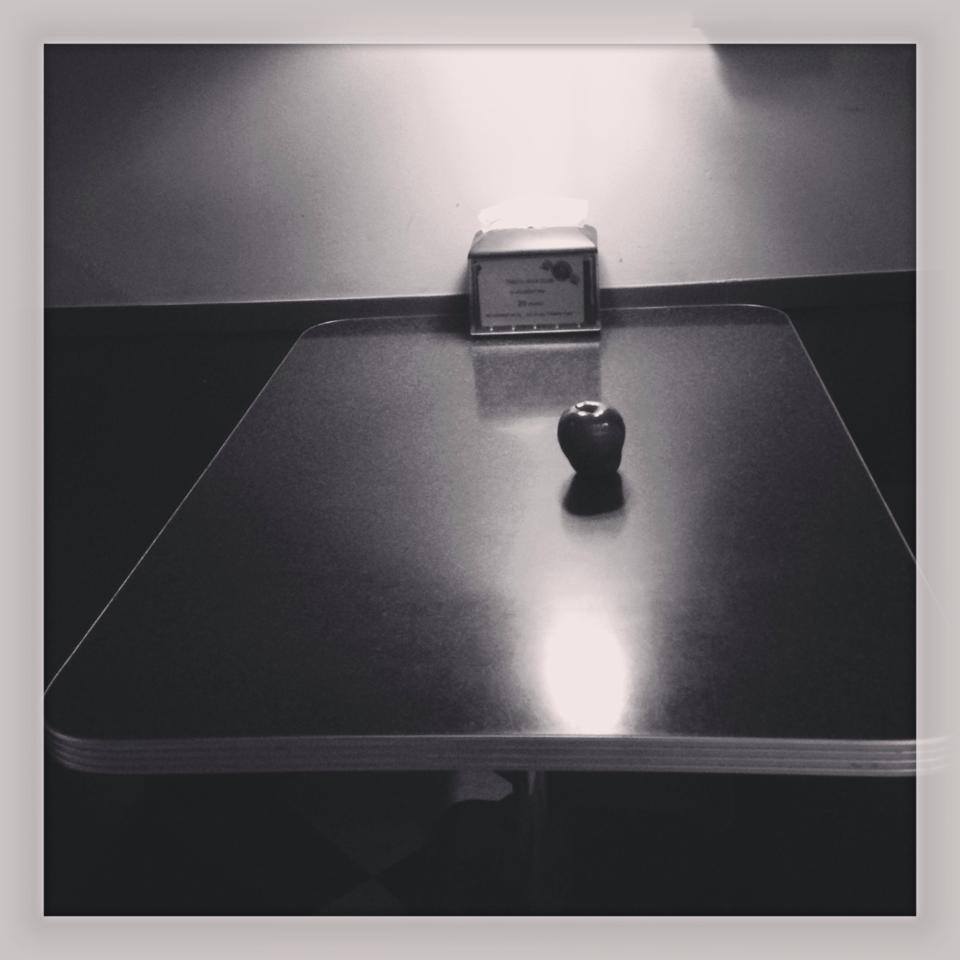
Table for OneI’m an introverted person.  One of the distinctive marks of an introvert is that they don’t mind going to a restaurant and asking for a table for one.  Don’t get me wrong, I love eating and being with people.  I love a good dinner party, or going out to eat with friends.  I also enjoy a meal by myself.  I enjoy the calmness of a table for one.  There are no social expectations, no awkward silences.  There might be a book, or a crossword puzzle, or a legal pad and a pen.

I enjoy a table for one.  It can be a space for reflection, meditation, or even prayer.  Sometimes though, it is not…

God “prepares a table before me in the presence of my enemies,” reads Psalm 23.  What if it is a table for one?

What if the enemy is within?

I’ve sat with myself on dark and lonely nights.

What if the enemy is my own apathy?

I’ve walked by pain, turned a blind eye to the suffering of my neighbor.

What if the enemy is my own comfort?

I’ve chosen to settle for the inertia of inaction over disrupting the status quo.

What if the enemy is my own pride?

I’ve avoided the one that hurt me. I’ve held onto bitterness, even when the taste in my mouth was too much to bear.

What if the enemy is my own fear?

I’ve walked away from persecution, and participated in unjust systems for fear of the wrath would be turned onto me.

So Jesus, what then?

You tell me to love my enemies.  Am I to love my enemy when the enemy is looking back at me in the mirror?

I know the answer.  I’ve sat at that table before.  Still, God meets me there.

I sit at the table in the presence of my enemy, and can only confess to my God and myself the times I have fallen short.  I sit with myself and have no choice but to forgive, so I may be forgiven.  I sit at my table for one and am confronted with the  profound absurdity of the gospel.  There is good news in sitting at the table for one.  

There is confession.  There is forgiveness.  There is grace.  There is bread for me to eat, and a cup overflowing.  There is oil being poured out on my head with such exuberance and abundance it seems shocking.  There at the table for one I learn that goodness and mercy are following me.  No, they are doing more than following me.  They are pursuing me.  Actively, purposefully, God is pursuing me.

Goodness and mercy are pursuing me, even when I flee.  Goodness and mercy are pursuing me, even when my apathy and my comfort and my pride and my fear seem to get the best of me.  God is pursuing me, and sometimes it is only at a table for one that I pause long enough to sense it.

Follow The Fat Pastor on Facebook

Follow @FatPastor on Twitter

7 Comments

Filed under Christianity

When I stopped teaching my daughter to fear

spider meme

I’ve killed my fair share of spiders.  I’ve never been one to consciously support stereotypical gender roles, but I fell easily into the role of family spider-getter.  There is a little kind of spider that seems to thrive in our bathroom.  They appear on a pretty regular basis.  With  legspan about the size of a nickel, they are harmless little creatures.  This week, something pretty amazing happened.

“Daddy!” my six-year-old daughter screamed.  “Come quick. There’s a spider.”

At hearing such a cry, most Dads would grab a magazine or tissue.  Instead, I wished I could remember where I had put my magnifying glass.

“It’s so cool,” she said, as she sat and watched it crawl along the wall and spin its web. Mesmerized by the work.

Not too long ago, this scenario would have played out much differently.  When my daughter was much littler, she had no particular fear of spiders, but by the time she was four or five, she was terrified.  Given where our spiders like to hang out, this posed a problem at some very inopportune times.

“Daddy!” She would scream. “I have to go to the bathroom!”  Long potty-trained, I wasn’t sure why she was screaming this at me with such ferocity.  “So?” I would ask.

“There’s a spider in here!”  So I would go in, armed with a tissue, and “take care” of the problem.  I would explain, “These spiders are harmless.  They won’t hurt you.  There’s no reason to be afraid,” as I squashed the little guy into oblivion.

Then I realized something.  My actions and my words were incongruous.  My words were saying, “Fear not.”  But my actions were saying, “This spider must die!”  She heard my actions much louder than my words.  By killing the spider every time I saw one, I was reinforcing the idea that the spider must be eradicated.  It must be feared.  So I did something strange.  I stopped killing them.

“Daddy!” she would scream, “There’s a spider.”  So I would go in, and explain to her that there was nothing to fear.  “That little guy is harmless, I would say.  He eats mosquitoes, which are annoying.  I’m not going hurt him, because he’s not hurting us.”  She was not happy with my decision, but eventually the power of nature’s call would overcome her fear.  As she did what she had to do, she wouldn’t take her eye off the little spider. 

This scenario repeated itself several times over the course of a few months.  Eventually the fear was gone, and it was replaced with curiosity.  Until one day she found herself excited to see a spider.  Well, maybe not excited, but at least intrigued.

Yes, this is a story about my daughter and spiders, but I feel like it is so much more.  Too often, when confronted with something different, our default reaction is fear.  What if, instead of fear, we respond with time, care, and compassion.  When curiosity or empathy replaces fear, maybe there is room for something more, like learning, relationship, and friendship.

Follow the Fat Pastor on Facebook

Follow @FatPastor on Twitter

1 Comment

Filed under Personal Reflection

Let no prison hold you

let none hold you

Few of us ever plan on going to prison.  No one wants to spend time in a jail cell.  Yet many of us spend time in one every day.

We spend time in jails built around us.  Sometimes they are barely noticeable.  Like the fish that doesn’t know it is in a fish bowl, or the bird that doesn’t know the world outside the cage, we spend our time in prison.  These are the prisons of injustice.  They are the prisons of systems that keep us from fulfilling our dreams.  They are the walls that are built by those that want to keep others oppressed.  Hope and possibility are kept out, and all that remains is a cycle of despair.

Sometimes we are in prisons that we built ourselves.  We guard our pain and our torment and make sure nothing is able to penetrate the walls we build.  We have been hurt too many times, so we build walls.  We remain in the cell because the outside world is full of pain, and at least inside the cell we have the illusion of safety.  Intimacy and friendship are kept out, and all that remains is superficiality.

Sometimes we are in prisons that have been built for us.  These walls are built by sickness, or by those that hurt us.  Sometimes great wrongs are inflicted upon us.  Sometimes the tragedy is too much to take.  Some say, “God doesn’t give us what we can’t handle.”  I don’t believe it, because I don’t believe it is always God that is giving it.  Sometimes the pain is just too much, and the walls of the prison are too strong to break free.  Healing and joy are kept out, and all that remains is pain.

In Matthew 11:2-11, we find John the Baptist in prison.  He was imprisoned by a King that did not want to hear the truth.  John spoke the truth to power.  He called for repentance.  He called for a change of heart.  He called upon people to follow the path of righteousness, and he prepared the way for the one that would come.  But he was not imprisoned until he demanded too much of the King.  When he impeded the powerful from having his way, he had to be stopped.  He was kept alive, for awhile, by the will of the people.

John was called the “greatest of all those born of a woman,” by Jesus.  And yet as he was in jail, he wondered.  It can be dangerous to inject too much of our own thoughts into figures in the Bible, but here it is almost impossible not to wonder what John was thinking when he sent a messenger to Jesus.

“Are you the one? Or are we to wait for another?” he asked.

John was in prison, so all he could do was wait.  And yet he wanted to know, “Are you the one?”  Sitting in jail, still alive at the whim of a tyrannical King, looking back at his work, his ministry, and looking forward to a future that was unlikely to have a happy ending, he asked, “Are we to wait for another?”

And likewise I wait.  I wait in my prison.  I wait in the prison of sin that I have built around me.  I wait in the prison of injustice that is all around.  I look to Newtown and Columbine.  I look to the Liberian Civil War and Apartheid South Africa.  I look to violence on the streets of our cities, and violence in the homes our children.  I look to hungry children at the school in my neighborhood, and to the cold families looking for coats at our Wardrobe ministry.  I look into my own heart at the choices I make, the hurts that I cause, and the prisons I build.  I wait and look back at my work, my ministry, and look forward to the future and wonder.  “Are we to wait for another?”

Is the question a sin unto itself?  Maybe.  But at least I know that I’m in good company.  I’ve never felt that doubt is the opposite of faith.  .

So, trapped in our prisons, what do we do?  What is Jesus’ answer?  Of course, Jesus doesn’t give us a straight answer (That is why I think doubt is not an obstacle to faith, but lines the pathway of faith.  If Jesus wanted us to never doubt or question, he would have given us more straight answers.).

Tell John what you have seen,” Jesus says.  Tell John to look beyond his prison walls.  Tell him to look beyond the pain and the heartache and the bleak outlook.  Tell John “that the blind receive their sight, the lame walk, the lepers are cleansed, the deaf hear, the dead are raised, and the poor have good news brought to them.”

This Advent, we still wait.  We wait like John in prison.  Not held in by despair, but looking always outward.  Looking from within our own prisons at the world all around. Waiting and watching with God’s eyes to see the signs.  Waiting is never a fun activity.  We do everything in our power to avoid waiting… for anything.  We fill our time with noise.  We go to restaurants designed to limit waiting as much as possible.  We go to grocery stores where the lines are filled with things to read, and last-minute items to buy.  What are waiting rooms filled with? TVs, magazines, some even check out ipads.

Yet here we are waiting, but not idly.  We are purposefully waiting.  Waiting with eyes open to the love of God that is all around.  We hear one of the Newtown mothers declare “Love wins,” and are left in awe of the power of the human heart to heal. We hear stories like the one Peter Storey tells here, of a woman in South Africa who said to the man that killed her son, “You took my son.  So now you must be mine.”

http://www.youtube.com/watch?v=37EtM4EXtX0

Advent is a season to wait.  Wait and watch for Christ in our midst.  In a world addicted to instant gratification, the act of purposeful waiting is a revolutionary act.  It is a soul-cleansing act.  We wait with eyes wide open.  We wait with hearts open for Christ, seeking the answers to our questions in the stories of hope and grace.  We wait, seeking  forgiveness.  We do not rush into anything, because you cannot rush something as powerful and painful and precious as forgiveness.

This Advent, we wait like John in prison, who was called to notice the signs all around.  

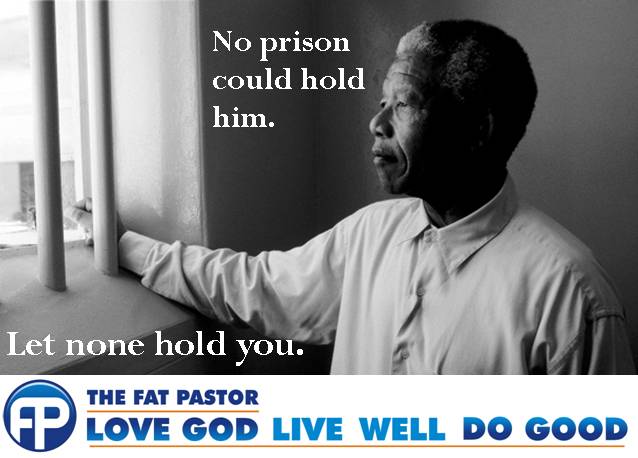
This Advent, we wait like Mandela in prison, who refused to let the walls hold him.  We wait like Mandela, who transformed his prison into a crucible of learning, organization, and reconciliation.  Who practiced forgiveness even as he was tormented.  Mandela, who befriended white guards who were supposed to hate him, who used their friendship to secretly write his manuscript for A Long Walk to Freedom.  Mandela, who wrote in prison, “I am fundamentally an optimist. Whether that comes from nature or nurture, I cannot say. Part of being optimistic is keeping one’s head pointed toward the sun, one’s feet moving forward. There were many dark moments when my faith in humanity was sorely tested, but I would not and could not give myself up to despair. That way lays defeat and death” (from A Long Walk to Freedom)

We are called to look beyond the walls of our prison.  Don’t ignore the walls, but do not let them defeat you.  Look beyond the walls, and do not let them contain you.  See the signs of mercy, justice, and love.  See Christ all around – not in holiday decorations or TV specials.  See Christ in the hearts of others.  The prisons made by sin and injustice can feel impenetrable, but there is freedom in Christ.  No prison held Mandela.  No prison held John.  Let none hold you.

Listen to the sermon I preached based on this post

Follow The Fat Pastor on Facebook
Follow @FatPastor on Twitter


2 Comments

Filed under Christianity, Sermons

The strangest of them all

ImagePhyllis Tickle calls it “The most difficult parable of them all.” David Lose calls it “The most confusing parable.”  The New International Version labels it “The Parable of the Shrewd Manager.”  The New Revised Standard uses the word “Dishonest” instead of shrewd.  The Common English Bible goes it different direction with the subheading “Faithfulness with Money.”

All parables have an element of strangeness.  That is sort of the point of them.  Jesus uses parables to teach about the Kingdom of God, which is a strange concept.  Forgiveness, compassion, self-sacrifice, these are counter-cultural concepts that take strange stories to understand. Some parables are strange because we don’t understand the cultural weight of words like Levite or Samaritan.  Some parables are strange because of the actions people take (who would plant a weed – one that gets really big – in a garden?) Yet despite the general strangeness of Jesus’ parables, the one found in Luke 16:1-13 seems to be the three-dollar bill.

It is a story of an owner and a manager.  The owner discovers that his manager has been dishonest, fearing that he is going to be fired, the manager decides to do some dealing.  Facing impending unemployment, he decides to make some quick deals so that “people will welcome me in their houses.”  He goes to a few of the owner’s clients and settles their debt at much lower rates.  Collecting about half as much as they owe, the manager figures that the clients will be grateful to him, and treat him well in the future.  The owner finds out about the tactics, and this is where it gets strange.

The owner commends the man for acting “shrewdly” in the NIV and NRSV, “cleverly” in the CEB.  What?  The manager, who was already identified as dishonest, goes about being more dishonest, and the owner praises him?  This one is a tough one to figure out.  Why would the owner praise him?  In most parables, the owner or master is supposed to be God.  Here we seem to have God praising a man that screwed him.  There is only small consolation in remembering that the disciples rarely understood Jesus’ strange stories either.

So what are we left with?  What is the good news?  I think it comes down to the same place that most of Jesus’ strange stories come to: relationships.  At the beginning of the story, we have many strained relationships.  There is a strained employer-employee relationship.  There are debts and debtors.  What are we left with at the end of the story?  Reconciled relationship and cancelled debt.  It makes no sense for the owner to praise someone for cancelling the debts people owed him.  He did not get what was coming to him, and yet he celebrated.

Perhaps a quick scan around the rest of the Gospel of Luke will help lift the fog from this confusing story.  Remember when Jesus taught the disciples to pray? Back in chapter 11, he tells them “Give us each day our daily bread.  And forgive us our sins, for we ourselves forgive everyone indebted to us.”  What if Jesus actually meant that?  “But wait!” you might be saying, “He wasn’t talking about money.  He was talking about sin, and you know, trespasses (whatever that is supposed to mean).”  All I have to say is, really?  You don’t think Jesus was talking about money?  This is the Gospel of Luke we’re talking about, the one that says “Blessed you that are poor… Blessed are you who are hungry now…” not “Blessed are the poor in spirit… Blessed are those who hunger and thirst for righteousness” like the Gospel of Matthew.   It is in the Gospel of Luke that Jesus says, “None of you can become my disciple if you do not give up all your possessions.”  Later he tells a man to “Sell all that you own and distribute the money to the poor, and you will have treasure in heaven; then come, follow me;” (Luke 18:22).  Then he says “it is easier for a camel to go through the eye of a needle than for someone who is rich to enter the kingdom of God'” (Luke 18:24).

And don’t give me the line about the gate in Jerusalem that was called the “Needle’s Eye” or some such nonsense.  There is no archaeological evidence of this mythical gate.  There are, however, many non-canonical uses of a similar phrase to explain something that is really, really hard.

On Episode 29 of the Pulpit Fiction Podcast, Eric and I discuss this difficult parable, and the lament found in Jeremiah 8:18-19:1

On Episode 29 of the Pulpit Fiction Podcast, Eric and I discuss this difficult parable, and the lament found in Jeremiah 8:18-19:1

All of this is to say, maybe Jesus is trying to teach us something about the nature of relationships and money, and our relationships with money.  Perhaps the manager was praised because he put relationships ahead of money.  You could argue that his motivation was less than pure, but in the end, he valued his ability to “be invited into people’s homes” over his ability to please his boss.  And maybe the owner cared more about his manager’s heart than he did about his bottom line.  The Pharisees didn’t get it.  They valued money, and understood that having money was the same as having God’s favor.  Jesus is reminding them that there are things in this world more important than wealth.  Perhaps the level of confusion that this parable stirs is evidence of how remarkably important it really is.  This one blows our mind, because it seems to go against all of our common understanding of fairness.

And that’s just it.  The Kingdom of God has little to do with fairness.  It has little to do with keeping proper ledgers and making sure that everyone gets what is their due.  The Kingdom of God is about relationships.  It is about reconciliation.  It is about forgiving our debts, as we forgive our debtors.  It is not an easy story to hear.  It is sometimes an even harder story to live.  It doesn’t make good economic sense.  Jesus had a funny way of not making  sense.

It doesn’t make sense to plant a weed in a garden.  It doesn’t make sense to ruin a whole vat of flour with some leaven.  It doesn’t make sense to turn your other cheek, throw a party for people that can’t invite you to theirs, leave behind a flock because one sheep strayed, or throw a party for your good-for-nothing son who finally came back home with his tail between his legs.

It doesn’t make sense that God would come to earth and take on flesh.  It doesn’t make sense that God would claim me as his own, or invite me to the Table of Grace.  It doesn’t make sense that Jesus would do all he could for a people that responded by nailing him to a cross.  It doesn’t make sense that tomb was empty, or that disciples have been able to experience Christ in the breaking of bread for centuries since he was said to be dead.

This strange parable is a doozie.  It is a challenge.  It is a challenge to look at what cancelling debt really looks like.  It is a challenge to take a close look at how I serve wealth over God.  It is a challenge to look at how I spend money, how I save money, and how I treat others.  It is a strange one, all right.  Maybe that’s how God intended it.

Listen to the Pulpit Fiction Podcast about this parable

Follow The Fat Pastor on Facebook
Follow @FatPastor on Twitter

7 Comments

Filed under Christianity

Sermon: Jesus saved a seat

This was my Maundy Thursday sermon this year.  It was largely inspired by an insight I received while watching Adam Hamilton’s 24 Hours That Changed the World DVD study.  In it, he asserts that Jesus and Judas must have been sitting next to each other at the last supper.  As the story is told, it was Judas that was seated at a position of honor, even as he was the one that was to betray Jesus.  Knowing Judas’s heart, what did Jesus do? He broke bread with him.  This was an incredible act of grace, and forms the heart of this sermon.

Follow the Fat Pastor on Facebook

Follow @FatPastor on Twitter

Follow on Tumblr

Leave a comment

Filed under Christianity, Sermon Podcast

You are the light of the world.

Part Two of my story of Godspell. Read part one here.

Click here to go to the full sermon, where I talk about our experience with Godspell, called “You are the Light of the World.”  From 11:30-20:00, I talk more extensively about the salt and the light as found in Matthew 5:13-14.

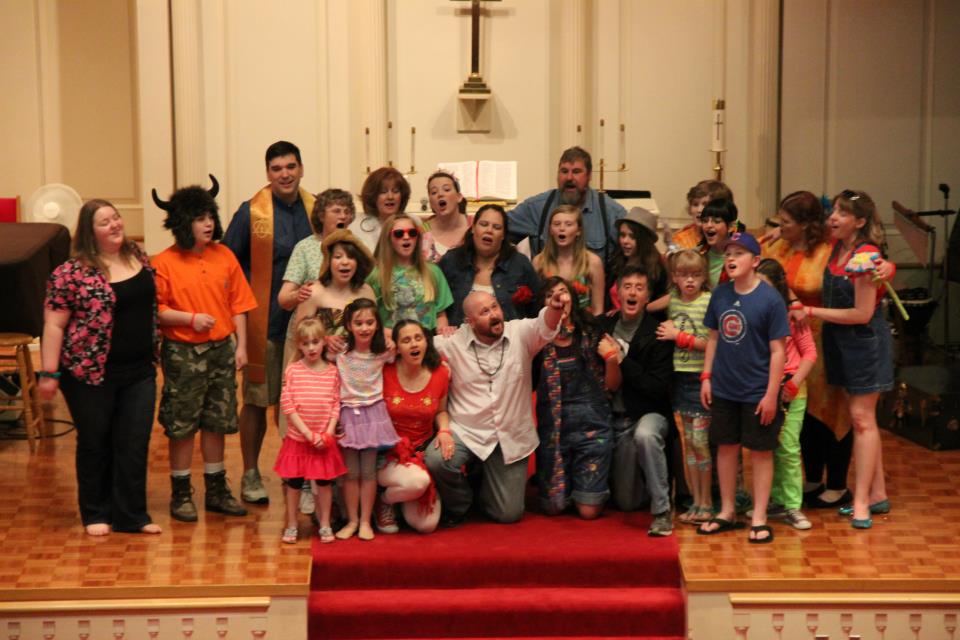
Our Riverside UMC "Godspell" cast

Our Riverside UMC “Godspell” cast

“You are the light of the world,” I sang. And then I went home and reflected on the amazing thing we had just done. Godspell had forever changed me, but in the hours after the show I don’t think I had any idea just how much.

“You are the light of the world,” we all sang. Dino Hayz, director of the Center for Living Arts and our Jesus, went out into the audience. He grabbed someone and had them stand up so we could all sing to that one particular person, “You are the salt of the earth.” Then quickly to another man he dashed. He got him to stand up so we could point to him and sing, “You are the city of God.” Finally, he found one last woman. She was sitting near the back, and we sang one more time, “You are the light of the world.”

It was the last song before intermission. We left the sanctuary rocking. We were half way home, and we all sensed that things were going well. None of our rehearsals suggested that the show would go as smoothly as it had been. At the end of the show, after singing the beautiful refrain “We can build a beautiful city, yes we can. Yes we can. We can build a beautiful city. Not a city of angels, but finally a city of man,” I felt a great sense of accomplishment.

After the show a woman approached me. She told me that she had a great time. She loved the music, and she was so glad she could come. For years, she told me, she had a Playbill from the original Broadway production. She also had an album she had never played. For years she had kind of wondered what Godspell was, and when she saw us in the paper, she decided on a whim to come check it out. I told her how happy I was that she was there, and invited her to come again to worship with us.

The next day I was talking to our head usher about what a great experience the show was. We were marveling at the amount of people that came, and how many people came that were not a part of our church. I told him about the woman I talked to after the show, and he quickly realized that he knew who I was talking about.

“Yeah, I was talking to her at intermission. She seemed like she was looking for something, and I wanted to help her. I saw her and said, ‘You are the light of the world,’ she was one of the people that you guys sang to when Dino got her to stand up.'”
She kind of laughed when I said that,” Tom told me. “And then she said, ‘No one has ever called me that before.'”

I got goosebumps when he told me that, and I thanked Tom for telling me about their exchange. Then I went back into my office and was overwhelmed. Something washed over me that I can only describe as the Holy Spirit as I prayed “Thank you God.” Tears started to flow, and my efforts at standing became feeble. I literally fell to my knees in tears as I was struck at once with an overwhelming sense of awe, wonder, sadness, joy, and purpose. “No one has ever called me that before,” she said.

There were so many moments that made Godspell a memorable experience. If it were not for Tom’s story, I would have counted it as a great memory. I would have remembered the impromptu rehearsals in the kitchen with my wife and daughter as we sang and danced together. I would have remembered Molly gently nudging me into the right place so I was ready to be one of the priests in the Good Samaritan parable. I would have remembered the prayer we shared before the show. I would have remembered hugging Dino during the farewell song, and whispering to him. “Thank you, brother.” With or without that conversation with Tom I would have relished in the glow of accomplishing something as a team.

After hearing the story of the woman that had never been told that she was the light of the world though, I had something more.

“You are the light of the world,” is not just a catchy line in a pretty song in an upbeat musical.
“You are the light of the world,” are Jesus’ words to his followers. They are words from what we call The Sermon on the Mount as found in Matthew 5-6. It is a small part of Jesus’ dissertation about what it means to live in this world.

“You are the light of the world.” It is a claim on those that had gathered. It is an assurance of what Jesus’ followers are, and what they shall be.

“You are the light of the world,” Jesus said so long ago.

“You are the light of the world,” Jesus declares today. You.

So let your light so shine. There is a light that is within you that is good. There is a light within you that is of God. There is a light within you that needs to be seen. I think for a moment of the children in this world that have never been told that they are the light of anyone’s world, and it breaks my heart. I think for a moment of people stuck in abusive relationships, allowing their light to be crushed, and I want to scream. I think for a moment of youth that want only to hide and be as invisible as possible so as not to draw anyone’s attention, and it kills me to know that they have never been told, “You were created in the very image of God. The light that God created at the very moment of creation. That is in you. Hear Jesus crying to you, ‘You are the light of the world.'”

That little musical gave me a lot of things. It gave me memories. It gave me friendships. It gave me knowledge about myself. And it gave me a renewed sense of purpose. It gave me a way to think about my mission as a follower of Christ.
I will strive to never allow another man, woman, or child pass me by without letting them know, in no uncertain terms, that they are the light of the world.

Learn more about The Center For Living Arts

Follow the Fat Pastor on Facebook

Follow @FatPastor on Twitter

4 Comments

Filed under Christianity, Media

I’ve lost 70 pounds, but I’m still The Fat Pastor

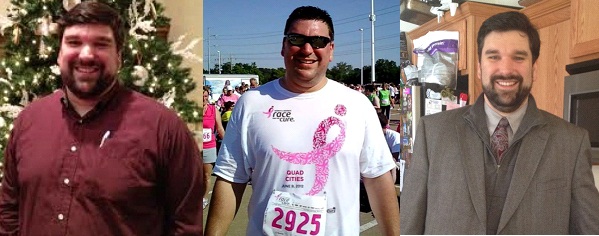
I high-fived my doctor today.  I had my annual physical.  It was a year and a day after stepping on the scale at that same doctor’s office and reading that I weighed 329 pounds.  Today my doctor looked back at what I weighed last year.  When he saw that I today I weighed 259, he gave me a high-five.

I have gone through a transformation in the last year.  I have transformed my habits.  I have transformed my priorities.  In so doing, I have transformed my body.  More than this, I have experienced spiritual transformation.  I pray more.  I study the Bible more.  I have discovered that when I am more disciplined in my eating and exercising, I am also more disciplined as a follower of Jesus Christ.  I am still transforming.  I am striving every day to Love God, Live Well, and Do Good.

I have lost 70 pounds in 366 days, but let me be clear – I am still The Fat Pastor.  For one thing, I am still overweight.  One year ago I was 34% body fat.  Today I am 25% body fat.  That is a great improvement, but it is still too high.  I literally have too much fat on my body.

Yet even if I lose another 70 pounds, have 7% body fat, and can run a marathon in under 3:00:00, there will always be fat that I can trim from my life.  I am, like John Wesley said, moving onward to perfection.  Until I am there, I will be laden with fat.

The difference between fat and fit is choices.  I make fat choices when I choose a mindless television show instead of time in study.  I choose fat when I spend too much time on facebook instead of cultivating relationships.  I choose fat when I refuse to help a neighbor.  I am fat when I objectify a woman.  I am fat when I contribute to an unjust society. I am fat when I forget the needs of the widow, the orphan, the poor, and the oppressed.  I am fat when I am blind to racism, sexism, homophobia, or any other way that humans try to divide and separate and subjugate.

I’m trying not to be fat any more.  I’m trying real hard.  I draw strength from the love and support of family and friends.  I draw strength from the encouragement of a remarkable facebook “following.”  I draw strength from the words of the prophets that remind me that God’s love and God’s promise of a new day is something for which we can all strive.  I draw strength from the Church as the Body of Christ in the world.  Above all, I draw strength from the grace of Jesus Christ and the power of the Holy Spirit.  I draw strength from knowing that it is not my strength on which I must rely.

Jesus said “You must love the Lord your God with all your heart, with all your being, and with all your mind. This is the first and greatest commandment.  And the second is like it: You must love your neighbor as you love yourself. All the Law and the Prophets depend on these two commands.”

I try to love God.  I worship, and I pray, and I read and listen to God’s Word.  I come to Table of Grace.  I fall down in confession, and I rise up with the Holy Spirit.  I try to live well, because I take seriously the oft-forgotten command to love yourself.  I try to do good, because it is through doing good for others that we best express our love of neighbor.

I am The Fat Pastor.  I’m trying not to be. With God as my strength and my salvation, I will be The Fit Pastor someday.  Until then, I’ll keep on my journey of transformation.  Thank you for going on this journey with me.

Follow The Fat Pastor on Facebook

Follow on Twitter

Left: December, 2011.  Middle: June 2012, immediately after first 5K. Right: January 2013.

Left: December, 2011. Middle: June 2012, immediately after first 5K. Right: January 2013.

10 Comments

Filed under Christianity, Fitness