Category Archives: Uncategorized

Somebody wrote me a letter

This post is long. At nearly 5000 words, it is the longest post I have ever written. It is an extended response to a letter I received. After the introduction, the words in bold are quotes from my previous sermons. The words in italics are direct quotes (exactly as they were printed) from the letter I received.

On June 25 my church, Two Rivers United Methodist Church, celebrated Reconciling Sunday. This was to celebrate that we joined the Reconciling Ministries Network, an organization of United Methodist churches, groups, and individuals who affirm the sacred worth of LGBTQ+ and are committed to working for a more inclusive church. It was the culmination of six months of work, discussion, prayer, discernment, and study.

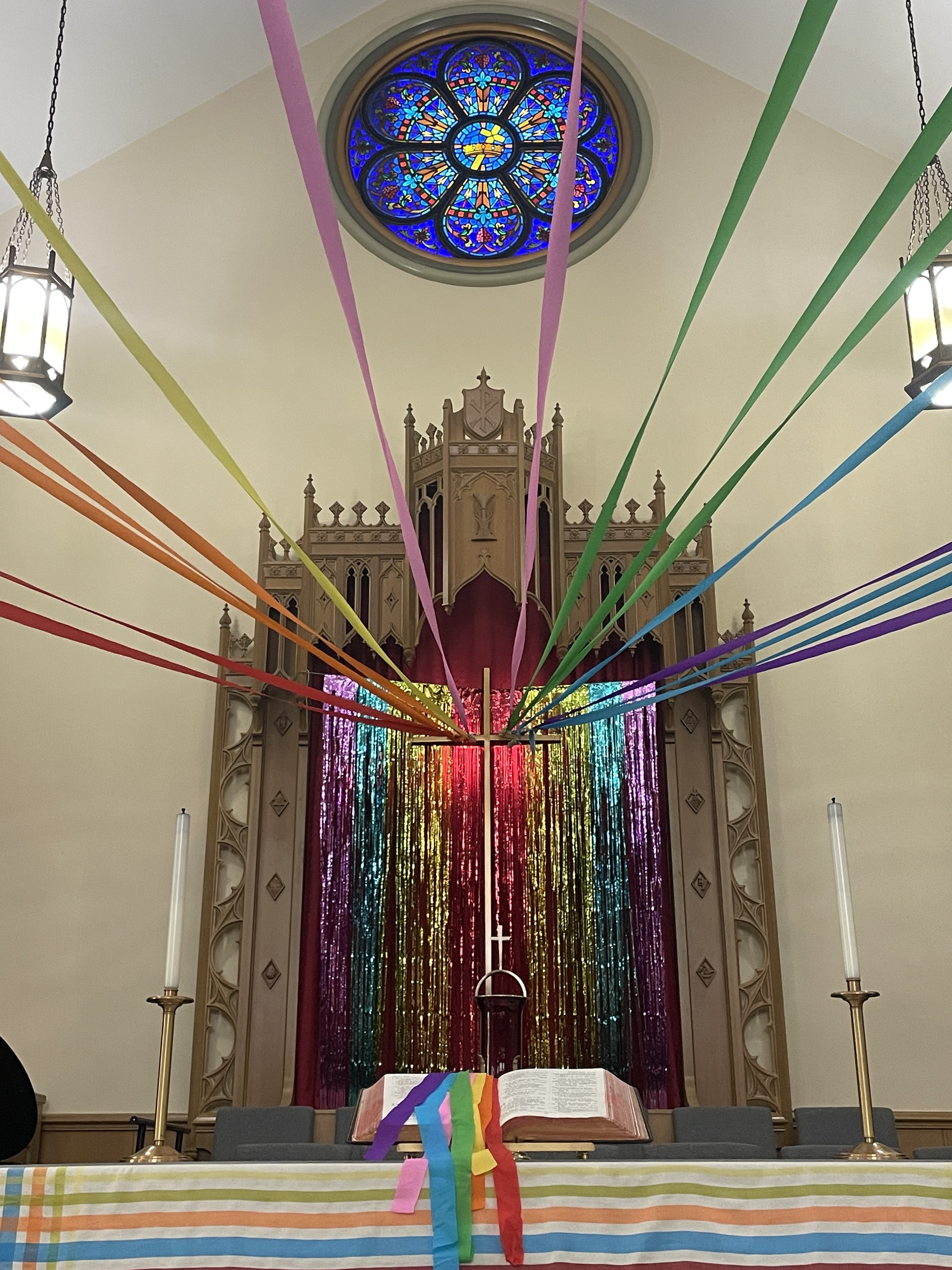
The morning of the service, the sanctuary was decorated with rainbow streamers. A pride flag hung from the wall. I wore a newly purchased rainbow stole. We had spoken-word poets share their work. Two of the poets were LGBTQ+ teenagers who felt ostracized by the Church in the past, but were welcomed into our celebration with love. A speaker from Clock, Inc., a local LGBTQ+ social services agency gave a word of thanks. We had a video of congratulations from other Reconciling pastors and leaders in our conference. My daughter, who is 16 and a lesbian, gave the sermon about the love of Jesus she felt in this church, at camp that summer, and in that moment of worship.
There were tears of joy. There were hugs and love. It was our most well-attended service since Easter, and there were guests from the community – mostly young adults – who we had invited at a recent Pride event. Afterwards, people basked in God’s love and lingered with conversation and cake for quite some time. When it was almost over, an older woman of our church – a member for over 60 years – stopped me on the way out.

“Thank you, Pastor Robb, for leading us here,” she said. “It took some time for some of our conservative older people to get here, but you brought us here with the Bible and with Jesus. And that mattered.”

A few days later, I received a letter. I should say right up front that this was the only negative response I received after this announcement. It was thoughtful. It was well-written. It made me sad, but I decided not to dismiss it because if seemed to come from a place of genuine concern and not pure vitriol. The letter remained in my backpack for quite some time. This week, I was preparing for a sermon series on Paul’s letter to the Galatians and decided to take another look at it.

I unfortunately opened the envelope in a way that destroyed the return address, so I cannot make a direct reply. Instead, I will do so here, point by point.

Dear Pastor Rob, (misspelled name, but that happens all the time)
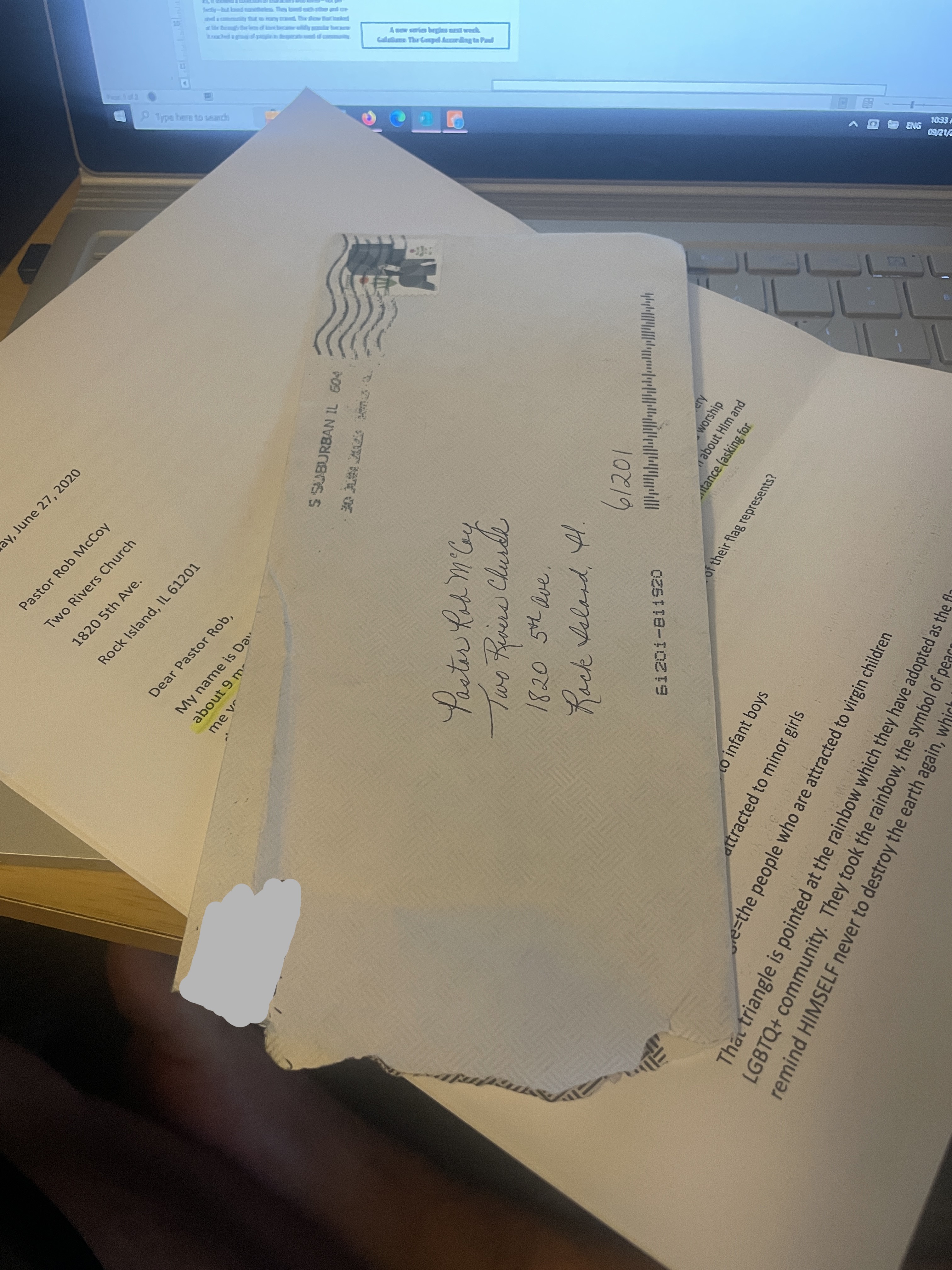
My name is Dee (changed for the purpose of this blog post). A friend of mine has been regularly watching your services on-line for about 9 months. My friend has always enjoyed your messages and your choir. My friend called me yesterday quite upset and asked me to go to your website and look at how your church was decorated for the June 25th Reconciling Service.

It is pretty amazing that someone I have never met can watch our services. I am glad that she enjoyed my preaching for 9 months. I can only assume that she heard me talk about this day coming for quite some time. I spoke often of the discussions that we were having. I invited people to call, text, or email me with questions. My cards have been on the table, so to speak, for quite some time about my belief about LGBTQ+ inclusion.

In April, I preached on Peter’s vision in Acts, and said “LGBTQ+ people have been a part of the Jesus movement from the beginning. They have followed the Way of Christ. They have received the Holy Spirit. The Holy Spirit is, and always has been, inclusive of Jew or Gentile, slave or free, male and female. It took time for Peter to understand that, but he learned. It is taking time for the Church to understand that, but I cannot help but wonder, “If God gave LGBTQ+ people the same gift he gave us who believed in the Lord Jesus Christ, then who are we? Should we stand in God’s way?” I wonder if Dee’s friend enjoyed that sermon.

I wonder if Dee’s friend was watching on Palm Sunday, when I said, “Over the last few months our congregation has been stirred. Our Reconciling Conversations have been a way to shake things up a bit. We are talking about ways we may shake up the way the Church has acted toward LGBTQ+ people. We are shaking up the way we think about invitation, inclusion, and the Kingdom. We have been praying for the last 28 days (or so), hoping that the Holy Spirit will stir something in our hearts, in our community, and in our church. Perhaps you have been stirred. Perhaps you have been shaken…”

I mean, we didn’t just wake up on June 25 and decide to decorate the sanctuary in rainbows. It all started on Pentecost 2022, over a year before, when we discussed as a congregation how we would respond to the launching of the Global Methodist Church. It began again in January with townhall meetings after worship. It continued in Lent with a period of prayer and discernment. It included two writing sessions and a straw poll. In the end, the vote to become a Reconciling Church was overwhelming. I wonder if Dee’s friend saw any of this. If not, I can consider a failure of communication on my part. I thought I went out of my way to make sure everyone was invited to speak, listen, and be heard. I feel bad that Dee’s friend was shocked by the rainbow streamers, but I can’t help but wonder if they were really paying attention at all.

I’ll be honest, I didn’t watch the service. I felt after just seeing the sanctuary and the statements of your church and the RMN [Reconciling Ministries Network] that the service would not be in line with what Jesus would want us to focus on during a worship service.

Well, that explains a lot. The streamers were all you needed to see. You missed two young people pour out their heart about the pain they have experienced. These were two young people who had been coming to our church for an after school program for months and felt loved and accepted in ways that one literally described as “life saving.” You missed Adam, a lifelong Methodist who a few weeks earlier watched his church celebrate their disaffiliation. I guess you would probably feel welcome in that congregation. Adam didn’t. He saw the streamers and his heart leapt.

You missed my daughter share her story as a Queer Christian who has felt loved by this congregation. She told a story about going to camp and finding a girl who didn’t “agree with her lifestyle.” But they spent the week worshiping together, sharing together, eating together, and praying together. They became friends who have a deeper understanding and appreciation for each other, and know that they share the love of Christ.

I am a former Certified Lay Speaker of the United Methodist Church and have lead Disciple Bible multiple times. I am also a former, life-long Methodist. I only tell you this so you have an idea of my background. I am currently attending a Bible Church and love the focus on the Bible and Looking Like Jesus.

I too am a lifelong Methodist. One of my first roles in a church was to lead a Disciple Bible study. It was an incredible and humbling honor. I learned to love the Bible and wanted to learn more and dig deeper into the Scriptures. When I went to seminary, I considered other theological paths, but fell deeper in love with Wesleyan Theology. The United Methodist Church has always believed that Scriptures are sufficient for salvation, but the Bible is not the end-all and be-all of knowledge about the world. I have long appreciated the value of Scripture as our primary source of revelation, but reason, tradition, and experience should also inform our thoughts and theology.

I preach from the Bible. Every week. I study the Bible deeply. I read from a wide variety of scholars from different backgrounds. I do my best to learn about the historical, linguistic, and literary contexts. I love the Bible far too much to believe that it is infallible or inerrant. I believe that the Bible is our best way of knowing the heart of God and Christ, and I believe that the overarching story of the Bible is that God so loves the world that God will do anything to bring us all into salvation and love. We are called to live into the Kingdom of God, and the story of Scripture is a powerful way to guide us there.

Pastor, I am all for welcoming the least, the last and the lost into God’s house of prayer. Every single one of us is a sinner and Jesus wants us all to feel welcome and come to worship Him.

See, we agree. I fear a ‘but’ is coming though. I’ve long said that someday I want to write a book called “The Holy But of God.” My best friend preached “I like big buts.” I fear however, that your ‘but’ might not be the kind I like. ‘Buts’ have an incredible power to erase all that came before. I have a feeling that your ‘but’ is going to erase that invitation.

But to worship Him with a contrite and repentant heart. To come and learn about Him and His precepts and worhip (sic.) Him.

Well, it’s interesting. I don’t actually disagree with any of this either. I think we may have a different idea of what repentance means. To me, it is about turning. When we worship, we are hoping to turn toward God. All through life, we get distracted. We lose our way. We miss the mark of God’s love. So, in worship we come and help each other re-aim. That is what repentance means to me.

So I have to ask you, are you preaching repentance (asking for forgiveness and ceasing the sin) to the LGBTQ+ community?

Well, there you go. I would say yes, I am preaching about repentance to the LGBTQ+ community, but not because they are LGBTQ+. Loving another person is never a sin. This is the foundation of my stance on inclusion in the church. I do not believe that a man falling in love with another man and having a sexual relationship with him is a sin. Sexual sin, as described in the Bible, is about idolatry, exploitation, or going against one’s nature. It has been proven that same-sex attraction is, in fact, natural. I do not think that two consenting adults falling in love, getting married, and raising a family is an abomination. Paul’s world was very different than our own. His understanding of sexuality is very different than our own. So yes, I do preach repentance, but I don’t think a loving, mutually consenting same-sex relationship is anything anyone has to repent of.

Do you know what the triangle colors at the flag-pole end of their flag represents?

Well, I assume you mean the part of the Pride Progress flag that is pointing forward, as in ‘forward thinking,’ and then also has colors that represent racial justice, and justice for trans people? The designer of the flag put it this way, “the light blue, pink and white stripes represent trans and non-binary individuals, and the brown and black ones represent marginalized People of Colour (POC) communities. The black stripe has a double meaning as it is also intended for “those living with AIDS and the stigma and prejudice surrounding them, and those who have been lost to the disease.” (https://www.vam.ac.uk/articles/the-progress-pride-flag)

Black-Black People

Brown=Brown People

Ok, I would put it more nuanced than that, but I guess that’s kind of right.

Baby blue = the people attracted to infant boys

Baby pink=the people attracted to minor girls

White triangle=the people who are attracted to virgin children.

Well, that escalated quickly. At this point, I’m at a loss for words. This is so wrong. I can only assume this is some Q-Anon theory you read on The Blaze. I realize that symbols are open to interpretation but choosing to interpret this flag in such an ugly way reveals more about you than it does about those who choose to fly it. There might be some fringe groups who claim this, but every reputable LGBTQ+ rights group has repudiated this. I guarantee you that every person in my congregation would reject this contrived explanation you just gave. Gay people are not all pedophiles. The sad irony is in Paul’s letters, the word that gets translated to “homosexual” in most modern Bible probably actually referred to the cultural practice of pederasty, and there was a time when Bible translations reflected that, much more specific practice that was more common in Paul’s time.

Sexual abuse of children is a vile crime. It is a problem that must be taken seriously, but filling people minds with false information and misguided stigma does not help prevent abuse. One researcher, who has been working on children sexual abuse for over 25 years wrote in an article, “”…[M]ost men who molest little boys are not gay. Only 21 percent of the child molesters we studied who assault little boys were exclusively homosexual. Nearly 80 percent of the men who molested little boys were heterosexual or bisexual and most of these men were married and had children of their own.” (https://www.zeroabuseproject.org/victim-assistance/jwrc/keep-kids-safe/sexuality-of-offenders/)

Pointing to the Progress Pride Flag as an emblem of child sexual abuse does not protect children. It just distracts people from seeing the real problem, but I have a bad feeling you’re not done.

The triangle is pointed at the rainbow which they have adopted as the flag representing the LGBTQ+ community. They took the rainbow, the symbol of peace God set in the clouds to remind HIMSELF never to destroy the earth again, which He did to remove sin from the earth. to represent their sinful lifestyles. In my mind, that is an offense to our Heavenly Father and the promise He made to us that day.

The rainbow has not been co-opted. It is still a reminder of God’s love and God’s promise. I should add however, that if God intended to wipe sin from the earth with the flood, God failed. Do you really worship a failure of a God? I won’t pull that thread any farther. Secondly, I don’t know a ton of queer folks, although I probably know more than you. As far as I can tell, their lifestyle includes coaching their daughter in soccer, performing in community theater, singing in our church choir, playing high school volleyball, and having coffee with friends. The only Gay Agenda I know of is the one that says, “please don’t take away my right to exist as an American citizen and beloved child of God.”

The LGBTQ+ community represents sexual immorality. There’s just no getting around that.

Remember your Shakespeare? There’s a line from Hamlet that I like in these situations (I admit I had to look up which play it was from). “‘The lady doth protest too much, methinks.’”

In 1 Corinthians 6:18-20, Paul says, ‘Flee from sexual immorality. All other sins a person commits are outside the body, but whoever sins sexually, sins against their own body. Do you know that your bodies are temples of the Holy Spirit, who is in you, who you have received from God? You are not your own, you were bought at a price. Therefore, honor God with your bodies.'” If my information is correct about the colors in the triangle

It’s not. Your information is very wrong.

This promotes pedophilia.

It doesn’t.

The sin against and inside our children’s bodies. The worst sin ever. And it’s hanging in your sanctuary.

Ok, there is a lot to unpack with Paul’s letters. There is a cultural and historical context you need to consider. Paul abhorred sexual exploitation. And so does any other right-thinking LGBTQ+ person I know. We all agree that sexually abusing minors is wrong. Consent matters. Respect and mutuality matter. These things can be as present in a same-sex relationship as it is in my relationship with my wife. Marriage is about two people coming together to make the world a better place. The purpose of a modern Christian marriage (we won’t get into the history of marriage and why so much of our language comes from the world of raising animals) is for two people to grow together, grow in their devotion to God, and make the Kingdom of God a reality in their home and the world. I cannot understand why two men or two women cannot make that happen as much as a man and woman can. Love is eternal. It is not gendered.

Also, you are quick to quote Paul. I am sure you have highlighted some of the other parts of his letters. There are also the words of Jesus, who tells us to worry about the log in your own eye before worrying about the splinter in your gay neighbor’s eye. There is also the part about Jesus talking about those who were “born eunuchs” entering the Kingdom of Heaven. Yes, there are verses in the Bible that people draw on to condemn homosexuality. Some of it appears very cut and dry, but a deeper look into the context of these verses, and an honest assessment of what we know about human sexuality reveals a much more complicated picture. Instead of pointing to a handful of verses that alienate a group of people, I see the story of inclusion for all people that runs throughout the Scriptures. I’m sorry that your friend didn’t hear more of it in her nine months of listening to me.

I am sorry Pastor Rob, but it looks to me that the RMN has just found a neat little way, “In the name of Jesus,” to do what the Roman Catholic priests did in private, publicly you are welcoming this sin into your church. Into God’s Huse of Prayer, (Mark 11:17)

Do you honestly think that it is only Catholic priests who have had this issue? Yes, it seems to be rampant there, and the cover up has been terrible. Perhaps repressing people’s sexual life in unhealthy ways manifested itself in ugly ways. Perhaps molesters were drawn to an institution the protected its own and valued secrecy. Yes, the Roman Catholic Church has done great evil, but do you think that “Bible-Believing” churches like yours have been exempt? The Southern Baptist Church is the largest self-professing “Bible believing” denomination in the USA. There has been widespread sexual abuse and cover ups there, too (see what I did there, I provided evidence for a claim I am making).

I don’t want you to mistake my belief that, yes, Jesus would want us all welcomed, loved and forgiven. But without contrite hearts and a repentive spirit, all you’re doing is condoning the worst sin there is and welcoming it into God’s house of prayer.

I’m not sure where you’re getting this “worst sin” thing. Yes, sexual abuse is horrible. I agree. Jesus however, talked a lot more about economic sin than sexual sin. He seemed to be a lot more concerned with healing the sick, feeding the hungry, and turning over a social order that exploited many for the profit of a few. The stories Jesus told about the Kingdom of God were about grace, forgiveness, restoring community, and calling people to live their fullest, most honest lives. I do not want to force LGBTQ+ to live a false life. Jesus delighted in the truth, and the truth for some people is that they feel wholly loved in a same-sex relationship.

A place that should be a sanctuary for all looking for safety, forgiveness and guidance without the fear of being judged themselves or watching a specific group being held up and favored.

Yes, I agree again. The church should be a place of safety. Especially for our young people. Studies have shown that being a part of a religious community is a factor in protecting young people from suicide. Churches can provide safety, guidance, and a source of hope for young people struggling with ideas of suicide. This, however, is not true for LGBTQ+ youth growing up in churches.

“A strong correlation, however, also exists between level of religiosity and negative attitudes toward homosexuality (Rowatt, LaBouff, Johnson, Froese, & Tsang, 2009). Additionally, the majority of Americans (57%) identify religious belief (belief in God) as a requisite for moral judgment (Kohut, Wike, & Horowitz, 2007). Due to these factors, LGBT persons who mature in a religious community context report experiencing increased discrimination and internalized homophobia” https://www.ncbi.nlm.nih.gov/pmc/articles/PMC4706071/

So yes, a church should be a sanctuary for people. It should be a place where they can be their true selves, not some false-self that a simplistic reading of the Bible imposes on them. For many LGBTQ+ young people, the church is a dangerous place. It is a place where they must hide themselves. It is a place where they have been called an “abomination” for the natural feelings that arise in them. For you, those streamers you saw meant “this church isn’t following Christ.” To the LGBTQ Christians in our congregation, those streamers meant, “I have found a home with people who will love me for who I am.” And in that love, we will provide guidance. We will provide discipline. We will confess our sins, seek forgiveness, and ask the Holy Spirit to guide us.

The bible also speaks against favoritism. (James 2:9) Is the RMN not favoring the LGBTQ+ community? Where is the church that favors murderers? Thieves? Pedophiles? Adulterers?

So first of all, Are you honestly equating a man falling in love with another man and trying to live in a monogamous relationship with murder? This sounds like a “slippery slope” argument, which is a logical fallacy that appeals to the weak-minded. Do you know any gay people? Have you ever met a queer Christian person? Have you talked with them and gotten to know them? I’m not sure you could do that and still ask this question faithfully. I get that you think homosexuality is a sin, but do you honestly feel that a church including gay people is the same as championing murder?

Secondly, Christ said that the first shall be last and the last shall be first. In our society, LGBTQ+ people have been treated as the last for centuries. They have been subjected to unjust laws, discriminatory practices, and violence. Decorating the church with rainbows does not make them favored, it just signals to them that this is a place where that violence will not occur. It’s not about privileging one group over another; it is about celebrating with a group of people who have long been subject to persecution. This does not mean that we are discriminating against “straight” people, but unfortunately when you have spent your entire life in a place of racial and heteronormative privilege, equality feels like oppression.

I believe the Holy Spirit laid it on my heart to tell you these things Pastor. If you fail to warn your congregation of God’s Wrath

The words you choose to capitalize are puzzling to me, but I think it is also revelatory. You go to God’s Wrath, I choose to dwell in God’s Grace. Jesus came because God so loved the world. He didn’t come to condemn it. Yet somehow, you feel the need to do that for God. The Holy Spirit is working in me, too. You may not believe it, but the Holy Spirit was present with us on June 25 as we celebrated becoming a Reconciling Church. The Holy Spirit told me to put this letter in my backpack and wait for a few months, and as I started to study Galatians, the Spirit called on me to take it out and respond.

And tell them of the gospel which can save them, you will have a reckoning with the Lord Himself. I would do some serious soul-searching, bible reading and praying on how you are shepherding your flock.

Believe me, I do. I study the Bible many times over the course of the week, and have been for years. I’m going to put this bluntly, your attitude toward LGBTQ+ is dangerous. You may think it is grounded in the Bible. I know you can find your verses to support your claim, but you can also find verses to support slavery and the subjugation of women. You are choosing to interpret the Bible in a way that is contributing to harming countless gay kids. You can repent. You can read your Bible again, but through the lens of Christ’s love and not through the lens of finding flaws in others. You can pray to God to soften your heart. You can change. I have seen it. I have led people in that change. There is still hope for you to stop doing harm. You love God, I believe that. And I believe that you love other people. Lean into that love. You don’t have to use the Bible as a weapon that harms people any more.

There are resources you can find. Good, scholarly, Biblical arguments that explain these things. I have only scratched the surface, and I hope that somehow this has placed in you a seed. Perhaps you may question some of the things you profess. That’s okay. Follow those questions. I encourage you to seek pastors, teachers, and scholars that are willing to ask tough questions and not just quote random Bible verses at you to prove they are correct. I believe the Bible to be much more rich, layered, and insightful than you can even imagine. I hope you find it someday.

You will be held accountable on Judgment Day my friend. And for what it’s worth, I do hope that on that day, you will hear the Lord say, ‘Well done, my good and faithful servant.’

In the Lord’s Service and Love,

Dee

The story of Scripture ends with a beautiful picture of God’s grace and a New City. The city’s gates are open. There is abundance for all people. There is peace. In the center of the city is the Lamb, and Christ’s final word is “Come.” I believe that grace has the final word. I hope you find that peace. In the meantime, I will continue to work out my salvation in fear and trembling, not fearful of a God waiting to punish me if I do it wrong, but fearful for a world of people like you who are waiting to punish me if I do it right.

P.S. Your “Welcoming Statement” also seems to deny God and his plan right off because it says there’s no male and female. Genesis 1:27 says: So God created mankind in his own image, in the image of God he created them; male and female he created them.

I doubt that you’ve made it this far in my response. After all, you couldn’t bring yourself to even watch an online service because of some streamers, but I find it quite ironic that you have based your entire system of condemning LGBTQ people based on Paul’s letters, yet you ignore this allusion from Paul’s letter to the Galatians. In fact, many believe that Galatians 3:28 is from earlier than Paul. In fact, he is probably quoting a baptismal creed, something that all the first followers of Christ would have said and known, “There is neither Jew nor Gentile, neither slave nor free, nor is there male and female, for you are all one in Christ Jesus.” Being one in Christ means that we are breaking down these divisions of race, class, and gender. Being one in Christ means there is a new creation, one that doesn’t have these divisions, hierarchies, and judgment-laiden systems that you seem to cling to. Listen to Paul – more than just a few verses taken out of context – and know that you can be set free from these sinful systems.

Finally, you close with a quote from Genesis 1. It is a beautiful poem, one of my favorites. It shows how God creates order out of chaos. It reveals the beauty and wonder of God who simply speaks, and it is. It points to the goodness of creation, indeed the very-goodness of humankind. In this beautiful poem, God creates day and night. God creates sea and land. God creates male and female.

The glory of this poem however, is that the greatest beauty of creation does not lie in the binary system of day and night, but in the incredible explosion of diversity found in the dawn and the sunset. There is indeed sea and land, but who has not stood on a beach and been awed by the glory of God. The biodiversity of the marsh and shorelines reveal God’s greatest work. The sun and the moon are wondrous, but there are places in the sky in between these two great lights – nebulae, galaxies, etc – that have revealed incredible wonder.

You see, it is in the in-between, the spectrum of diversity that God’s hand is most clearly revealed. Why would it be different with humans? You want to cling to an outdated system of binary gender expression – but this has never been the reality of God’s creation. There has always been a spectrum. There has always been an in-between. God’s greatest work has always been reveled in the diversity of humanity – not in the clear and simple categories you want to impose.

So again, I encourage you to notice the next sunset which is neither night nor day. Stand in awe of the ocean waves re-creating the shorelines. There is more to God’s Kingdom than you seem to be able to see right now. Embrace the dawn, for it is there that a risen Christ meets us on our journey and reveals to us the new and abundant life that is possible.
6 Comments

Filed under Uncategorized

Season Three

I’m doing it again. I’m five weeks into a new lease on life, and I’m exhilarated and terrified. Did I hit rock bottom? I doubt it. I’m sure things could have gotten worse – and that’s the part that scares me. I’ve done this all before and yet here I am again. I think this time it started with Lent. Considering spiritual disciplines I could take on, I started thinking about the changes I needed to make in my life. I recognized that I was deeply unhealthy.

I don’t need to go into the details, but I looked in the mirror and hated everything I saw. Heavier than ever – way too close to 400 pounds. Aching back, tingling feet, chronic fatigue. I was cruel to myself, “You’re a piece of shit” was my multiple-times-a-day mantra. I hated things that I once loved. I leaned into terrible habits, stopping at McDonald’s between meals, eating handfuls of Oreos before bed, buying candy bars in the checkout line. I ate to experience a small dose of happiness in the midst of a world that was so full of evil, apathy, and pressure. This winter, as the world started to come out of pandemic – even as it lingers – I started to see what I had done and what I had become. I realized that I was slowly killing myself because I was convinced that the world – my church – even my family – would be better off without me. I never harmed myself, but I was destroying myself slowly. I was choosing the slow burn into oblivion.

Then I knew it had to stop. My family deserved better than a husband and father who was slowly destroying himself. Lent came and it was the catalyst I needed to make some changes. I made an appointment with my physician, fearful that I had already done irreparable physical damage as I massaged my toe that hurt for no reason. I found a therapist who seemed compatible and enjoyed our first session even though I knew she wouldn’t tell me anything I didn’t already know. We renewed our membership at the local fitness center, and I made a plan to go every day after dropping off the girls from school. I decided to join my daughter in the piano lessons that she started.

I took control. I had a plan. I found a goal – a 5K in June that I decided I wanted to run. I asked my daughter if she wanted to run it with me, and she was excited. I told my daughters that I started going to therapy. I shared with them my struggles, and told them how sad I had gotten. We cried. We hugged.

I started posting pictures of my workouts on Facebook and Instagram. I told people about the theme song I found – “Living My Best Life,” by Ben Rector. I told my girls that every time I get on the elipitcal machine, when I get to the last three minutes of my workout I start playing it and it motivates me to finish strong.

I close my eyes and lip sync “Can’t believe I’m a grown ass man, but you know what they say of best laid plans. But I’m holding on to my daughters’ hands, and I’ve got a reason to live,” and I throw my fist into the air and beat my sweaty chest and go harder. People might wonder what the heck I’m doing, but I don’t care, because “Baby I’m thriving. I’m living my best life. I wake up with the sunrise. It does not look a thing like I thought that it would. I’m getting my steps in, and I sleep with my best friend, It’s the best that has been in a long time.”

And that’s why I’m scared. I’m terrified because I’ve done this all before. This is the third time in my life that I’ve looked at myself in the mirror and hated everything I saw and felt and started to make some changes. Twice before I’ve lost 80 pounds. Twice I’ve started doing 5K runs and felt the addictive joy of trimming times off of my mile. Twice I’ve felt like I had made the kind of permanent changes that would save my life.

So now I’m in season three of the same show. I’m getting my steps in. I’m wearing my Fitbit and tracking my calories. I’m making smarter choices. I’m skipping McDonald’s. I’m choosing fruit instead of fries. I’m making protein smoothies instead of eating sleeves of cookies. I’m finding ways to get to the gym instead of finding excuses to avoid it. I feel good. I’ve lost 20 pounds. My heart rate has improved. I’m getting stronger.

This time I’ve added a few characters and twists to the show. I’m going to therapy, and feel good about having a place to articulate my depressive feelings. I’m inviting my church to participate in the 5K. I’m taking piano lessons. I love the creative outlet. I took piano lessons as a kid and always regretted quitting. I love that I’m doing it – and I love even more that I’m doing it with my daughter. It gives us this beautiful shared experience and shared sense of accomplishment, confidence, and pride.

Things are better right now than they have been a in long time, but I’ve been here before. I’m terrified that I’m going to mess it up again. I’m so scared that I’m going to do all of this work, make all of these changes, and then let it all fall apart again. I post all the selfies and soak in the likes and encouraging comments, but what happens when it stops? What happens this summer when I don’t have the built in reason to get up with my daughters and get to the gym? What happens when I go on a trip for work and there isn’t a gym at the airbnb I’m staying at? What happens if I strain my calf again (which ended season one)? What happens when I take my foot off the gas?

I want to say that this time will be different, but I don’t know that it will be. Season one was ten years ago. I wrote about my first 5K. I knew that time I was doing it for them – for my girls. Season two was four years ago, and I realize now that a lot of that was about dealing with the grief of my Mom’s death. I was doing it for her. This time feels different because I’m doing it with my girls. I’m talking to them about my mental health. We’re sharing our joy of learning piano together. We plan on doing the 5K in June together for Pride Month, which is important to us emotionally and spiritually as well.

Yet I’m still scared that I’ll fall into the same traps. Four years ago – back in season two – I said that “I don’t believe in Before and After.” Do I really believe that?

Four years ago I wrote this:

“I can be good all day, light breakfast, healthy lunch, smaller portions at dinner. Then a few hours pass and I’m cleaning up the kitchen or watching some TV and the hunger sets in. I suddenly want to EAT ALL THE FOOD. One cookie turns into a handful. And a bowl of cottage cheese. And some yogurt and granola. Suddenly all the gains I made all day are gone. I’m not alone. Losing weight is hard. According to some research, keeping it off is nearly impossible. Apparantly it is a natural reaction for your body to be more hungry after losing weight. It’s as if your body is screaming “You’re starving yourself!”

So what’s the answer? I checked out some websites, and basically the only way to maintain this lower weight is to keep doing what I’m doing. In other words, there is no before and after. There is only now and the next choice I make.”

It’s still true. I’m just really hoping that it’s a lesson I’ve finally learned. Considering how low I got this time around, I’m not sure I could survive a season four.

7 Comments

Filed under Uncategorized

The wedding at Cana

Reading: John 2:1-11

A wedding is the start of something. A wedding is a celebration. It is a joyful event. It is a public declaration that a family has been formed and promises have been made. It is a time of worship and celebration, but it is not a marriage. A marriage is a life of choices to keep the promises that were made. A marriage is sacrifices and compromises and celebrations and disappointments. A wedding is a celebration, but a marriage is a relationship.

Jesus ministry starts at a wedding. It is a joyful celebration which begs many questions. Whose wedding was it? Why did they run out of wine? Why did Mary know they ran out of wine? What’s the deal with Jesus’ curt response? Who knew about this “sign” (The Gospel of John does not use the word ‘miracle.’ Instead, the word ‘sign’ is used to describe these actions that reveal the divinity of Jesus).

Some speculate that this may have been the wedding of a relative of Mary. This would explain not only their invitation, but also her position of authority at the party. Most speculate that the families involved were poor and could not afford the amount of wine needed for such a celebration (that some commentators claim may have lasted a full week).

As to Mary’s request of Jesus, we yearn to know more. Did Mary know that Jesus could do such a thing? Had he done it before at home? Why was Jesus reluctant? Why did this seemingly small crisis prompt Jesus to step forward in such a public manner.

In the Synoptic Gospels (Matthew, Mark, and Luke) Jesus begins his ministry much differently. In all three of them, the catalyst that starts his ministry is the arrest of John the Baptist. Then he begins with major teaching—either the Sermon on the Mount in Matthew or his reading at his home synagogue in Luke.

Here though, Jesus becomes “public” without really going public. After all, in the end no one really knows about this sign but the disciples and the servants. The headwaiter simply thinks it is an act of extreme generosity by the bridegroom. The servants know what happened, but their response is unrecorded.

We who believe know that this is the start. This is the first sign that Jesus is the Son of God. This is the beginning of the wedding celebration that the people had been waiting for for centuries. A wedding has been a way to describe the messianic hope of Israel since the time of the prophets. A marriage was a metaphor for the relationship between God and Israel for centuries.

Here, Jesus turns water into wine and we know that the wedding has officially begun. This is a celebration. The coming of Jesus initiates a party—an extravagant one at that. One that had over 120 gallons of the finest wine (600+ bottles in today’s measurement).

The Word of God became flesh, and this is reason to celebrate. John tells us that Jesus’ life on earth is a time of joy, generosity, and celebration. It is not a reason for solemnity, fasting, or judgment. At the crucifixion, we find that the party is over. At the moment Jesus was crucified, this sign was reversed. On the cross, Jesus is given sour wine to drink. Upon his death, he is pierced in the side and water comes out. At this wedding water is turned to wine. At his crucifixion the wine is turned back into water. The crucifixion may have been the end of the wedding, but the marriage was just beginning. The ongoing relationship of Jesus abiding with us didn’t end when the wedding was over any more than a new couple’s marriage ends when people leave the party. Discipleship is a marriage.

One of the most important clues to the meaning of this story comes in the very first words. “On the third day.” This wedding happened on the third day. We know what else happened “on the third day.” The third day is the day of resurrection. It is the day of joy, generosity, and celebration. The third day is the end of fasting, mourning, and judgment. This wedding is a foretaste of the Resurrection which we are allowed to live every day.

Jesus’ life—the time when the Word was flesh and walked among us—was a wedding. It was a celebration. It was a time that was marked by turning water into wine, and at his death the wine was turned back into water. Yet this wedding at Cana gave us another clue as to what really happened. On the third day there was celebration again. On the third day there was so much joy it overflowed. On the third day shame was turned to joy. The wedding at Cana was the initiation of Jesus’ ministry and a foretaste of our lives as Christians. The wedding started it all, and in our life of discipleship we will live into the marriage which is abiding with Christ in our lives.

1 Comment

Filed under Uncategorized

A Puppet Christmas Script

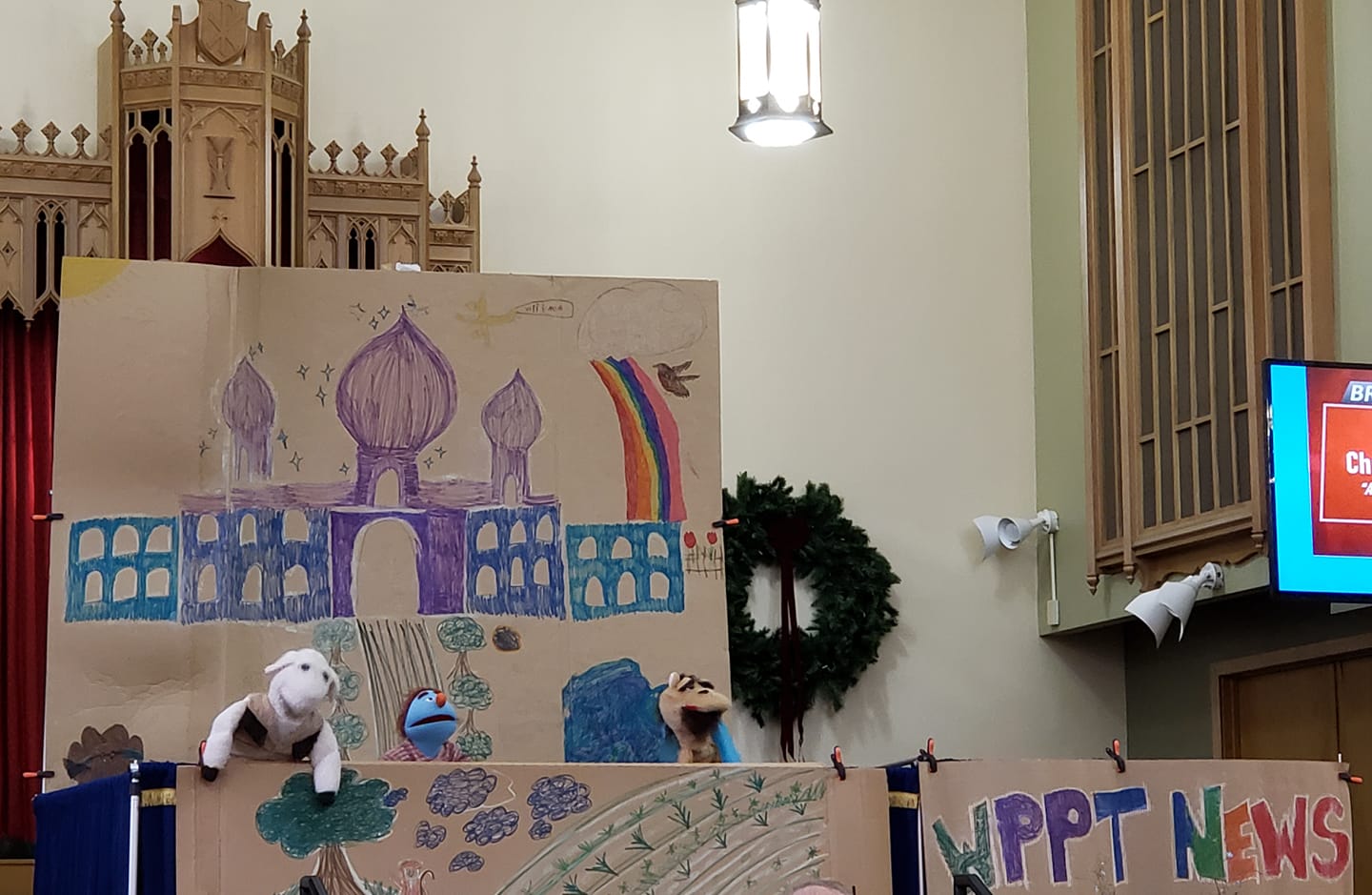
Our set was designed quickly one day at Sunday school by one of our parents. The kids all participated in coloring it. Pictured is a scene with reporter Camilla Camelo interviewing Sam Shepherd and Sheep.

This script can be downloaded as a pdf file. WPPT News Puppet Christmas News is about 10-15 minutes, depending on your scene and set transitions.

1 Comment

Filed under Uncategorized

Wisdom shouts

This devotion was published first in the IGRC for Unity weekly email. IGRC for Unity is a group of Illinois United Methodists who have rejected the Traditional Plan for the United Methodist Church and are working to create a United Methodist Church that is truly open to all. These devotionals will be taken from a text from the Revised Common Lectionary, and will often have a theme of inclusion and welcome.

The Revised Common Lectionary reading for September 12, 2021

https://commons.wikimedia.org/wiki/File:Container_Ship_%27Ever_Given%27_stuck_in_the_Suez_Canal,Egypt-_March_24th,_2021_cropped.jpg

Gospel Reading: James 3:1-12 and Proverbs 1:20-33

When the author of James wrote, “Consider ships: They are so large that strong winds are needed to drive them. But pilots direct their ships wherever they want with a little rudder. In the same way, even though the tongue is a small part of the body, it boasts wildly,” there is no way that he could have envisioned what happened near his homeland in March 2020. In the early days of a global pandemic and mass shutdown, the enormous ship Ever Given, roughly the same size as the Empire State Building, got wedged in the Suez Canal, devastating global trade. The eyes of the world watched with great anxiety as the ship blocked traffic for six days in one of the most important waterways in the world.

In the case of the Ever Given, the rudder was not enough to keep the winds at bay. The ship got turned in a way the pilot could not avoid and the result was an economic disaster. While the Ever Given’s rudder was not enough, the point is still made: The tongue is powerful. Words matter.

We live in a world full of talking. The cacophony of 24-hour news, click-bait articles, pithy memes, social media ‘researchers’, talking heads on TV, and political maneuvering, feels as if we are surrounded by fire. Foolish words are doing real damage, and as the song of Wisdom declares in this week’s reading from Proverbs, “Wisdom shouts in the street; in the public square she raises her voice. Above the noisy crowd, she calls out.” And yet it feels as if no one is listening.

Last week I shared an image with different petri dishes, each showing the growth of bacteria after breathing, coughing, and singing into the dish with and without a mask. I felt is a was a graphic representation of the wisdom of modern science. I believed it showed perfectly why masks were important, and that no one would be able to argue such a graphic and clear illustration.

As soon as I shared it though, I regretted it. Even as the likes start to count upward, I realized something. People are going to like the image or not like the image, but no one is going to gain anything from it. I was not sharing wisdom. I was sharing my perspective and making it clear that anyone who disagreed with me should feel ashamed for doing so. I deleted the post.

Was this a small step in “taming my tongue”? Maybe. I decided that it was more important to share compassion and kindness. Social media has created a world in which throwing matches on fires is easy. In fact, it is rewarded with little hits of dopamine called “likes.” There is little doubt in my mind that the comments sections have been set ablaze by the fires of hell. Intentionally rigged to fan the flames.

I cannot expect to bear good fruit on the vine of a rotten plant. Instead, I will try to cultivate true relationships. I will share kind words in hopes that wisdom can be heard above the noise. As the world seems to dig deeper trenches and divide along clear lines of demarcation, I will recognize my own tendency to bless God in one moment while cursing God’s image with the same mouth. Like James said, it shouldn’t be this way. I hope a voice of change can start with me.

Leave a comment

Filed under Uncategorized

Open Up

This devotion was published first in the IGRC for Unity weekly email. IGRC for Unity is a group of Illinois United Methodists who have rejected the Traditional Plan for the United Methodist Church and are working to create a United Methodist Church that is truly open to all. These devotionals will be taken from a text from the Revised Common Lectionary, and will often have a theme of inclusion and welcome.

In this reflection, I offer to you a prayer of illumination. Feel free to use it in your worship setting, and do not feel obligated to offer me credit.

The Revised Common Lectionary reading for September 5, 2021

Gospel Reading: Mark 7:24-37

“Open hearts. Open minds. Open doors,” has been the promise of the United Methodist Church since 2001. For twenty years the UMC has used this as a slogan in billboards, commercials, and websites. Today, if you go to umc.org, you will see the slogan at the very top of the page.

If you are anything like me, you have had misgivings about using the slogan. For many inside the United Methodist Church, it feels like false advertising. The exclusionary practices and policies of the United Methodist Church toward the LGBTQ community makes many wonder if the people of the United Methodist Church truly have open hearts, minds, or doors.

I still use the slogan, but I no longer think of it as a description. Instead, I see it as a prescription. I do not consider the word “open,” to be an adjective. Instead, I express it as a verb.

Today our passage includes Jesus healing two people. In the first story it seems as if Jesus himself is the one who is opened. This is a troublesome thought to many. They will use many dubious explanations about the diminutive form of “dog” to avoid what is clear in this story: Jesus acts in a closed-minded way. Yet this woman – a foreign woman from a foreign land – challenges Jesus and helps open his mind to the Gentile mission.

This is particularly poignant because this comes right off the heels of Jesus criticizing the religious hypocrisy of the Pharisees. Now Jesus is confronted by a foreign woman and he does the unthinkable – he changes. In the second half of this passage Jesus is confronted with a man unable to hear or speak. Jesus takes him aside, gives him a holy wet-willy (not really, but it is shocking how physical this sign is when the previous one was done at a distance).

“Then looking up to heaven, he sighed and said to him, ‘Ephphatha,’ that is, ‘Be opened.’” (Mark 7:34). With this word, the man can hear and speak. Despite Jesus’ best efforts to keep this miracle quiet, word about him spreads even more.

These are two stories of opening. First Jesus’ mind is opened. Then the man is opened. Sometimes open is a verb. Sometimes we are called as a church to do the opening. This is where the power of our slogan truly lies. It is our role as pastors, lay people, and Christian ministers all of us – to open up pathways to God’s power. We are to open our hearts and the heart of others. We are called to open our doors. We must always be willing to open our minds.

In my congregation, we say this prayer every Sunday before the reading of the Scripture. It is our prayer for illumination and keeps us mindful of our task as a church: “Holy Spirit, open our hearts to the story of your love. Open our minds to new ways of knowing you. Open our doors to all whom you would welcome.”

Many of us have been challenged by our own versions of the Syrophoenician woman. We were forced to open up our minds through encountering people who we may have at first considered “other.” Many of us have been opened up by Jesus himself. We were given ears to hear and words to speak by the power of the Holy Spirit. May all our closed spaces be touched by the grace of Christ. When I think of the United Methodist Church, I can’t help but look up to heaven, sigh, and pray, “Ephphatha.” Open up.

Leave a comment

Filed under Uncategorized

Tamar and Simone

This devotion was published first in the IGRC for Unity weekly email. IGRC for Unity is a group of Illinois United Methodists who have rejected the Traditional Plan for the United Methodist Church and are working to create a United Methodist Church that is truly open to all. These devotionals will be taken from a text from the Revised Common Lectionary, and will often have a theme of inclusion and welcome.

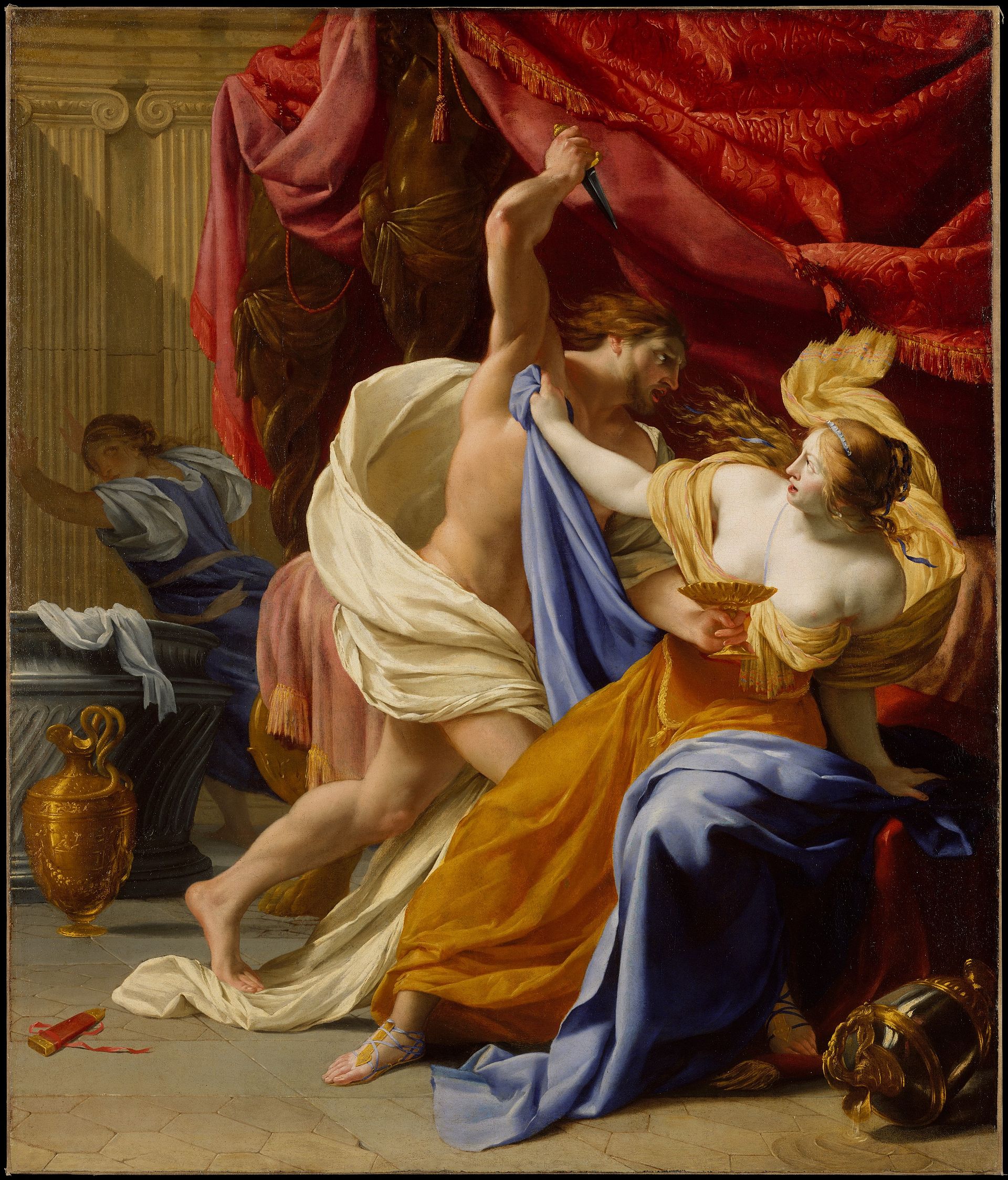
The Rape of Tamar, by Estache Le Sueur, wikimedia.

First Reading of the RCL for August 8, 2021

 2 Samuel 18:5-9, 15, 31-33 The death of Absalom (who started a war with David because David did nothing to punish Absalom’s brother who raped their sister Tamar).

I played team sports my whole life. Baseball, football, and basketball were my great passions as a kid. Even as an adult I’ve played semi-pro football and church league softball. Now as a parent I coach as often as possible – helping out with my daughters’ softball teams. I think this is why my first reaction to Simone Biles withdrawing from the team gymnastics competition was overwhelmingly negative.

In the immediate aftermath of hearing that she withdrew because of mental health considerations, I was frustrated. I was disappointed that she wouldn’t compete. I was mostly angry on behalf of her teammates. “She let them down,” I said to no one in particular. “They are supposed to be a team. They are supposed to pick each other up.”

My righteous indignation was raised on behalf of three women I had never met. “Michael Jordan never quit on his team,” I thought. “Tom Brady played through injury!” Then I saw a meme that reminded me of Kerri Strug, the gymnast who clinched Team USA’s gold in in 1996 landing a fantastic vault despite having an injured leg. At first, I thought Kerri was the true champion, and Simone had shown weakness.

Then I thought some more.

While I do not want to take anything away from Kerri Strug, I want to recognize something that we should have known then. She should not have vaulted on an injured leg. Strug was a part of a system and a culture that treated the women on the team as commodities that could be traded, replaced, and whose only value was reflected in the scores they achieved.

Since 1996, “many fellow gymnasts who endured the rigors of coaches Bela and Marta Karolyi’s ranch believed Strug was conditioned to push through her pain under an abusive environment where girls were afraid to challenge authority.” (Holly Ford, https://www.nbcphiladelphia.com/news/sports/tokyo-summer-olympics/1996-olympic-gymnast-kerri-strug-praises-simone-biles-decision/2900065/). Strug, Dominique Moceanu, and Mckayla Maroney are just three former gymnasts who have come out in support of Biles.

They were all a part of a system that compelled women to lose their autonomy, erase their dignity, and submit to the desires of more powerful people – often men. It was a culture that devalued questions and demanded obedience – or the girls would be replaced. It was a culture that produced gold medals, and it was a culture that allowed for emotional, physical, and sexual abuse.

Simone Biles survived abuse. She has stated that she returned to Olympic competition in part so that her voice as an abuse survivor would not be silenced. She wanted to hold USA Gymnastics to the fire and not go away quietly. Her platform as the greatest gymnast of all time gave her a power that no other gymnast has had.

Simone Biles became famous for doing athletic feats that no other gymnast has done before. She has four moves named after. She altered scoring systems, and now she has altered cultural systems. By withdrawing, she did something no other gymnast has done before. She stood up for herself. She stood up for the hundreds, maybe thousands of girls who were abused by powerful coaches, trainers, and doctors. She stood up and claimed her own autonomy, not for the glory of USA Gymnastics – a group that helped create a culture of abuse – but for her own self-care.

As I watched the events unfold – tape delayed on NBC – I saw the faces of her teammates turn from shock and disappointment to fierce determination and I realized that Simone Biles owed me nothing. She is a champion in the truest sense of the word. She championed for those little girls in gyms across the country who are pushed too far. She championed for those who suffer from mental health in silence for fear of being mocked or belittled. She is a champion – no matter what color medal hangs around her neck.

And what does any of this have to do with the Biblical texts this week? Very little, unless you read the story between this week and last week in 2 Samuel. The lectionary skips from 2 Samuel chapter 12 – in which David rapes Bathsheba and skips to chapter 18 and the death of his David’s son Absalom. Skipped is a civil war between David and Absalom. Also skipped is the rape of Tamar, David’s daughter.

While the Biblical text is ambiguous about Bathsheba’s rape (Biblical authors did not have the same concept of power dynamics), Tamar’s rape is explicit. She is raped by her half-brother Amnon. It is a violent exchange. She pleads with him – first not to rape her – and then not to discard her. Amnon’s actions are vile. When Absalom finds out, he tells her to be quiet. David does nothing to Amnon “for he loved him like a first born son.”

Tamar – much like dozens of American gymnasts before Simone Biles – was silenced. Yet her actions stood defiantly against her rapist. Wilda Gafney writes, “Tamar proclaims it publicly so that it may be Amnon’s shame and ultimately his death sentence. But she will have to wait years to see justice done. Tamar rips open her royal dress just as her body was ripped open, using that sartorial wound to make visible her vaginal wounds and those of her soul. She cries, not silent tears but a cry loud as the cries heard in battle, the cries of women in labor, and the cries of desperate people to their God. Tamar’s cry holds Amnon accountable – even when their father does not.” (Gafney, Womanist Midrash, Westminster John Knox Press, 2017; p. 215)

Life is messy. It is not always easy to draw easy lines of cause and effect. “Everything happens for a reason” is seldom a helpful way of understanding God. Why did Absalom die? Was it because of Joab’s ruthlessness, David’s ineffective leadership, Amnon’s lust… How far back do we go? Is it because of David’s lust after Bathsheba? Was it because David himself rose to power because of killing Goliath? How far back do we go? 

Did Simone Biles quit on her team or did she reclaim her agency? Did she crack under the pressure or did she stand up and champion those who are all-too-often silenced? Tamar was silenced, but Amnon and Absalom were ultimately silenced too. David’s kingdom crumbled, yet God’s love is steadfast and endures forever. For the orphan, the widow, and the alien, for Tamar, and for Simone, God’s love endures forever.

Leave a comment

Filed under Uncategorized

E and Me Season 2

E and Me 2-1(1)CLICK HERE TO LISTEN

The E and Me Podcast has started season two. Ellie and I have recorded four episodes, and have released the first one. We have all of our recording equipment at home, so we’re hoping to have more episodes this season. Episode 2-1 is about jealousy, and it features our special guest and number one fan: Lucy, Ellie’s little sister.

This is the podcast to help families have important conversations. I hope you listen with someone you love. Don’t forget to search and subscribe on your favorite podcast player.

1 Comment

Filed under E and Me Podcast, Uncategorized

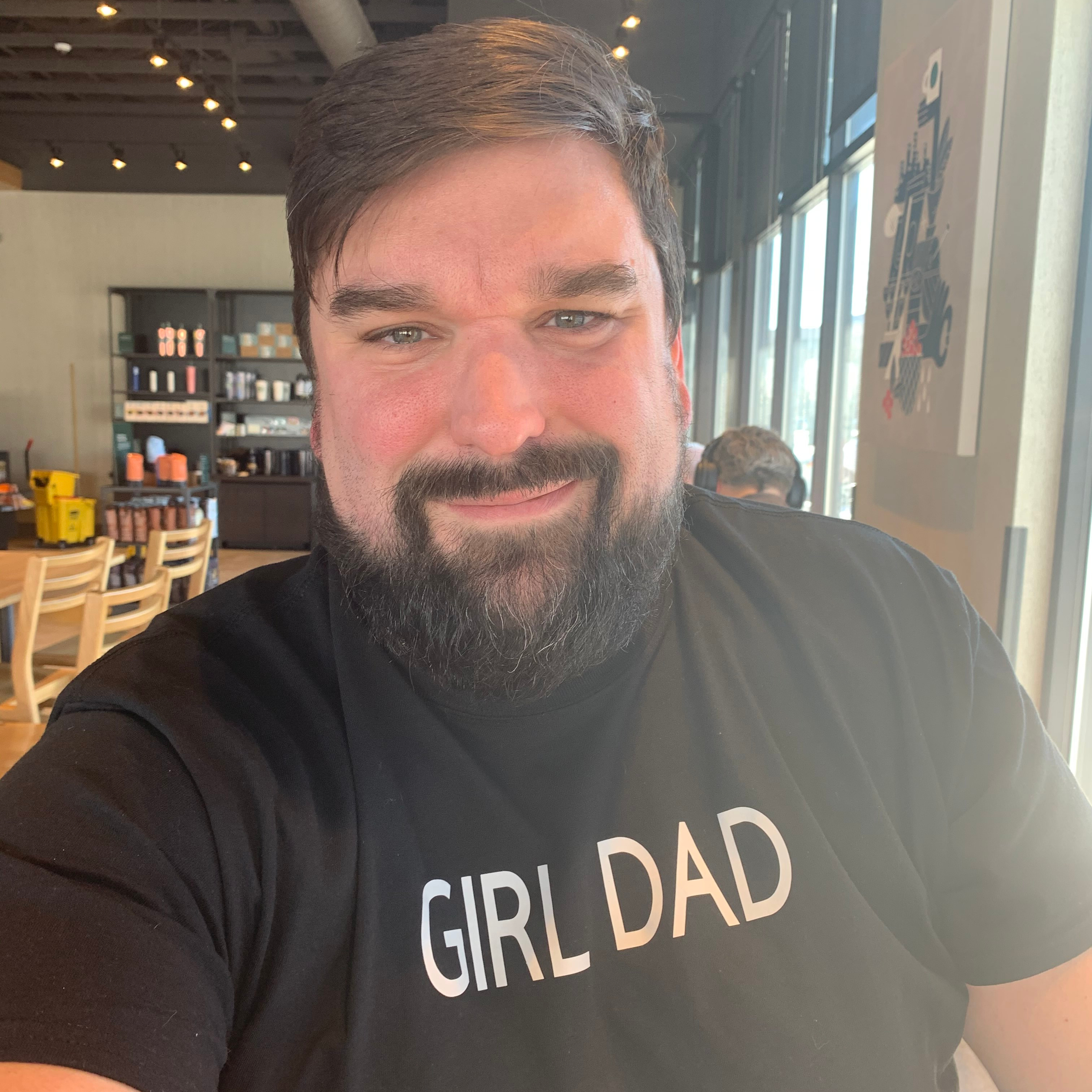
#GirlDad is not just about my daughters

IMG_3458Dear girl friends of my daughters,

I feel like I need to explain something to you. Hopefully you know that I love my daughters very much. Since you are her friend, you should know that my love for her is so strong that it spills over onto the people she loves, too. You are not mine, but I love you anyway. It is one of those things that has most surprised me about being a father. I always knew that I would love my girls no matter what. From the moment they were born, I knew that I would do anything to keep them safe, warm, protected, happy, and loved.

What I did not expect is just how much I would love their friends as well. I love it when you come over. I love watching you girls sit on the couch together and watch movies. I love hearing you singing the newest pop hit. I love hearing you giggle about boys and crushes. I love watching your dance parties and choreography.

I’ve long said, “If I love you, I feed you.” That’s why I love taking you out to dinner or making you smoothies. I love it when you sleep over and all pile in the big bed in the spare room. I love making pancakes for you all in the morning. You’re not a nuisance. You’re not too loud. You’re never annoying. There is no more beautiful noise than my daughters laughing with their friends. You’re actually providing me a beautiful gift when you come over. Thank you.

I will always give you a hug if you want it. I won’t put my arms out to you, or tell you “Give me a hug,” because I don’t want you to feel uncomfortable. I don’t ever want you to feel compelled to give me a hug, but if you put out your arms, it makes me very happy. I am an affectionate person. I love to give hugs, but consent is always my top priority. I want you to know that I’m always here for a hug, but only if you want. And if you don’t want to, I get it.

I will always give you a roof if you need it. I know sometimes you are going to go through difficult times with your own parents. If you have an unhealthy relationship at home, reconciliation with your family is always preferred, but my home will always be a safe place for you. This is especially true if you are rejected by your family for your sexuality or if you are gender non-conforming. I don’t want you to ever feel unsafe in your own home. If there is ever abuse in your home, physical or emotional, consider me your safe haven. I will listen to you. I will believe you. I will do what I can to protect you and keep you safe. If you are ever forced out – even if it is because you screwed up – we have an extra room for you.

I think you are absolutely beautiful, right now, just as you are. But I am much more likely to ask you about school, or your favorite book, or you softball team than I am going to tell you look pretty, or complement your hair or your outfit. I think you are beautiful, but I also think our culture puts way too much onto girls about how they look. You are so much more than your looks. Please don’t believe anyone that tells you that you are not beautiful. If I hear you insult yourself, I will intervene. If I hear you belittle your own body, looks, or anything physical about you, I will remind you that you are beautiful. I doubt it will matter much to you what I think, but I will not let self-deprecation go unchallenged. And it may not seem like a big deal, but it hurts me when I see you scratch out your face on Snapchat. The world is better when you are smiling, don’t blot that out.

I believe in you. I believe in your heart, your mind, your abilities, and your compassion. You don’t need a boy to define you. You are valuable, worthy of love, and worthy of affection. That is true whether or not a boy likes you. It is true whether you are single or in a relationship. If you find a boy (or girl) you love, I’ll be happy for you, but you are so much more than what you can offer to a boyfriend. You have a strong mind and an imagination. You have skills, talents and passions. I want to know about them. I want to hear about what you care about. Any boy that says he “likes you” should want to also. Please don’t ever mistake jealousy for love. Jealousy comes from fear and insecurity. Love should strengthen and uplift you, not hold you back. As you get older, you will have more intimate and powerful relationships. Always remember that consent is everything. Don’t let anyone dim your light. And if you are ever in a situation where you feel abused or in danger, I will help.

I will always have my daughters’ back, but I won’t allow her to be mean to you. If you and she get in a fight, I will tell her if I think she is wrong. If you hurt her, I will always be on her side, but I won’t stop caring about you. I have a forgiving heart. My love for you started with her, but it doesn’t end with her. Even if you and she just slowly drift apart, know that I will always have the light on for you. If you come back into her life, I will be there happy to welcome you back, too.

These are all things I hope my daughters know, but I want you to know it too. If you have a great relationships with your Dad, that is awesome. If you don’t, I know that I will never be your Dad, but I am, and always will be, a #GirlDad, so I’ve got your back too.


4 Comments

Filed under Uncategorized

Inclusivity Devotional 8 (Matthew 5:13-21)

This devotion was published first in the IGRC for Unity weekly email. As the Communications Director for IGRC for Unity, I compose a weekly email with news, resources, and reflections. IGRC for Unity is a group of Illinois United Methodists who have rejected the Traditional Plan for the United Methodist Church and are working to create a United Methodist Church that is truly open to all. These devotionals will be taken from a text from the Revised Common Lectionary, and will often have a theme of inclusion and welcome.

salt

The lectionary text for February 9 is Matthew 5:13-21. This come immediately after the Beatitudes, and serves as the beginning of Jesus’ most famous teaching in the Gospel of Matthew, also known as “The Sermon on the Mount.” I’ve told many people, ‘If you are only going to read three chapters in the Bible, make it Matthew 5, 6, and 7 – the Sermon on the Mount.’

Verses 13-16 include two famous lines, “You are the salt of the earth,” and “You are the light of the world.” Salt and light, this seems like an odd pairing. One is essential to life, the source of heat, the first step in Creation, and an eternal symbol of God’s presence in the world. The other is on our table at the diner. Salt however, is also essential to life. Some have argued that salt is the primary ingredient to civilization itself. It allowed for the preservation of food and the survival of people in times of scarcity and famine. If it were not for salt, people would have remained nomadic, simply following the food where it could found instead of settling into a place where life could be preserved. Light and salt. One is essential for revelation. The other is essential for preservation. Both are invaluable. Perhaps we can learn something from these metaphors Jesus used.

So many of our culture wars are framed in terms of “us vs them,” “liberal vs conservative,” or “progressive vs traditional.” Instead of framing his sermon in similar terms, Jesus lifted up the salt and the light. Illumination and preservation; these are the building blocks of the Kingdom of God. The Sermon on the Mount is Jesus’ articulation of an alternative way of being, but he is not inventing something entirely new.

This passage reveals that the Kingdom of God is at the same time built upon the foundations of God. The Law is still to promise of God. It is still the way people should live in relation to God and to one another. It is to be preserved, but not in the rigid and harsh ways that some think it should be. The light reveals something new. It reveals the heart of the Law, the relationships essential to the Law, the love that is at the foundation of God’s Law. Jesus came to proclaim something new that is not new at all. He came to proclaim God’s love which is revealed not simply through the law, but in its loving interpretation and application.

And this brings us to perhaps the most important part of the Sermon on the Mount: the audience. Remember who Jesus is calling salt and light. Remember who Jesus is telling “You are essential to life! You are essential to the Kingdom!” The audience came from “Galilee, the Decapolis, Jerusalem, Judea, and from the areas beyond the Jordan River” (Matthew 4:25). Jesus did not reserve his teaching to a privileged few. He preached to Jew and Gentile, tax collector and zealot, Pharisee and sinner. He came so that all may have life. All of them – poor, oppressed, hungry, downtrodden, and rejected, they are the “Light of the world.” All of us are the “salt of the earth.”

As we are moving forward as a United Methodist Church, we can remember Jesus’ call to be the salt and the light. We can preserve what is good, what is of Jesus’ love, what is worth preserving for the sake of God’s Kingdom. We can illumine new ways of experiencing God’s love. We can lift up our light of justice, grace, and mercy. We can lift up the light of Christ to those who have been kept in shadows. As we move forward as a denomination and conference, let us be wise in preserving our mission, our Wesleyan roots, and our traditions which are life-giving, and let us carry to the light of Christ to those who have yet to see what true love looks like.


1 Comment

Filed under IGRC for Unity, Lectionary Reflection, Uncategorized