Category Archives: Christianity

11 ways to #BeChristInChristmas

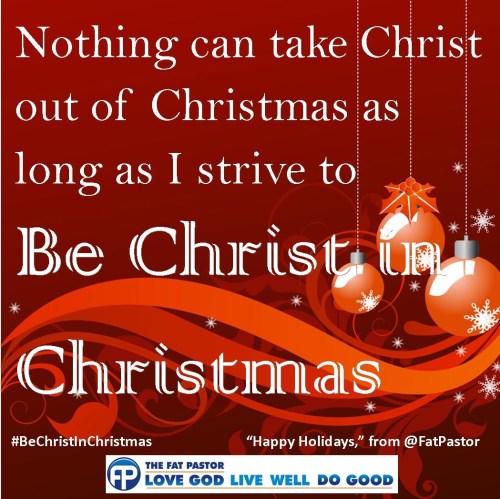
christmas meme1. Don’t get mad at people when they wish you “Happy Holidays.”  I’m not sure who decided that anger is the right Christian response to a polite greeting from a stranger.  I say “Happy Holidays” all the time.  Is it because I’m a politically correct, overly emotional, too-sensitive, mamby-pamby, liberal pinko who hates Christmas and wants to hang an Obama Tree in my living room?  Maybe, but I’m only a few of those things (I’m not telling which).  I just think it is a nice thing to say.  People that are looking for Christ at the check-out register of Target might be looking in the wrong place.  Frankly, I’m not too interested in finding Christ at my daughter’s public school either.  Check that.  I can find Christ anywhere, but I find it in the heart of my neighbor, not in slogans, signs, or songs.

2. Go to worship.  It might sound overly simple, but maybe we can look for Christ in his house.  The purpose of worship is to connect with the divine, so look for Christ in the hearts of your brothers and sisters.  Find Christ in the songs of the ages.  Find Christ in the passing of the peace, in the breaking of the bread, and in hearing the Scriptures read and proclaimed.  If you’re not a church-goer, give it a try.  Most churches are at their best in the weeks leading up to and on Christmas Eve.  There are few moments of the year I enjoy more than singing “Silent Night,” and lifting a candle on Christmas Eve.  I’m not going to guarantee that every House of Worship will suit you.  The body of Christ has many flaws and scars, yet the presence of Christ can be found in the midst of this imperfection.  Then go out into the world and be the presence of Christ for others.

3. Read the Bible.  Again, sounds simple.  There are a lot of ways to encounter Christ, and one of them is to read the stories of his life.  Read the Christmas stories as found in Matthew and Luke.  Read about Jesus’ ministry and discover what he said, who he loved, where he went, and what he did.  Allow the Sermon on the Mount to challenge your life.  Allow the parables to challenge the way you think of the world.  Discover the radical strangeness that is the Kingdom of God.  Be like a tree planted by the waters, and delight in the stories of Jesus.  Then maybe his birth will mean something more.

christmas check list

4. Volunteer.  Give your time to a cause that is meaningful.  Use your talents, skills, and passion for something larger than yourself.  Love mercy, do justice, and walk humbly with your God.   Find a soup kitchen, a food pantry, a clothes closet, or a shelter that needs help.  Sign up with the Boys and Girls Club.  Offer to teach a class at your church.  Volunteer to read to kids at your local elementary school.  Then after Christmas is over, keep doing it.

5. Shop fair trade.  Buy products you can feel good about.  Support economic justice by making sure that the people that created the products you buy are paid a fair wage.  There is a shop in downtown Davenport I buy a lot of stuff from called SIS International Shop.  Equal Exchange is another great company that I love to support.  Ten Thousand Villages is a wider chain with some great merchandise as well.  
christmas meme 2

6. Buy gifts that will improve relationships, not just add to clutter.  A few years ago my brother, sister, our spouses, and I decided that we weren’t going to buy each other presents.  Instead we gave our parents a night with the grandkids, and the six of us went to dinner and bowling.  I don’t get to see them nearly as much as I’d like, so I cherish that night we shared much more than any t-shirt or book that they might have gotten me.  Last year my daughter got a big Lego Star Wars set for Christmas.  It was great, but the best part of that gift were the hours that we spent together working on it.

advent books7. Make one of these.  I could buy a cheap box with terrible chocolate to pop out each day leading up to Christmas, or I could make this.  The Advent calendar of children’s books is an amazing idea I’ve seen from a couple of people on Facebook.  I hope I take the time to make the latter.  I’m afraid I’m going to end up buying the former.

8. Go on a prayer run.  This is a term I first heard from a follower on my Facebook page.  She told me that while she runs, she prays.  She solicits prayer concerns from friends from church, and takes them with her as she goes on a run.  Sometimes she listens to the Bible as she runs.  I’m hoping she adds the Pulpit Fiction podcast to her playlist too.  The point is, she’s improving her physical health while at the same time strengthening her spiritual life.  She told me recently that she ran her first 5K.  I’m so glad she shared her joy with me on the FB page.  Now I share her idea with all of you.  You can also participate in the 2014 Advent Run to Bethlehem.  The distance from Nazareth to Bethlehem is 103.2 miles.  Last year, 23 different people made a total of 67 entries in our Advent Run.  There were entries from 14 different states plus London, England. We went a total of 255 miles.  Join in the virtual run to see if we can cover that distance as a team between Thanksgiving and Christmas.  Here is the link to submit your run.  It will open on Thanskgiving Day, 2014.

9. Throw a Baby Shower for Jesus.  There is a women’s shelter near you.  There is a scared teen mother you know.  There is a Children’s Home that is struggling to stretch their budget.  Invite people to a Baby Shower for Jesus.  Have games, food, and decorations just like a regular baby shower.  Invite everyone to bring gifts just like at a regular shower.  Then give them all away to someone in need, and remember that Jesus said, “I assure you that when you have done it for one of the least of these brothers and sisters of mine, you have done it for me.” (Matthew 25:40; CEB)  And if the idea of throwing yet another party before Christmas is too daunting, then wait until Epiphany (January 6, 2014), the day we remember the coming of the wise men to bring gifts to the baby Jesus.

10. Advocate for Justice.  The unnamed miracle of Christmas is that Mary survived.  Mary gave birth among animals and filth.  There was no professional to help her.  She was probably very young.  The fact that she survived the birth is a miracle that few name.  This Christmas, name that miracle. Tell the stories of the thousands of women who give birth in similar conditions every day.  There is a natural connection between the need to advocate for maternal health and family planning and the coming of Christ.  I wrote this reflection after I went to Washington to meet in Congressional offices on Capitol Hill.  Understand though, that you don’t need to go to Washington.  Write or call your local Congressional office.  They pay attention to what people talk to them about.

11. Tweet #BeChristInChristmas.  Share ways that you are being Christ to someone else this holiday season.  Use the power of social media to share the good news of Christians being like Christ.  Last year there were a few people that participated and shared some great ideas that included sending cards to soldiers, shopping for an Angel Tree, and singing in nursing homes.  I’m hoping that this idea can grow, and we can all be inspired to do something for mercy, justice, and kindness.  Be the hands, feet, heart, mind, and mouth of Christ this Christmas.  And please, have a very happy holiday!

12 Listen to this song by Christopher Grundy.
Follow The Fat Pastor on Facebook

Follow @FatPastor on Twitter

18 Comments

Filed under Christianity

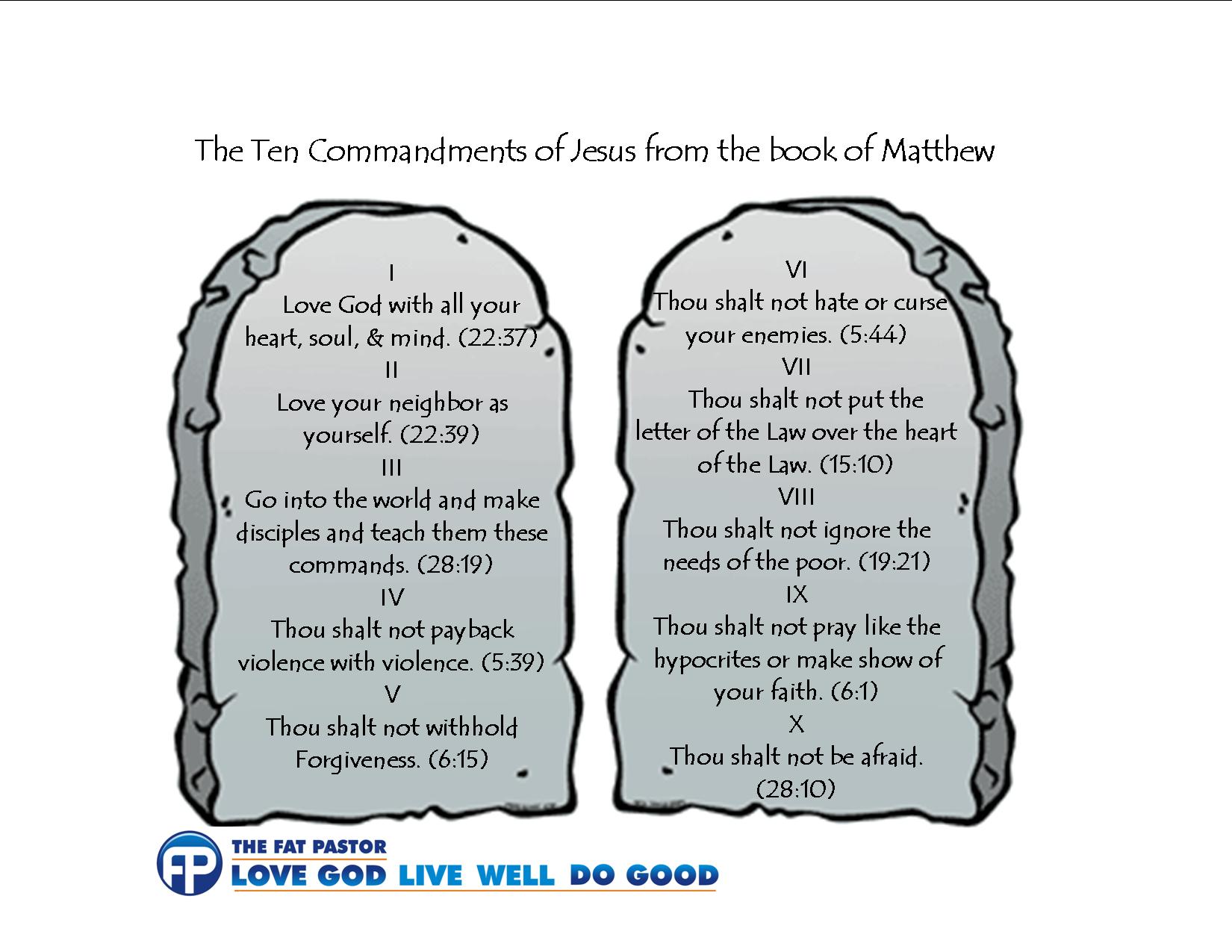
The 10 Commandments of Jesus

This is not comprehensive.  What are some commandments that you would add?

This is not comprehensive. What are some commandments that you would add?

There are a lot of people that clamor to put the Ten Commandments in public places.  I believe too firmly in the separation of Church and State to want to see that happen.  Yet sometimes I wonder why no one seems to want to put the sermon on the mount in the courthouse lobby?  Jesus said, “When they wish to haul you to court and take your shirt, let them have your coat too.”  How would that go over?  After we put the sermon on the mount at the courthouse, could we put Luke’s sermon on the plain on Wall Street?  How would that fit?  He said to “lend expecting nothing in return” (Luke 6:35 in the sermon on the plain).  What would that do to our economic system?  

Really, I can’t help but wonder if there is any way to reconcile a realistic society with Jesus’ teaching.  Does our justice system of punishment and retribution have anything to do with the grace and peace that Jesus taught?  Could our society function on the premise of turning the other cheek?  Could our economic structures survive Jesus’ teaching about money?  Jesus places some pretty big demands on his followers.  It is hard to imagine how it would even work.

But then, do the systems we have in place now work? I’m not sure a society can function under the rules Jesus laid out, but I’m also pretty sure no society has really tried.

“Christianity has not been tried and found wanting; it has been found difficult and not tried.” – Gilbert K. Chesterton

Follow the Fat Pastor on Facebook

Follow @FatPastor on Twitter

1 Comment

Filed under Christianity, Media

Who gave you this authority?

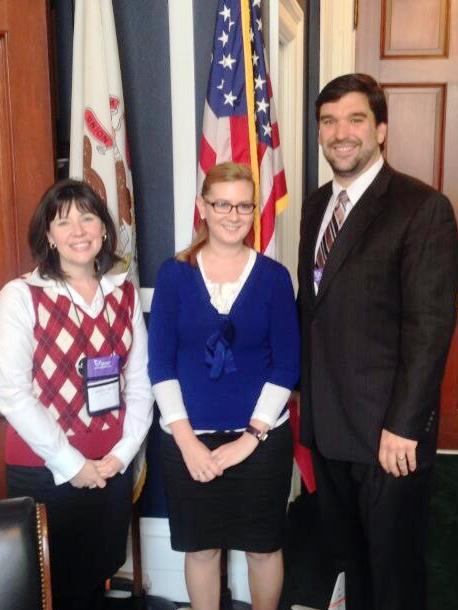
ImageI walked by the chapel on my way to lunch.  “Come in,” my heart whispered.  It was still racing a little.  I didn’t want to stop.  The adrenaline was still flowing after meeting at three different offices on Capitol Hill.  At each office, I was with colleagues with the Healthy Families Healthy Planet project.  Surrounded by my sisters in Christ, we made our case on behalf of women around the world in front of two Senators and a Congressman.

We walked the halls of the Temples of Power, and strode purposefully across the Capitol.  We talked about the 222 million women that wish to delay their pregnancies, but cannot gain access to contraception.  We spoke for the 270,000 women that die each year from complications to child birth and pregnancy.  We spoke for the thousands of mothers that can be saved.  We reminded the staffers that funding international maternal health and family planning initiatives could prevent 54 million unintended pregnancies, 26 million abortions, and 7 million miscarriages a year.

In just my second trip to Washington as an adult, I gained access to some of the most powerful people in the world.  As I walked into the Dirksen Senate Office Building, I felt a sudden surge of desperation.  I knew my facts.  I knew the stories.  Yet I was suddenly faced with the grandeur of it all and doubted.  “Who am I?” I thought.  Surrounded by so much marble and glass, I could not help but feel the power of my own insignificance.  Then something funny happened.  Each meeting was a little easier than the last.  Each time I looked at my notes less, and looked into my heart more.

Image

From left: Rev. Carrie Carnes (a friend and colleague), Kelli Tripp (a member of Rep. Aaron Schock’s staff), and me.

Now back from the three meetings in 90 minutes, I was still in high gear.  Still breathing a little heavy.  My mind did not want to stop.  It wanted to keep going, keep talking, keep engaging. “Come in,” my heart beckoned.  I walked into the chapel of the United Methodist Building.  I stepped a few rows in, past another taking a similar pause, and sat.  I breathed.  My heart slowed.  My mind opened.  I prayed.

I prayed of exhaustion.  Exhausted by the three days of learning and training.  Exhausted by the walking and the waking early. Exhausted by the stories of the suffering women endure around the world.  I prayed of mourning.  Mourning despair of mothers who have lost children.  Mourning my brother in Christ at the training that talked about his own mother losing 10 infant children over the course of her life.  I prayed of celebration.  Celebrating the strength of so many women.  Celebrating the women in my life, and the women I was surrounded by at the training.  Celebrating the victories, and the chance to speak the truth to power.

I prayed and sunk deeper into my chair as the Spirit washed over me.  Then I saw the Bible, once again my heart beckoned, “Come.”  I opened the Bible, and read the first verse my eyes focused on, “When Jesus entered the temple, the chief priests and elders of the people came to him as he was teaching. They asked, “What kind of authority do you have for doing these things? Who gave you this authority?” (Matthew 21:23, Common English Bible).

Who am I to do these things?

I am a father.  I am a father who loves two daughters with all of my being.  I am a father who dreams of their future and wants to open every pathway to joy in their lives.  I am a father who wants to see my daughters grow to be educated, independent, powerful women.  I am a father who wants nothing less for all the girls of the world.  I am Papa Robb, who will stand up for the girls that no one else will stand for.

What kind of authority do you have for doing these things?

I claim the authority of the women that suffer needlessly.  I claim the authority of the the motherless infants, and the wifeless fathers.  I claim the authority of the communities that are stuck in the cycles of poverty that keep them from abundant life.

Who gave you this authority?

My authority lies in Christ Jesus, who came so that we may have life, and have it abundantly.  I am given authority by the one who raised the widow’s son, who let Martha sit at his feet and learn, who engaged the foreign woman at the well, and defended the woman caught in adultery.  I do these things by the power of the one who called out the most powerful men in the world, who defied their pomposity, and saw through their grandeur.  I am given authority by the one who suffered crucifixion at the hands of the powerful, who suffered in silence and grace, determined to fulfill his mission of peace, justice, and salvation.  I am given authority by the one who was Resurrected, and offers to me the same Resurrection.  I am given authority by Jesus Christ, who has already claimed the victory

I finished my prayer.  I thanked God for this moment.  I thanked God for beckoning me to come.  

And now I will go.  I will go with the strength of the women and men I have met on this journey.  I will go with the strength of knowledge.  I will go with the strength of love.  I will go with the strength of Jesus Christ, who came that all may have life, and have it abundantly.  I will go with the promise that the work we do is just, the promise of God is steadfast, and the victory is already won.

Related: Read about the Unnamed Miracle of Christmas

Follow The Fat Pastor on Facebook

Follow @FatPastor on Twitter

Follow Healthy Families, Healthy Planet on Twitter

4 Comments

Filed under Christianity

“… I’m afraid he’ll ask me the same question”

ask god question

I’ve always liked this as a quote.  I’m not sure why the “in the mirror, dimly” image came to me, but I took this picture about a week ago specifically to make this meme.

“Sometimes I would like to ask God why he allows poverty, famine and injustice in the world, when He could do something about it…but I’m afraid He may ask me the same question.” Anonymous.

Follow The Fat Pastor on Facebook

Follow @FatPastor on Twitter


1 Comment

Filed under Christianity

The strangest of them all

ImagePhyllis Tickle calls it “The most difficult parable of them all.” David Lose calls it “The most confusing parable.”  The New International Version labels it “The Parable of the Shrewd Manager.”  The New Revised Standard uses the word “Dishonest” instead of shrewd.  The Common English Bible goes it different direction with the subheading “Faithfulness with Money.”

All parables have an element of strangeness.  That is sort of the point of them.  Jesus uses parables to teach about the Kingdom of God, which is a strange concept.  Forgiveness, compassion, self-sacrifice, these are counter-cultural concepts that take strange stories to understand. Some parables are strange because we don’t understand the cultural weight of words like Levite or Samaritan.  Some parables are strange because of the actions people take (who would plant a weed – one that gets really big – in a garden?) Yet despite the general strangeness of Jesus’ parables, the one found in Luke 16:1-13 seems to be the three-dollar bill.

It is a story of an owner and a manager.  The owner discovers that his manager has been dishonest, fearing that he is going to be fired, the manager decides to do some dealing.  Facing impending unemployment, he decides to make some quick deals so that “people will welcome me in their houses.”  He goes to a few of the owner’s clients and settles their debt at much lower rates.  Collecting about half as much as they owe, the manager figures that the clients will be grateful to him, and treat him well in the future.  The owner finds out about the tactics, and this is where it gets strange.

The owner commends the man for acting “shrewdly” in the NIV and NRSV, “cleverly” in the CEB.  What?  The manager, who was already identified as dishonest, goes about being more dishonest, and the owner praises him?  This one is a tough one to figure out.  Why would the owner praise him?  In most parables, the owner or master is supposed to be God.  Here we seem to have God praising a man that screwed him.  There is only small consolation in remembering that the disciples rarely understood Jesus’ strange stories either.

So what are we left with?  What is the good news?  I think it comes down to the same place that most of Jesus’ strange stories come to: relationships.  At the beginning of the story, we have many strained relationships.  There is a strained employer-employee relationship.  There are debts and debtors.  What are we left with at the end of the story?  Reconciled relationship and cancelled debt.  It makes no sense for the owner to praise someone for cancelling the debts people owed him.  He did not get what was coming to him, and yet he celebrated.

Perhaps a quick scan around the rest of the Gospel of Luke will help lift the fog from this confusing story.  Remember when Jesus taught the disciples to pray? Back in chapter 11, he tells them “Give us each day our daily bread.  And forgive us our sins, for we ourselves forgive everyone indebted to us.”  What if Jesus actually meant that?  “But wait!” you might be saying, “He wasn’t talking about money.  He was talking about sin, and you know, trespasses (whatever that is supposed to mean).”  All I have to say is, really?  You don’t think Jesus was talking about money?  This is the Gospel of Luke we’re talking about, the one that says “Blessed you that are poor… Blessed are you who are hungry now…” not “Blessed are the poor in spirit… Blessed are those who hunger and thirst for righteousness” like the Gospel of Matthew.   It is in the Gospel of Luke that Jesus says, “None of you can become my disciple if you do not give up all your possessions.”  Later he tells a man to “Sell all that you own and distribute the money to the poor, and you will have treasure in heaven; then come, follow me;” (Luke 18:22).  Then he says “it is easier for a camel to go through the eye of a needle than for someone who is rich to enter the kingdom of God'” (Luke 18:24).

And don’t give me the line about the gate in Jerusalem that was called the “Needle’s Eye” or some such nonsense.  There is no archaeological evidence of this mythical gate.  There are, however, many non-canonical uses of a similar phrase to explain something that is really, really hard.

On Episode 29 of the Pulpit Fiction Podcast, Eric and I discuss this difficult parable, and the lament found in Jeremiah 8:18-19:1

On Episode 29 of the Pulpit Fiction Podcast, Eric and I discuss this difficult parable, and the lament found in Jeremiah 8:18-19:1

All of this is to say, maybe Jesus is trying to teach us something about the nature of relationships and money, and our relationships with money.  Perhaps the manager was praised because he put relationships ahead of money.  You could argue that his motivation was less than pure, but in the end, he valued his ability to “be invited into people’s homes” over his ability to please his boss.  And maybe the owner cared more about his manager’s heart than he did about his bottom line.  The Pharisees didn’t get it.  They valued money, and understood that having money was the same as having God’s favor.  Jesus is reminding them that there are things in this world more important than wealth.  Perhaps the level of confusion that this parable stirs is evidence of how remarkably important it really is.  This one blows our mind, because it seems to go against all of our common understanding of fairness.

And that’s just it.  The Kingdom of God has little to do with fairness.  It has little to do with keeping proper ledgers and making sure that everyone gets what is their due.  The Kingdom of God is about relationships.  It is about reconciliation.  It is about forgiving our debts, as we forgive our debtors.  It is not an easy story to hear.  It is sometimes an even harder story to live.  It doesn’t make good economic sense.  Jesus had a funny way of not making  sense.

It doesn’t make sense to plant a weed in a garden.  It doesn’t make sense to ruin a whole vat of flour with some leaven.  It doesn’t make sense to turn your other cheek, throw a party for people that can’t invite you to theirs, leave behind a flock because one sheep strayed, or throw a party for your good-for-nothing son who finally came back home with his tail between his legs.

It doesn’t make sense that God would come to earth and take on flesh.  It doesn’t make sense that God would claim me as his own, or invite me to the Table of Grace.  It doesn’t make sense that Jesus would do all he could for a people that responded by nailing him to a cross.  It doesn’t make sense that tomb was empty, or that disciples have been able to experience Christ in the breaking of bread for centuries since he was said to be dead.

This strange parable is a doozie.  It is a challenge.  It is a challenge to look at what cancelling debt really looks like.  It is a challenge to take a close look at how I serve wealth over God.  It is a challenge to look at how I spend money, how I save money, and how I treat others.  It is a strange one, all right.  Maybe that’s how God intended it.

Listen to the Pulpit Fiction Podcast about this parable

Follow The Fat Pastor on Facebook

Follow @FatPastor on Twitter

7 Comments

Filed under Christianity

A beautiful story in a three minute commercial

I’m not sure what product this commercial is selling. I don’t think I’m one of their intended customers.  It, however, tells a beautiful story.  A story that is ancient and timeless.  It is a story of giving.  What does it mean to give and expect nothing in return?  This seems to be the heart of generosity, and the heart of the Gospel.

Jesus told stories like this.  He told a story of a father that gave a huge party when his wasteful son returned home.  He told a story of workers that were paid the same even though they did not seem to earn it.  He told a story of a wedding feast where all the invited guests didn’t come, so he brought in the people off the streets.

And he told a story about a man, beaten, robbed, and left for dead.  The man was passed by time and again until finally a foreigner found him.  This man took the beaten man, gave him medicine, brought him to an inn, and gave him a chance to live.  It’s funny, Jesus’ story that we know as The Good Samaritan didn’t have a neat little happy ending like the video above.  I’m not sure Jesus would have made a great marketing director.

Instead, Jesus gave us the greatest ending of all.

Follow The Fat Pastor on Facebook

Follow @FatPastor on Twitter

4 Comments

Filed under Christianity, Media

Live from #LionLamb13

At some point tonight, I’m going to go to sleep.  When I do, I will sleep well.  Not yet though.  First, I have to stop my head from spinning.  I’m not sure how to explain all that happened today at the Lion and Lamb Festival.  I think the only way I can tell you about it is by telling you a story about my little girls.

Within minutes of arriving at Praise Park in Fort Wayne, Indiana, we were greeted by two little girls.  Age six and five, they were delighted to see my two daughters, age six and three.  The four of them became friends immediately, achieving immediate intimacy in a relationship in a way that only children can.  The four spent most of the day together.  “I’m in first grade too!”  They worked on crafts together.  “I like to color too!”  They ran and danced and played together.  “I like soccer too!”  They relished in learning about each other, and sharing the things they loved in an unbridled and unpretentious way.  For a six-year-old, there is no such thing as idle small talk.  There is only genuine discovery.

As a cool breeze slowly transformed the sweltering day into a perfectly pleasant evening, the girls paused for a snack.  They sat on a bed sheet in the field as Amy Cox played on the stage.  I discovered Amy on the Lion and Lamb’s youtube channel.  She was one of many musicians I had been looking forward to hearing.  As she played, I watched as the group of four girls started to grow.  The little community they created expanded.  Soon there were two more girls, and now there were two boys.  They were coloring.  They were looking at the Star Wars books we brought.  They were sharing cookies and apples.  They were dancing.  At this little group of children sat in a circle too perfect to have been planned by any parent.  They each had an apple, and all were dancing as Amy played.

While Amy was playing her beautiful song, “The Table,” which I included in a video below, one of the girls noticed something out of place.  There was another little girl just a few feet away.  She left the circle, tapped the girl on the shoulder and asked her to come play too.

In this moment, the Table was not a table at all.  It was a bed sheet spread on the ground.  There was no bread and wine.  There were apples, and grapes, and pretzels, and there was more than enough to share.  There were soccer balls, and a big field in which to run.  There was music in the air, and a Spirit calling the children to dance.

Lion and Lamb is not an event.  It is a community.  It is a community of people, spreading out a bed sheet, trying to figure out how to invite people to come, have an apple, and play.

It is Erica, a poet who spit her rhymes with a rawness that made me at one moment cringe, at one moment laugh, and at another moment make me bask God’s melody of creation.  She challenged me to step out to use art to proclaim peace and justice, and taught me a new word: artivism.  She inspired me to sit and try to write a poem.  I was shocked, and a little afraid, at what came flowing out of my pen.

It is Bruce, an author, an Asian man, a father, and a grandson of a woman who did not know where to sit in a bus in Little Rock Arkansas because she was not black, but did not see herself as white either.  He taught me another new word, microaggression.

It is Lorelei, who is training women to empower themselves and their communities in business.

It is Richard, a musician who is looking for songs that express a deeper understanding of God, and urges worship leaders to move beyond cliche and rote expressions of religiosity.

It is Rachel, a blogger and author who I admire and encouraged me to find my own voice by listening.  In her talk she challenged “preachers who want to be the next Rob Bell, and writers who want to be the next…” and didn’t fill in the blank, ONLY TWO DAYS AFTER I WROTE THIS: “Can I be the next Rachel Held Evans? Do I even want to be?

Tomorrow I am going to step into the speakers tent, and I am going to offer my voice.  I have already been changed by this community.  The plans I had for the talk I will give have changed too.  Right now I have no idea what I am going to say.  All I am going to do is throw open a sheet, take out a bag of apples, and share Christ’s love with anyone willing to play.

Follow The Fat Pastor on Facebook

Follow @FatPastor on Twitter

http://www.youtube.com/watch?v=Ll6a0caW5LU

1 Comment

Filed under Christianity

The 85th Christian blog you should be reading

ImageLast week Christian Piatt, a Patheos Christian blogger, conducted a survey looking for the “25 Christian Blogs You Should Be Reading.”  Readers and bloggers nominated over 400 Christian blogs.  While it seemed to me that most of them leaned toward the Progressive end of the theological spectrum, there was a pretty wide array of blogs nominated.  I discovered the survey a couple of days into it, and added The Fat Pastor.

I first sent the link to vote for my blog on Facebook at 11 p.m. on Friday night.  I did it once again on Saturday and again on Sunday afternoon.  I tweeted it twice, I think.  I shared the link a few more times on my personal facebook page.  I never thought I’d make the top 25, but I thought I could break into the top 100.

The final vote finished with The God Article as number one, Rachel Held Evans as number two, and The Fat Pastor tied for 85th.  You can see the whole list by clicking here.  I was pretty pleased with finishing tied for 85th, but what was really touching were the comments people made.  I went through the top 100, and mine was one of only four blogs that had seven comments.  And it was not just the seven comments that touched me, but the kindness and appreciation that was expressed in those comments, largely from people I’ve never met face-to-face.  Sure, one of the comments was my brother, but even his words meant a lot to me.  The comments made in the survey read like the back cover of a book.

It was a pretty exciting couple of days as I watched my blog rise through the ranks.  I was thankful to see a couple of my facebook friends not only vote, but share the link with their friends.  I received a little bit of criticism on the Facebook page for the self-promotion, but it was good-natured.  And rest assured, there was nothing anyone said there that I had not already thought of.  Should I care where I am ranked on some list?  Should I care how popular I am?  Why do I write?  Is it to gain a big audience?  What is the mission of this blog?

I’ve been thinking a lot lately about the nature of self-promotion on a Christian blog.  It takes a certain amount of hubris to write a public blog in the first place.  The moment I started The Fat Pastor, I remember thinking, “what do I have to say that other people should care about?”  Nearly five years later I am approaching 300,000 page views.  In the big picture of internet usage, that is barely a blip. At the same time, I think to my self “THREE HUNDRED THOUSAND!”

Does it matter that I’m approaching 300,000 views?  Am I being more faithful to God because I’ve reached this milestone than if I had not reached it?  I remember when I approached 1,000 Facebook followers.  I made a big deal about it on the page, and it turned people off, so they left.  Does the fact that I now have over 2,500 followers on Facebook make me a better writer?  Does that mean I’m a better pastor, or a better Christian, or closer to God?

None of the questions about self-promotion on a Christian blog are easily answered.  It all boils down to the question of mission.  What is the purpose of this blog?  Or put another way, if I suddenly had no facebook followers, no subscribers, no twitter followers, and no page views, would I keep doing it?  If I had a million followers and high traffic on the blog, what would change?

I am a writer and a preacher.  I will write about the love of God and preach the good news of Jesus Christ for as long as I have breath.  I will tell people about the transforming power of God, and I will share that with as many people as I can for as long as I can live.  I will struggle.  I will fail.  I will have doubts and questions, but the truth of who I am will never change.

Is it wrong to seek a larger audience for what I do?  I don’t think so, as long as what I do is point to something greater than me.  As long as what I’m doing is bringing people to the table of grace, then I’m going to keep going.  If my self-promotion takes precedent over God-promotion, then I’m in trouble.  In the meantime, I’m going to search for new audiences, because each audience is full of people – real people – who are longing to hear about the God that loves them, the God that errs on the of grace, the God that can lift all of us out of whatever hole we’ve dug ourselves, the God that can melt hearts, transform communities, and topple kings.

So yes, I wanted to be in the top 25 – because making the top 25 would have allowed me to speak to more people.  I believe in the story I have to tell, so I will continue to tell it. 

I’ve been grappling a lot lately about the future of this blog and the nature of my ministry.  How far should I push this Fat Pastor brand?  And if you’re turned off by my use of the term “brand,” I apologize, but that is exactly what I’ve created here.  I try to write from my heart.  I try to share my passion, joy, and frustrations.  I try to let you into my journey, but no reader will ever know the real me.  I don’t write every thought that pops into my head.  I make choices, and these choices create a separate entity that is not Robb McCoy, but the brand The Fat Pastor.  The Fat Pastor is me, but it is not all of me.  It’s not about being inauthentic, it’s just about having boundaries.  I create logos, and buy domain names, and craft a motto and wonder, what can I do with this blog?

Can I be the next Rachel Held Evans?  Do I even want to be?  Should I open a Fat Pastor store?  Should I sell t-shirts, mugs, and other merchandise?  Can I raise money through this blog to advertise in places to reach more people?  Can I raise money to support ministries?  Can I create a company that could help make a difference in the world?  Are there investors out there that could make it happen?  Should I write a book?  Should I seek more speaking engagements outside my congregation?  Should I open a youtube channel?  Should I live stream worship services?  How many people can I reach?  What does it mean to see “the whole world as my parish?”  To John Wesley it meant that he could get on a box and preach in a park and be just as true to his mission as he was inside a grand Anglican Church.  To me it means something different, and I pray that the Holy Spirit continues to guide me in understanding what it means to me.

I have a big vision for what The Fat Pastor can be.  I have to make sure that it isn’t just my vision, but a God-breathed vision that will build the Kingdom of God, not feed the kingdom of Robb.

Follow The Fat Pastor on Facebook

Follow @FatPastor on Twitter

1 Comment

Filed under Blogging, Christianity

You were made in the image of God, part 2 of our trip to East Saint Louis

Part 1 of our trip to East Saint Louis “Bullets on the Tennis Court”

It is a lesson I have taught dozens of times.  I guess you could say it is one of my “go-to lessons.”  In my estimation, it is a pretty important lesson to teach.  You were made in the image of God.  It is a foundational lesson in the Bible, and the repercussions of understanding it are far-reaching.

On the first day with kids at the Mary Brown Center, we started by getting in a circle.  Sitting at halfcourt of the gym, there were about 12 kids from the center, and 9 of the youth we brought from Moline.  We played an ice-breaker game before I told them a story.

“In the beginning was darkness and chaos.  There was no order, no light, no substance.  Then God spoke, ‘Let there be light.’  And there was light.  And God saw that it was good.  Then God separated the sky and the world, giving shape to the Earth.  And God saw that it was good,”  I was encouraged by the attention I had.

“Then God made the oceans and the dry land. And God saw that it was good.  Then God set the stars, the moon, and the sun in the sky, and everything was ready for life to begin, and God saw that it was good.  Then God filled the sky with birds, and the seas with fish, and filled the earth with animals of every kind.  And all of it was what?”

“Good,” they said.

“Yet God wasn’t done.  It was all there, everything was ready, but something was still missing.  So now I’ll read directly from the Bible: ‘God said, “Let us make humankind in our image, according to our likeness; and let them have dominion over the fish of the sea, the birds of the air, and the animals of the earth.” So God created humankind in God’s image.  In the image of God he created them; male and female he created them.'”

As I read these words, I was able to look at the children sitting around me.  I repeated, “In the image of God, he created them; male and female he created them.”  I was a little surprised at just how rapt they were at this point.  I didn’t need to call their attention to me.  I didn’t have to tell anyone to sit still.  So I went on.

“All of God’s creating work culminated in this act.  God created humanity as the ultimate expression of God’s love and creative work.  God made man and woman, and what did God call them?”

“Good,” they replied in unison.

“Indeed, the Bible says that God called them ‘very good.’  God is still creating.  God created every man and woman in God’s image.  That means that you were created in the image of God.  I was created in the image of God.  You, and you, and you…”  I looked directly into the eyes of the children and youth as I said this, “You were created in the image of God.”

“So what does that mean?”  I asked.  “It means that you should be treated as God’s special creation, who God called ‘good.’  God called you good, so don’t let anyone ever tell you anything different.  And it means more,” I said.  “It means that everyone you meet was also created in the image of God.  Your friends, your Mom, strangers, even people you don’t like.  They were created in the image of God too, and God called them good.  So it is important to treat others for who they are.”

It is a story I have told so many times.  It is always a powerful story to tell, but this time I felt like it was something more.  It is easy to tell a group people that they were created in the image of God when everyone in the group looks alike.  But we sat in this circle and our differences were obvious.  Different races.  Different ages.  Different social classes.  Different home towns.  Everything about us was different.  Yet at the same time there was nothing different.

As we went about the week, we learned more and more just how true this was.  We discovered undeniable truths about the people that God has created.  We love to create.  We love to dance.  We love to play.  We want to feel safe.  We enjoy making friends and connecting to others.

The mission of the trip was simple.  We wanted to share something that we love with new people.  We wanted to share the music, art, and learning that we love with children.  In accomplishing our mission, we did so much more.  We created friendships.  We built connections across all the obvious divides, and called upon something even more obvious, but somehow less well-known.

In so doing, we learned perhaps the most important lesson of the creation stories.  We were made, above all, for relationship.  We were built to be in relationship with God, and with each other.  We were created so that we could create.  We can create art, music, laughter, friendship.  We can create light in the midst of darkness.  We can create order in the midst of chaos.

We were created in the image of God who is a Creator, and who is still Creating.  My prayer is that the relationships we built were built to last, and that none of the kids we met ever forget who and whose they are.

Part 3 – Not goodbye, see you later

Learn more about the mission and ministry of the Lessie Bates Davis Neighborhood House

Follow Fat Pastor on Facebook

Follow @FatPastor on Twitter

Lessie Bates Davis logo

1 Comment

Filed under Christianity

Every morning I build my own little Tower of Babel

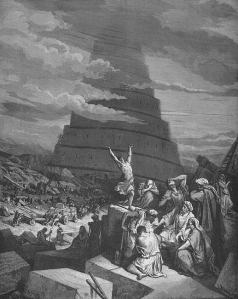
tower of babel

Gustave Doré, found at http://www.textweek.com Art Index. Click on the picture for more from the artist

I held my daughter.  I crawled into her bed, and wrapped her up in may arms.  She nestled deeper into me.  I smelled her hair and kissed her soft cheek.  She took my hand, and pulled it under her head like a pillow.  The alarm clock flashed 6:30, but time stood still.  I prayed, thanking God for this moment.  I paused, And allowed. Myself. To. Stop. Breathe.  Deeply.  She was safe in my arms, and there was no reason for either of us to ever get up.

It would have been so easy to just remain there.  She was safe and warm, and as long as I could keep her there in my arms, nothing bad could happen to her. As soon as I whispered into her ear, “It’s time to get ready for school,” I would lose my grip.  As long as I held her there she would come to no harm.  She couldn’t have an accident.  She couldn’t stub her toe, or burn her hand, or get hit by a car.  No one could hurt here there.  No one would call her stupid or make fun of her shirt.  No one could exclude her from a game or break her heart.  We lay there together, drifting in and out of sleep, and there was no reason at all for us to rise.  Except for one: Babel.

The Tower of Babel story is found in the 11th chapter of Genesis.  The first 11 chapters are generally recognized as a separate section within Genesis.  Walt Brueggemann refers to it as the “Pre-History.”  Terrence Fretheim calles Genesis 1:1-11:26 the “Primeval Story.”  This section of Genesis includes the two creation stories, the first sin and expulsion from the Garden, the murder of Abel, and Noah and the flood.  These are the foundational stories of God and the people God created.  It is a myth in the sense that it is a story that explains why things are the way they are.  And like all myth, the truth of the story does not lie in the facticity of the events, but rather in the meaning we draw from it about God and God’s created people.

The story goes like this:

All people on the earth had one language and the same words.  When they traveled east, they found a valley in the land of Shinar and settled there.  They said to each other, “Come, let’s make bricks and bake them hard.” They used bricks for stones and asphalt for mortar.  They said, “Come, let’s build for ourselves a city and a tower with its top in the sky, and let’s make a name for ourselves so that we won’t be dispersed over all the earth.”

Then the LORD came down to see the city and the tower that the humans built.  And the LORD said, “There is now one people and they all have one language. This is what they have begun to do, and now all that they plan to do will be possible for them. Come, let’s go down and mix up their language there so they won’t understand each other’s language.”  Then the LORD dispersed them from there over all of the earth, and they stopped building the city.  Therefore, it is named Babel, because there the LORD mixed up the language of all the earth; and from there the LORD dispersed them over all the earth. (Genesis 11:1-9, Common English Bible)

Beyond the simplistic questions about historical accuracy, there are deeper theological truths that can be found from this story.  There are also troubling questions about the nature of God that rise quickly from the scattered remains of the people.

The main question is, “Why did God do that?”  It seems like a strange God that is in action here.  “There is now one people,” God declares.  This kind of unity sounds like a good thing.  In a world beset with division, barriers, walls, and wars, a united people sounds like a wonderful place to work toward, not a troubling situation that needs to be fixed.

The common interpretation of this passage is that the sin of the people was hubris.  Many see the problem to be the grandiose plans. The sky, they say, is no place for humans, but instead is the realm of God. The sin of the people was to make themselves too high, and to try to compete with God.  To understand the sin of Babel though, we must look closer at the motivation for the tower, and go back a little farther in human history.  The people state the mission of the tower is to “make a name for ourselves, so that we will not be dispersed all over the earth.”

The Tower would be a source of pride and strength.  A tower is an important part of any settlement.  The Tower draws travelers for trade.  Conversely, it helps detect invaders from a distance.  It provides a strategic advantage for defense, and serves as an economic hub.  The Tower is an important ingredient in protection, safety, and settlement.  The people knew that the tower will keep them from being scattered.  These things do not, on the surface, appear to be troubling.

It is no more troubling than laying in bed in the morning with the one you love more than anything in the world, and deciding to stay there forever.  Protection, safety, and settlement are not necessarily vices, but they are not innately virtuous either.

A look back at the beginning of the Pre-History reveals to us the problem with the Tower.  Look at the first creation story.  The work of God was started to create order and life out of chaos and emptiness.  This creative work culminates in Genesis 1:27-28, where God not only creates humans, but gives us mission in the world.

“God created humanity, in God’s own image, in the divine image God created them, male and female God created them.

God blessed them and said to them, ‘Be fertile and multiply; fill the earth and master it. Take charge of the fish of the sea, the birds of the sky, and everything crawling on the ground.'” (Genesis 1:27-28, Common English Bible)

God said, “Be fruitful and multiply.  Fill the earth and master it.”

The sin of Babel was disobedience.  Moreover, the people were creating their mission.  God gave them a purpose, and they were refusing to act.  The languages then, were not given as a punishment.  The languages were given to people to help them get the job done.  Not the job they intended, but the job God had given them.  What has often been seen as a curse is actually God empowering the people to do what they would not do on their own.  With this nudge, the Scriptures tell us that the people scattered.  They fulfilled their mission, were fruitful and multiplied.

I understand the sin of Babel, and I understand the gift as well.  I thank God every day for giving me those nudges.  Time and again I have thought to myself, “I’m settled.”  It seems like every time, God is there, confusing my language, pushing me to a new adventure, a new relationship, or a new mission.

Every morning I wake my daughter up to get her ready for school, I build my own little tower.  I crawl into bed with her and wrap her in my arms and want so badly to keep her from being scattered.  Every time I whisper into her ear, “Honey, it’s time to get ready for school,” I break the tower down.  It is one of the hardest things I do.

Settlement and safety are not inherently bad things, but anything that works against God’s mission for the world must be worked through.  It is so tempting to hold her and never let go.  It would be so easy to keep her in my own Tower, but in trying to protect her, I would be hurting only her.

God has great plans for her.  I’m not sure what they are, but who am I to get in her way?  Who am I to ignore God’s calling on her life?  She is made to love, to share kindness, to work for justice.  She, as she has said, “was born to dance.”  No one can dance with their Daddy weighing them down.  So I help her to get ready.  I send her out in the world equipped as best I can.

I kiss her goodbye, go upstairs and wake up her little sister.  Maybe I can stay in the tower a little longer with her today.

Follow the Fat Pastor on Facebook

Follow @FatPastor on Twitter

1 Comment

Filed under Christianity, Personal Reflection